A cleaning system built into the castle
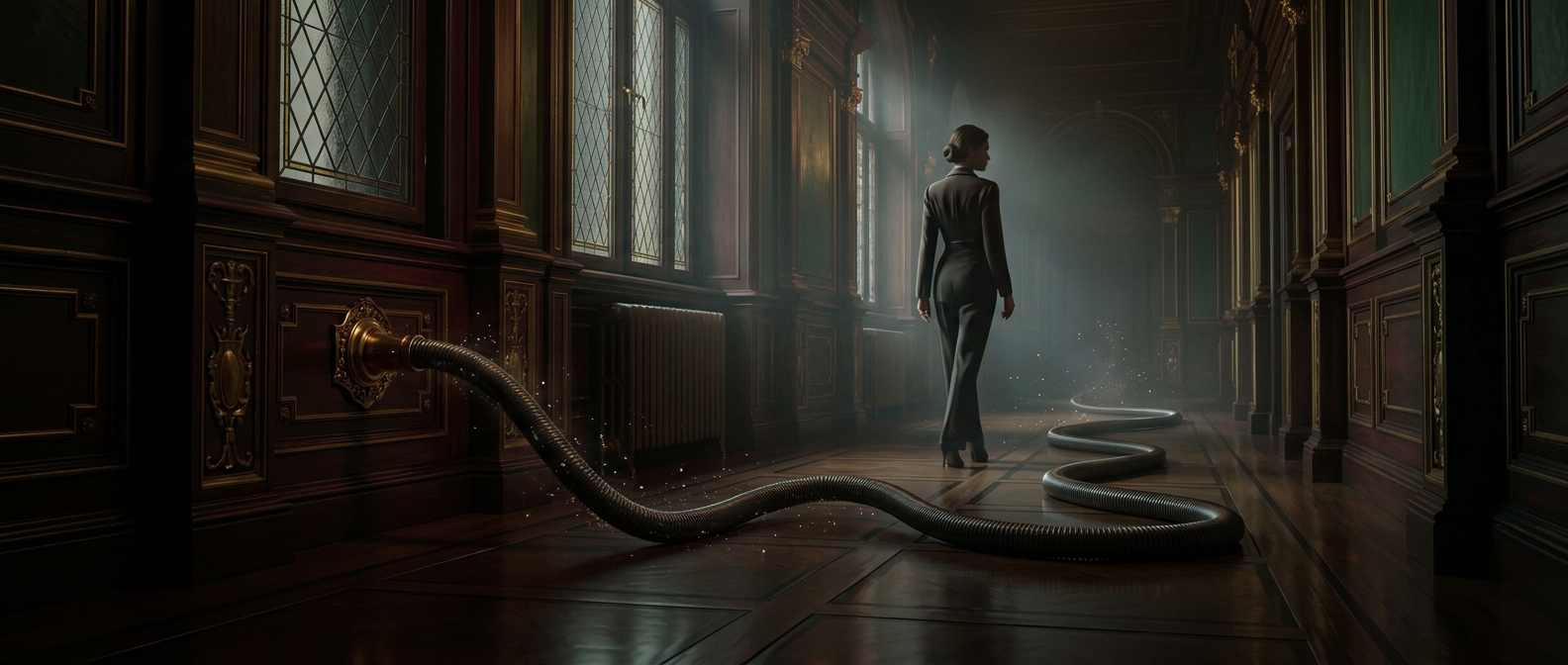
At Peleș Castle in Sinaia, a cleaning tool was part of the building’s infrastructure rather than a machine carried from room to room. Its central vacuum system used fixed piping to draw dust away from the spaces being cleaned. Instead of keeping a motor and dust container beside each user, the system gathered suction at a central point and carried debris through the pipes.
That arrangement depended on more than clever plumbing: it made sense in a residence already designed around modern services. Electricity could power equipment, while the building’s layout could accommodate the pipes and connections a fixed system required.
Why centralizing the work mattered
A portable vacuum brings its motor, container, and noise into the room. A central system shifts much of that machinery elsewhere; the person cleaning connects a hose to an inlet and lets the fixed network do the conveying. The practical payoff is less equipment to maneuver through halls and furnished rooms, and dust can be collected away from the living space.
The system also hints at a broader design choice at Peleș: modern convenience was treated as something to engineer into the residence, not merely add as a decorative novelty. For visitors, the memorable detail is that the castle’s walls and service spaces were doing quiet work behind the scenes—turning cleaning into part of the building’s hidden infrastructure.