Neuschwanstein Was a Retreat Still Taking Shape
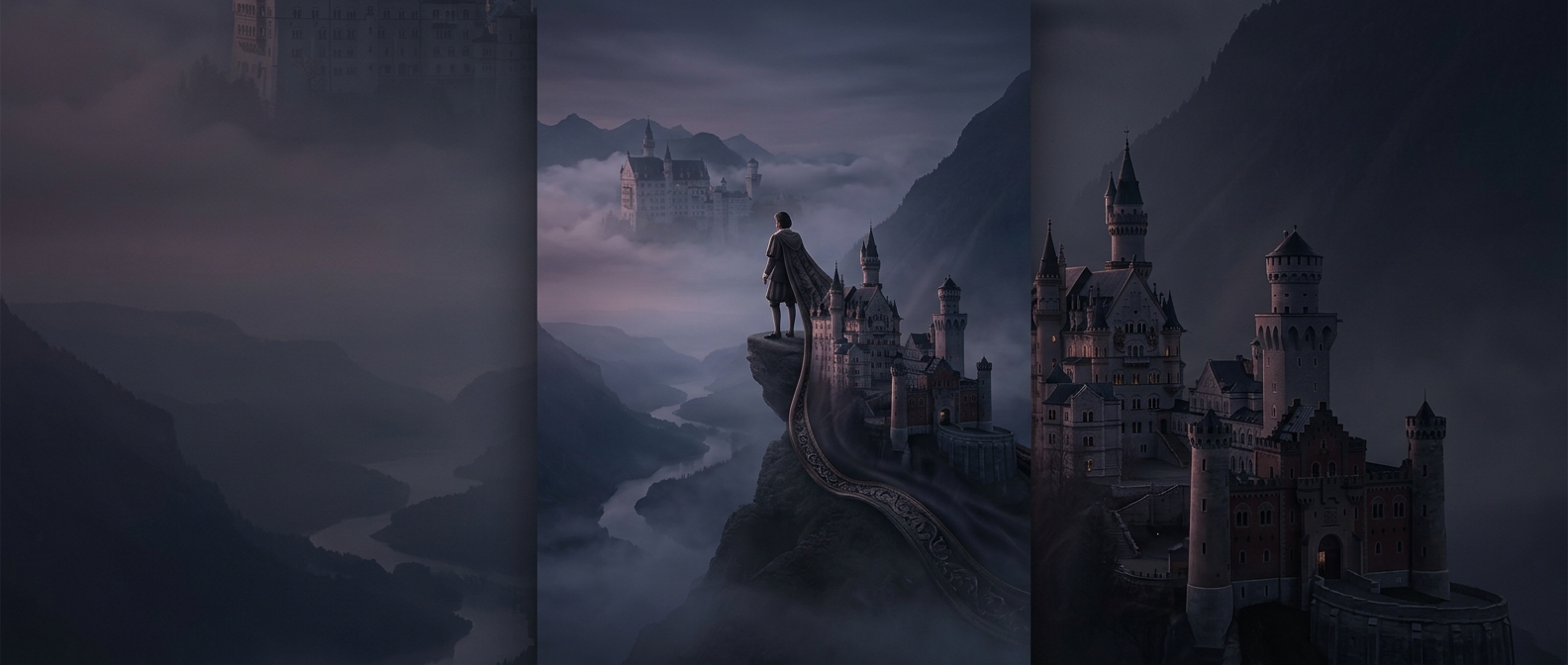
Ludwig II did not commission Neuschwanstein as a working fortress. The Bavarian king envisioned a private retreat shaped by the medieval stories and operas he admired. Its towers and romantic interiors were meant to evoke an imagined past, not serve the practical needs of a royal court.
Construction Outlasted the King’s Stay
Work began in 1869, but the ambitious design took years to build. Ludwig moved into the castle in 1884, when only part of it was usable. Many rooms and planned features remained unfinished when he died in 1886. The 11 nights he spent there were therefore not a brief visit to a completed palace; they were his limited time in a home that was still a construction site.
A Private Dream Became a Public Landmark
After Ludwig’s death, the castle was opened to visitors. Its unfinished state is part of the story: what looks today like a complete fairy-tale setting was never fully realized for the king who imagined it. Neuschwanstein’s most striking contrast is that a building conceived as a personal escape became famous only after its owner was gone.