How Lost City Makes Fuel Without Magma
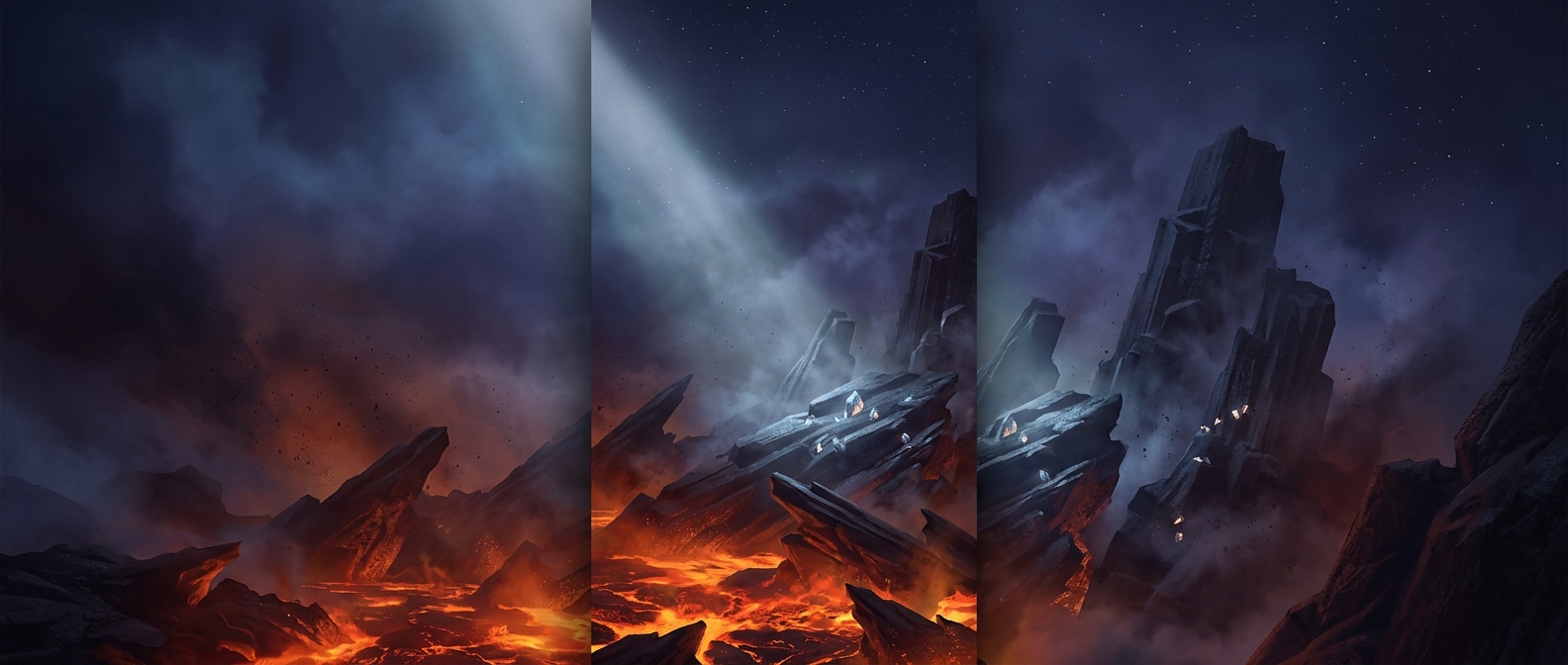
At Lost City, on the Mid-Atlantic Ridge, seawater seeps into exposed mantle rock and reacts with it. This process, called serpentinization, changes the rock’s minerals and releases heat and hydrogen. The water that returns to the seafloor is strongly alkaline—chemically more like a base than ordinary seawater—and can be hot without being heated by nearby magma.
That distinction sets Lost City apart from familiar black smokers, where magma-heated water carries dissolved minerals that precipitate as dark plumes. Lost City’s fluids instead build pale limestone towers as they mix with cooler, carbon-rich seawater.
Mineral Surfaces Help Build Organic Molecules
The returning fluid carries hydrogen, while seawater supplies carbon dioxide and other forms of dissolved carbon. Iron- and sulfur-bearing minerals on the chimney surfaces can help those ingredients react. A catalyst speeds a chemical reaction without being consumed by it; in this setting, mineral surfaces can promote the formation of simple organic compounds without cells or enzymes.
The process is not a miniature version of an organism making food. It is chemistry driven by a gradient: the vent fluid and surrounding seawater differ in temperature, acidity, and chemical composition. As they meet, reactions can use that difference as a source of energy and produce molecules that could serve as building blocks for more complex chemistry.
Why the Chimneys Matter
The limestone towers are more than striking structures. Their pores and mineral surfaces create small, persistent reaction zones where fluids mix and compounds can accumulate rather than being instantly diluted in the open ocean. That makes Lost City useful for exploring how life’s ingredients might have formed in a natural environment before biology existed.
It does not show that life began there. It demonstrates a narrower but important possibility: some organic chemistry associated with life can arise from rock, water, and chemical energy alone. The same vent system continually renews the ingredients and mineral surfaces, turning the chimneys into a long-lived natural laboratory.