Two isotope signals, one drought record
Pollen is built from carbon and hydrogen atoms, and small differences in the atoms’ weights can preserve clues about a plant’s growing conditions. These differences are called isotope ratios: they compare heavier and lighter forms of the same element.
Hydrogen in pollen ultimately comes from water taken up by roots. As water moves through a plant and evaporates from its leaves, the balance of hydrogen isotopes can shift. The pollen’s hydrogen signal therefore reflects the water available to the plant, modified by conditions inside the plant.
Carbon records the plant’s response
Carbon provides a complementary clue. To take in carbon dioxide, a plant opens tiny pores in its leaves called stomata. In dry conditions, it often closes them partly to limit water loss. That changes which carbon isotopes the plant uses during photosynthesis, leaving a measurable shift in its tissues, including pollen.
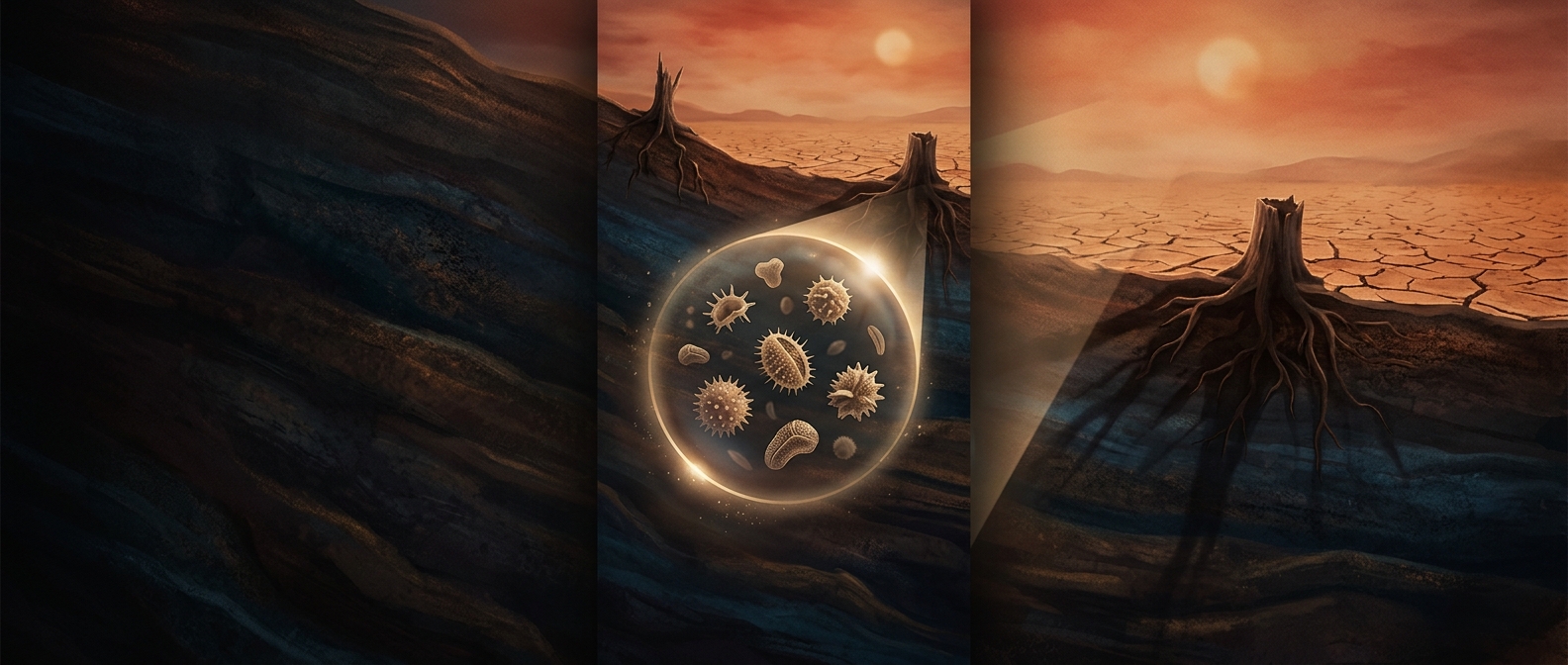
Researchers can measure both signals in fossil pollen and compare them across layers of sediment. A sustained shift can indicate that plants faced drier conditions, while the two elements together help distinguish a change in water availability from a change in how plants managed that water.
Reading the record carefully
Pollen does not function as a direct rain gauge. Different plant species, local water sources, and preservation can affect the signals, so researchers interpret them in context—often by comparing similar pollen types across layers and checking other environmental evidence.
That makes the grains useful for extending climate history beyond written records: a buried layer of pollen can preserve evidence of how plants experienced drought, not merely whether rain fell in a particular year.