A book turned into wrapping
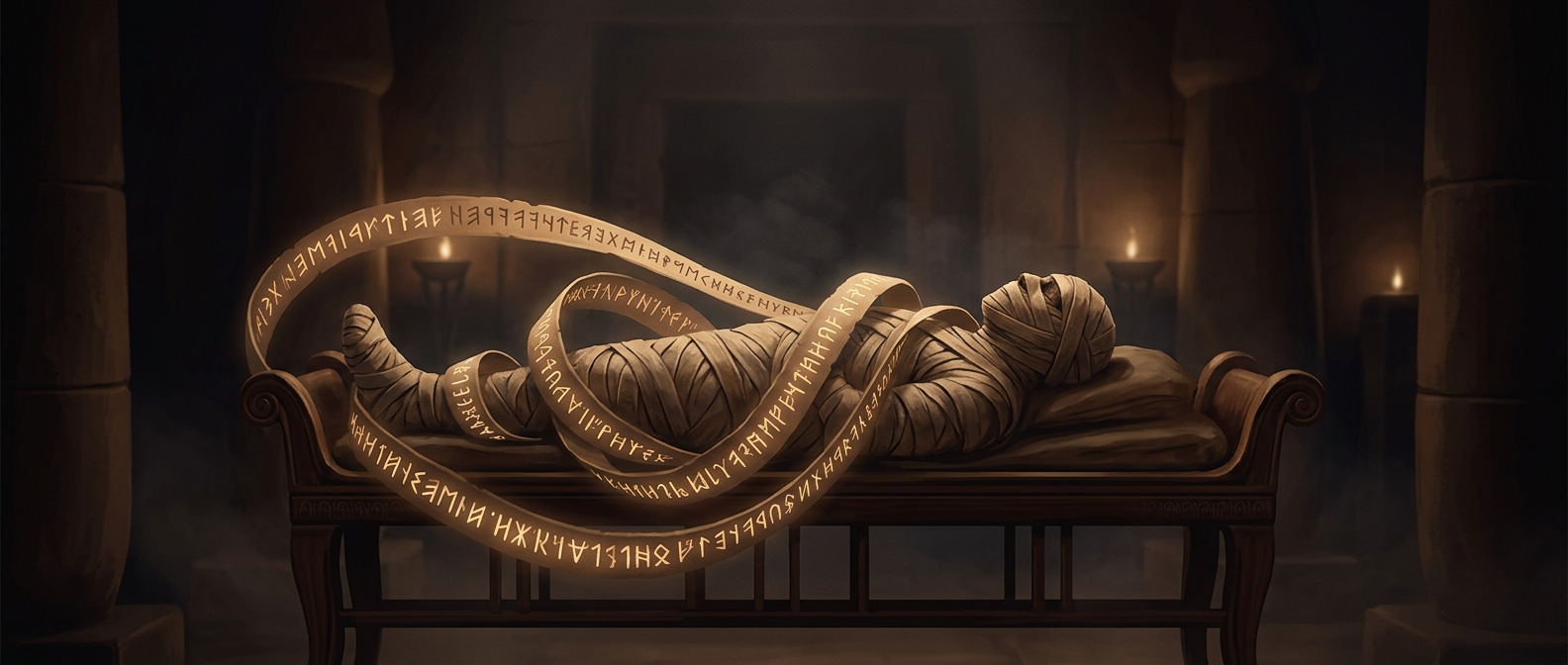
The linen began as a written document, not as material made for a burial. At some point, it was cut into strips and reused to wrap an Egyptian mummy. The strips ended up far from the world in which the text had been written: the mummy was brought to Zagreb in the 19th century by Croatian collector Mihajlo Barić.
When scholars examined the wrappings, they recognized that the writing was Etruscan. The strips were later arranged as a single document, now known as the Zagreb Linen Book. Its journey through reuse and burial preserved more of the text than any other surviving Etruscan writing.
What the text can—and can’t—tell us
The Etruscans lived in what is now central Italy before and during the rise of Rome. Scholars can read the alphabet used in the linen text, but the Etruscan language is still only partly understood. That distinction matters: recognizing the letters does not automatically reveal what every sentence means.
The surviving document appears to be a religious calendar, with entries associated with ceremonies and offerings. Its repeated references and date-like structure give scholars clues about how Etruscan worship was organized, even where individual words remain uncertain.
The preservation was accidental, but the result is unusually revealing: a discarded piece of writing became part of an Egyptian burial, then survived long enough to offer a rare glimpse of a language whose other records are mostly short inscriptions.