A death story built around mistaken identity
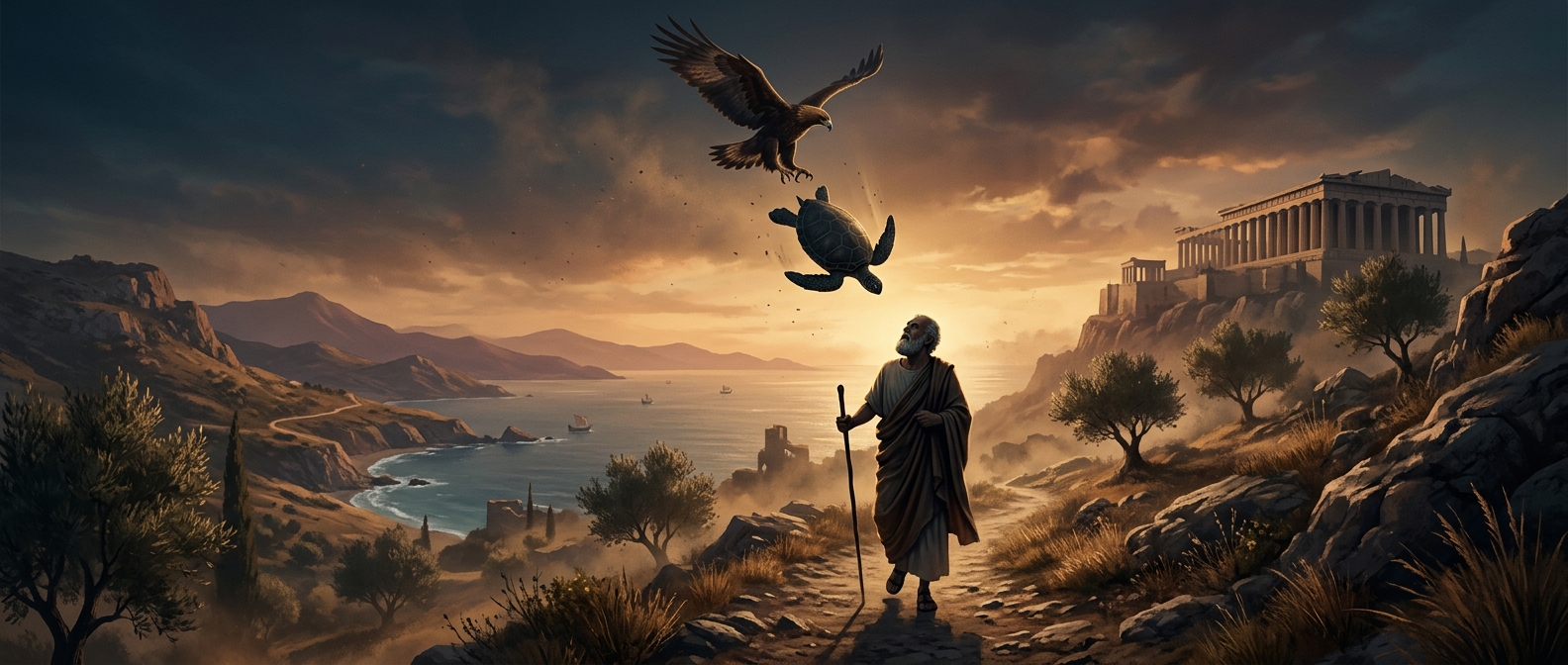
Aeschylus, the fifth-century BCE Athenian playwright, is said to have died when an eagle dropped a tortoise onto his head. The bird, the tale goes, mistook his bald scalp for a hard surface on which to smash the shell. The impact killed him.
The story’s logic depends on a striking bit of animal behavior: some large birds of prey can carry tortoises aloft and drop them onto rocks, cracking the shells to reach the flesh inside. In the legend, the eagle performs the same maneuver—but mistakes a person for its usual target.
What the anecdote can—and cannot—tell us
The account belongs to the tradition of stories told about famous figures in antiquity, where a memorable death could become part of a person’s public image. Aeschylus’s baldness supplies the visual twist that makes this particular tale easy to remember. But the episode is reported as legend, not established as a documented cause of death; its vividness is not evidence that it happened exactly as described.
That tension is part of why the story endured: a playwright known for tragedies was given an ending that sounds almost like a dark punch line. The tortoise was not simply an odd prop in the tale—it turned a natural hunting behavior into a bizarre accident of mistaken identity.