Why stressed corals can glow
A coral is an animal, but much of its energy comes from microscopic algae living inside its tissues. The algae use sunlight to make food and share some of it with the coral. When seawater stays unusually warm, this partnership can falter: the algae may stop working normally or be expelled, leaving the coral short of energy.
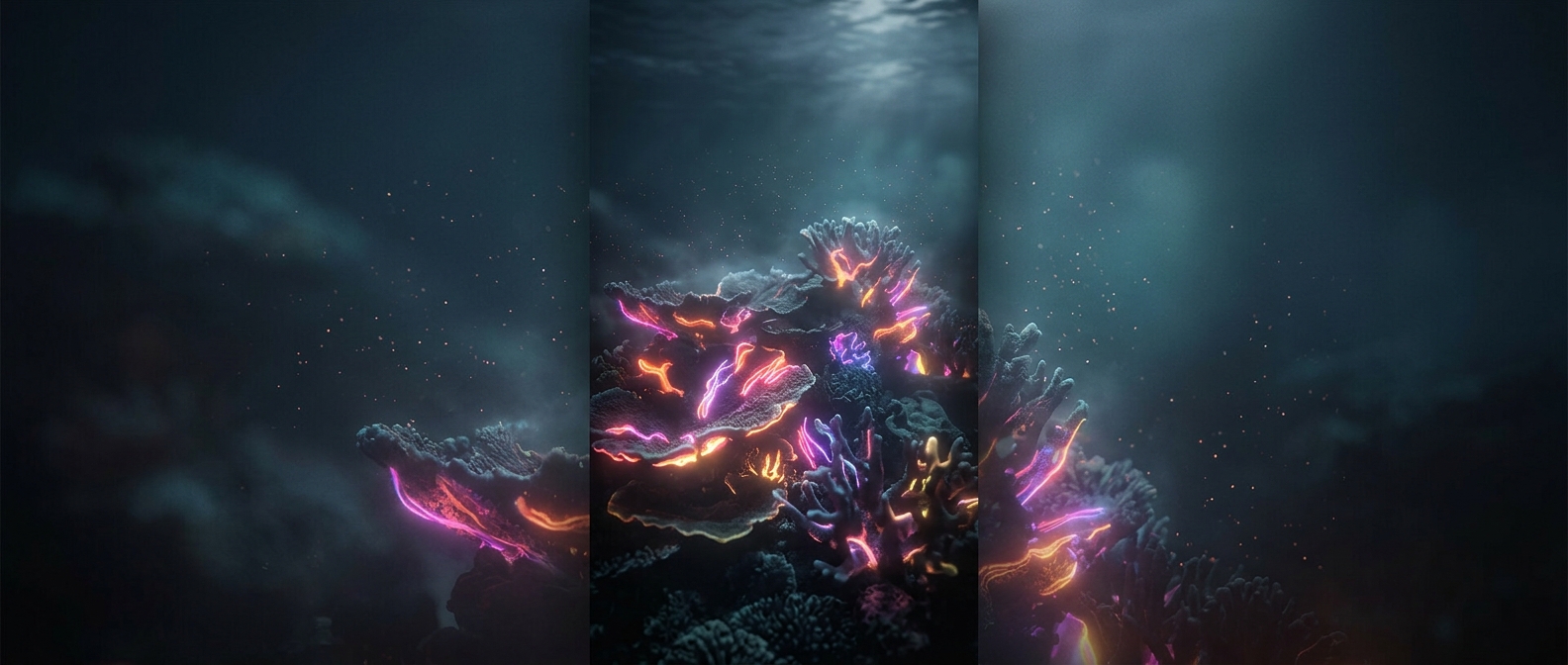
Heat-stressed corals sometimes respond by producing more fluorescent proteins—molecules that absorb light and re-emit it in another color. The vivid green, pink, or orange appearance can also become easier to see as the algae’s brown pigments fade. The glow is therefore not simply color appearing out of nowhere; it can reflect both a change in the coral’s own pigments and the loss of color from its partners.
A possible shield, not a cure
Fluorescent proteins may help manage the light reaching the coral’s tissues. In particular, they could reduce intense light exposure for algae that remain or return, giving the partnership a better chance to re-form. But fluorescence is not a reliable sign that the coral is recovering, and its protective role can vary with the species and conditions.
If the stress eases soon enough, a coral may regain its algae and color. If heat stress continues, it can remain bleached, weaken, and die. The neon display is best read as evidence of a stressed partnership—not as proof that the coral has escaped harm.