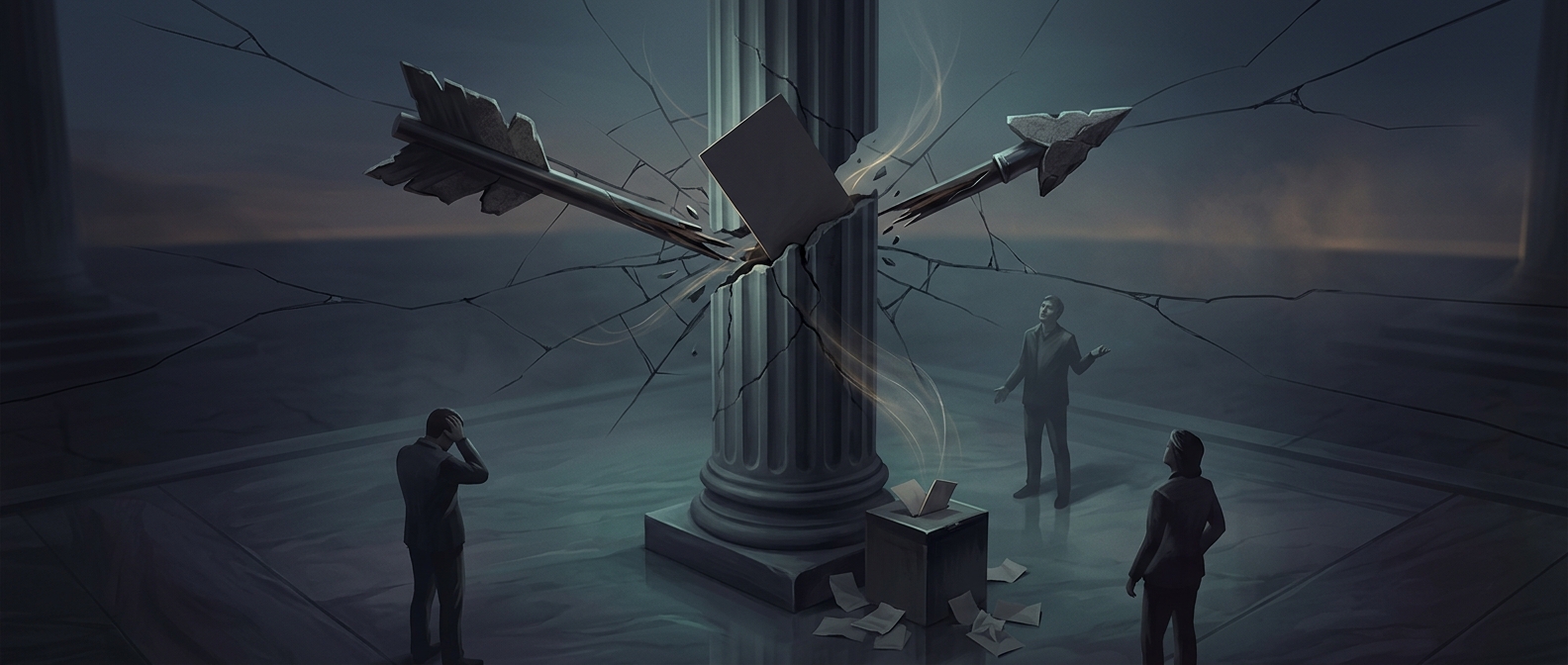
Why shared rewards can make effort disappear
When a group receives a benefit whether or not every member contributes, each person faces a private calculation: doing the work costs time or effort, while the payoff is shared. Holding back can seem sensible if others are likely to carry the task. The trouble is that the same logic applies to everyone.
This is a free-rider problem: people can benefit from a group effort without paying their share of its cost. It is especially likely when individual contributions are hard to see and the benefit cannot easily be reserved for contributors. A clean shared space, for example, may help everyone even if only a few people tidy it.
How a reasonable choice becomes a bad group outcome
The key is that the best move for one person may not be the best result for the group. If each member waits, the project stalls; if enough members contribute, everyone can benefit. No one needs to be selfish or unusually lazy for this pattern to emerge. Uncertainty about whether others will do their part can make waiting feel even safer: why take on extra work if the rest may not?
That creates a coordination problem as well as an incentive problem. Members need both a reason to contribute and some confidence that others will contribute too. In a group project, a student who cannot tell whether teammates are working may delay; a visible task list can make responsibilities clearer and reduce that uncertainty.
Making contribution easier to expect
Groups can limit free riding by making contributions visible, assigning specific responsibilities, or tying some benefits to participation. These arrangements change the calculation: effort is less likely to vanish unnoticed, and members can see whether the shared task is moving forward. But monitoring also takes time, and strict rules can feel unfair when people have different abilities or workloads.
The useful lesson is not simply to demand more effort. It is to design the task so that each person can tell what they are responsible for—and whether the others are carrying their part. Without that structure, a group can lose momentum one cautious decision at a time.