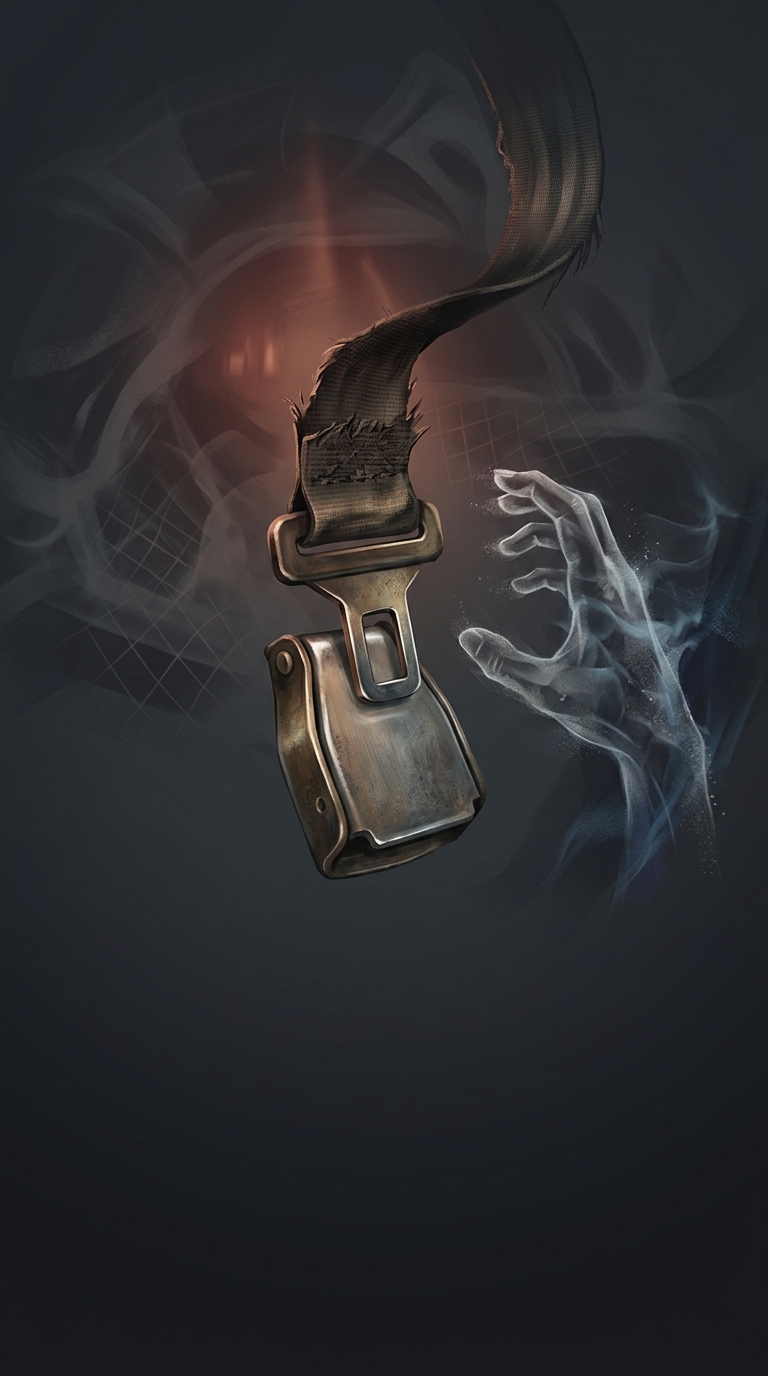
Why Airplane Seatbelts Open with a Lift
The familiar airplane buckle is a simple lap-belt latch: a metal tongue slides into a clasp, and lifting the clasp’s flap releases it. Unlike a car buckle’s recessed push button, the flap is exposed and can be operated directly. Its design is easy to understand once you see the parts: lift the cover, and the belt comes free.
That does not mean aviation experts chose it because people in a crash “regress” to basic movements. There is no need to assume a special panic response to explain the mechanism. The airplane buckle is a straightforward design that has remained practical for securing a passenger with a lap belt.
A Different Restraint, a Different Buckle
A car’s seatbelt system typically includes a shoulder strap and a retractor—the spool that lets the belt extend and then pulls it snug. The buckle’s button releases the tongue from that system. An airplane passenger belt, by contrast, is generally a lap belt with a clasp that holds the belt ends together. The two systems solve related problems, but they are not built around identical hardware.
The lift flap also makes the release action visible: passengers can see which part moves and how the tongue comes out. That is a practical feature, not proof that the buckle is uniquely safer under panic. In an emergency, passengers still need to release the belt and follow crew instructions; the simple latch is one part of that process.
So the metal flap is less a relic explained by a dramatic theory of human behavior than a durable, uncomplicated choice for a lap-belt restraint. It is also why unfastening an airplane belt feels different from pressing the button in a car.