A canal carried across a valley
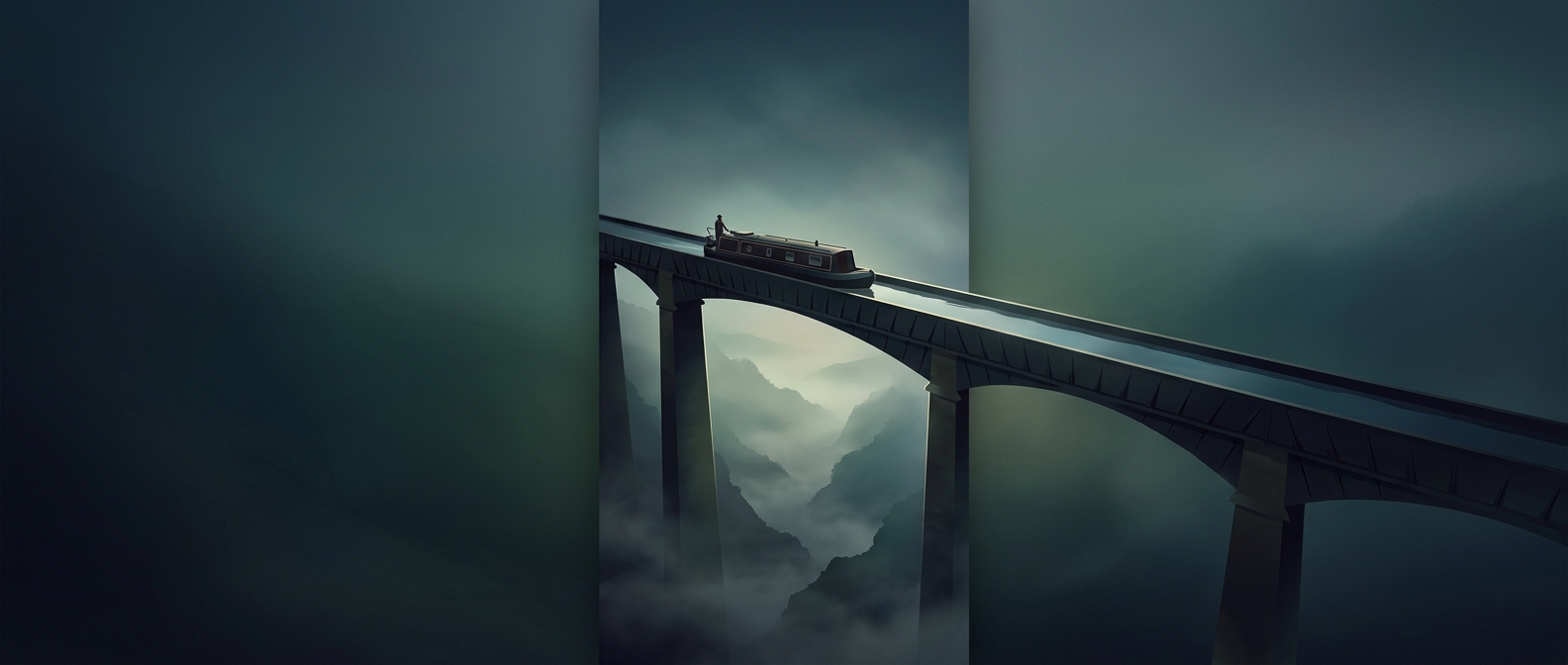
The Pontcysyllte Aqueduct solves a basic problem of canal travel: boats need a nearly level waterway, but the Dee valley cuts across the route. Instead of sending the canal down one slope and back up the other through locks, engineers carried it straight across in an elevated trough. The route stays level, so boats can pass over the valley without climbing or descending.
A long, narrow vessel of water
The trough is made of cast-iron plates joined to hold water, with masonry piers supporting it above the valley. The iron does not need to form a sealed pipe: it acts as the canal’s open bed and sides. Water presses outward against the trough, while the supporting structure bears the load of the water, boats and ironwork. The aqueduct’s height makes the crossing dramatic, but its essential job is to keep the canal’s water contained and at the right level.
Two very different edges
The towpath lets people walk beside the canal, and its railing offers protection on that side. Boats, however, travel close to the unguarded water’s edge. That open side is part of the aqueduct’s design as a canal channel, not a road bridge with barriers on both sides. For visitors, the contrast is striking: a calm, level stretch of water is also a route suspended high above the valley.