The horror is assembled around the child
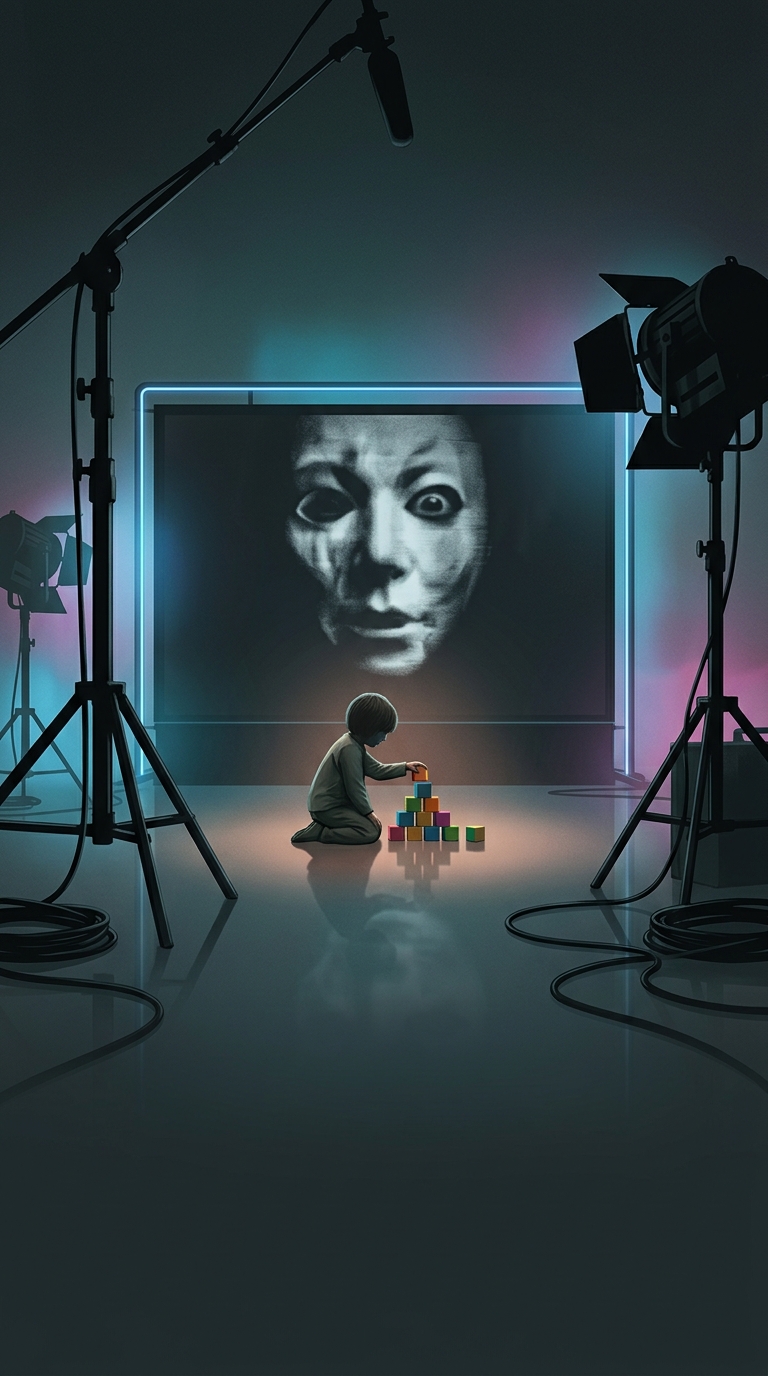
A frightening scene can look like one continuous ordeal on screen, but it is usually built from separate, controlled pieces. A child may react to a quiet set, a harmless prop, or an actor moving slowly; the violent impact, threatening music, and sudden noise can be added or intensified later. Camera angles and editing make a staged movement appear more dangerous than it is. Fake blood is a makeup effect, and the child need not see the finished scene—or the adult version of its most disturbing imagery—while performing it.
That separation is both a filmmaking tool and a way to keep the work manageable. Directors can shoot close-ups, reactions, and effects shots at different times, rather than asking a young actor to experience the whole scene as the audience eventually will.
Make the fiction understandable
Children generally need a clear, age-appropriate account of what is happening: who is pretending, what the prop does, and when the action stops. A director might describe a creature as a performer in costume or explain that a frightening sound will be added later. The goal is not to trick the child into a convincing reaction, but to help them play the moment without confusing make-believe danger with real danger.
Parents or guardians and the production’s responsible adults help set boundaries, while breaks and a calm set give the child room to reset. The precise safeguards vary by production and scene; no technique can guarantee that every young actor will feel the same way about frightening material.
The audience supplies the terror
Horror depends heavily on what viewers infer from a glimpse, a sound, or a cut—not on showing a child actor enduring something real. A director can protect the performer’s experience while preserving the audience’s fear by controlling what the camera reveals and when. The finished scare may last seconds; the performance behind it can be assembled from brief, ordinary actions.