How the hospital corner is made
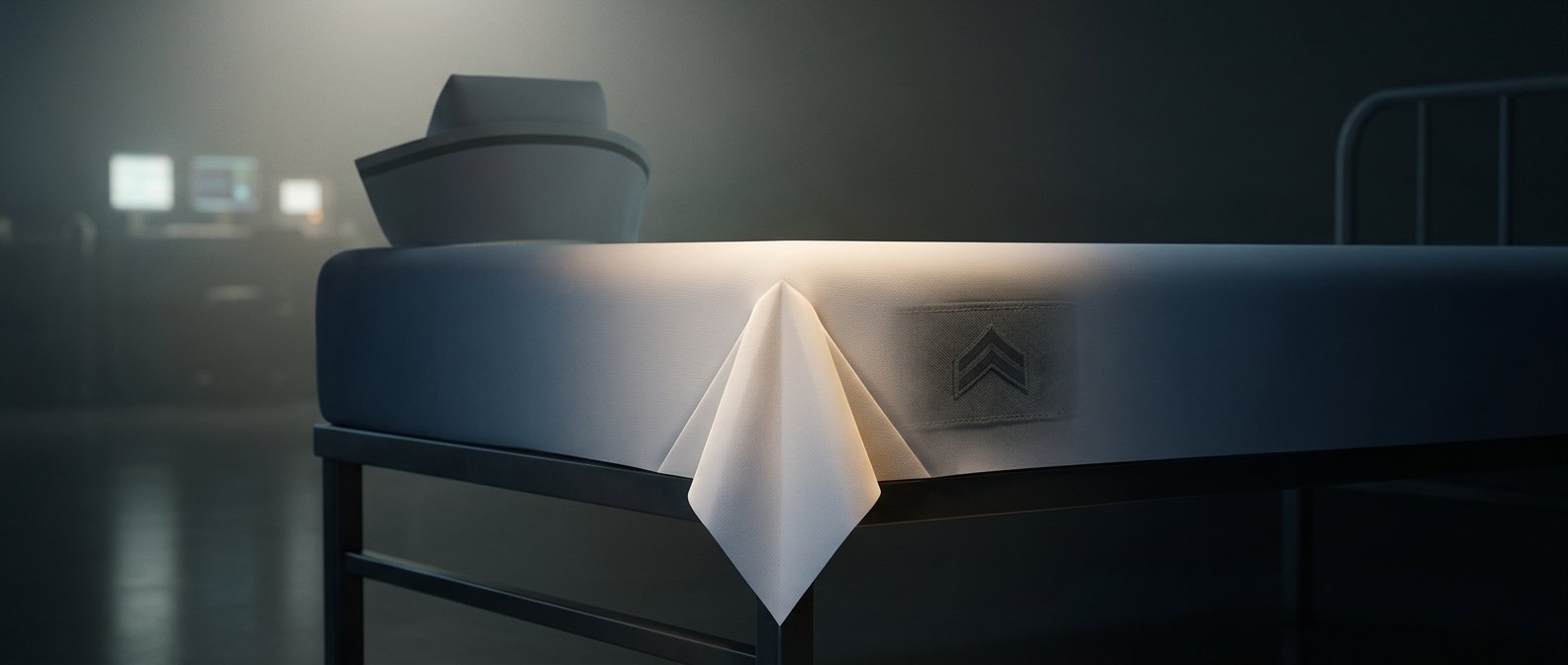
A hospital corner is a way of securing a flat sheet at the foot of a bed. The sheet is tucked under the mattress, then pulled back at each corner to form a diagonal flap. That flap is folded down, and the remaining fabric is tucked beneath the mattress. The result is a neat, firm edge rather than loose fabric hanging at the sides.
The fold is easy to recognize because it turns a simple task into a repeatable sequence: tuck, lift, fold, and tuck again. That consistency helps explain why the technique suits places where many beds are made to the same standard. Its association with strict military academies reflects an emphasis on visible order, not a special medical function.
A visual standard, not a treatment
A tightly made bed presents a smooth surface and crisp corners, making the room look orderly at a glance. The corner itself does not provide a hidden benefit to the patient; it is primarily a presentation choice. In hospitals, where a room may be reset between patients, that familiar, uniform finish can signal that the bed has been made, even though the fold alone says nothing about the care or cleanliness behind it.
The memorable detail is that a small, precise fold carries a larger impression: discipline made visible in an everyday object.