From battlefield litter to hospital stretcher
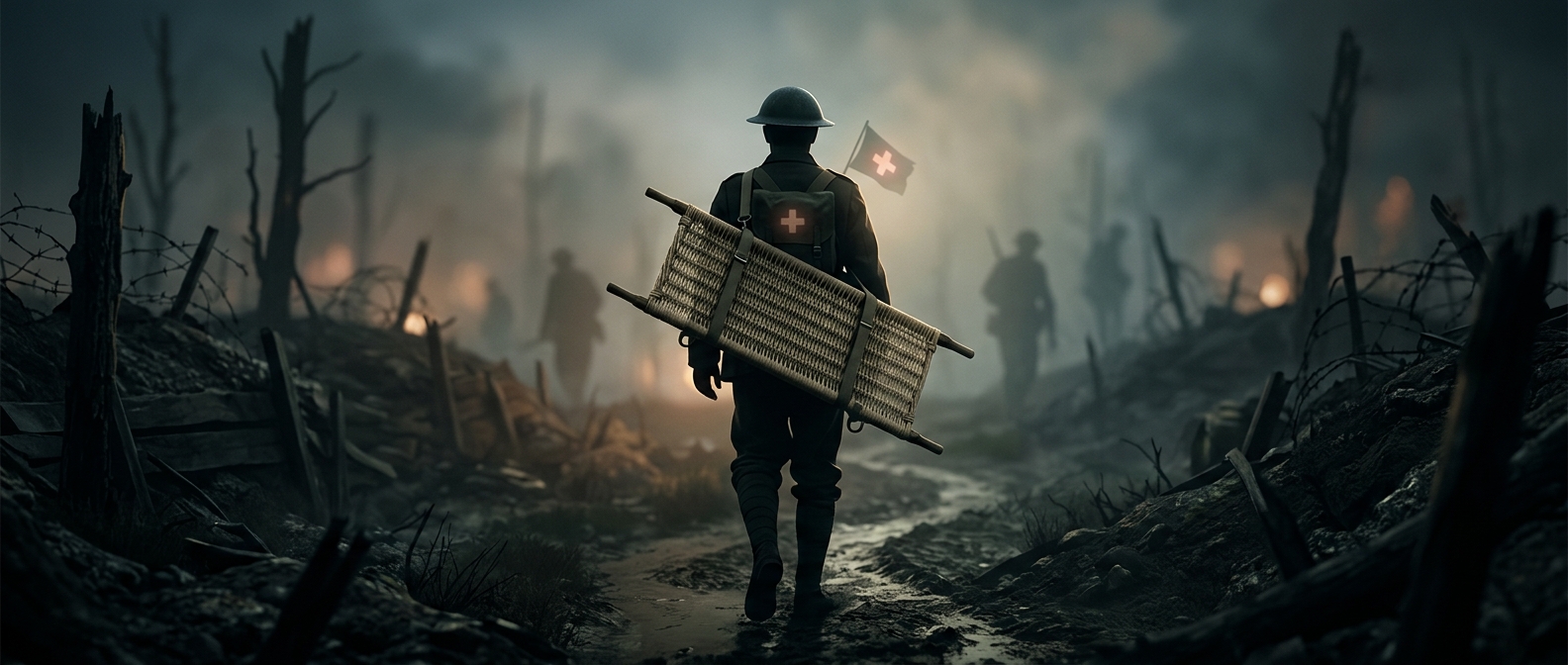
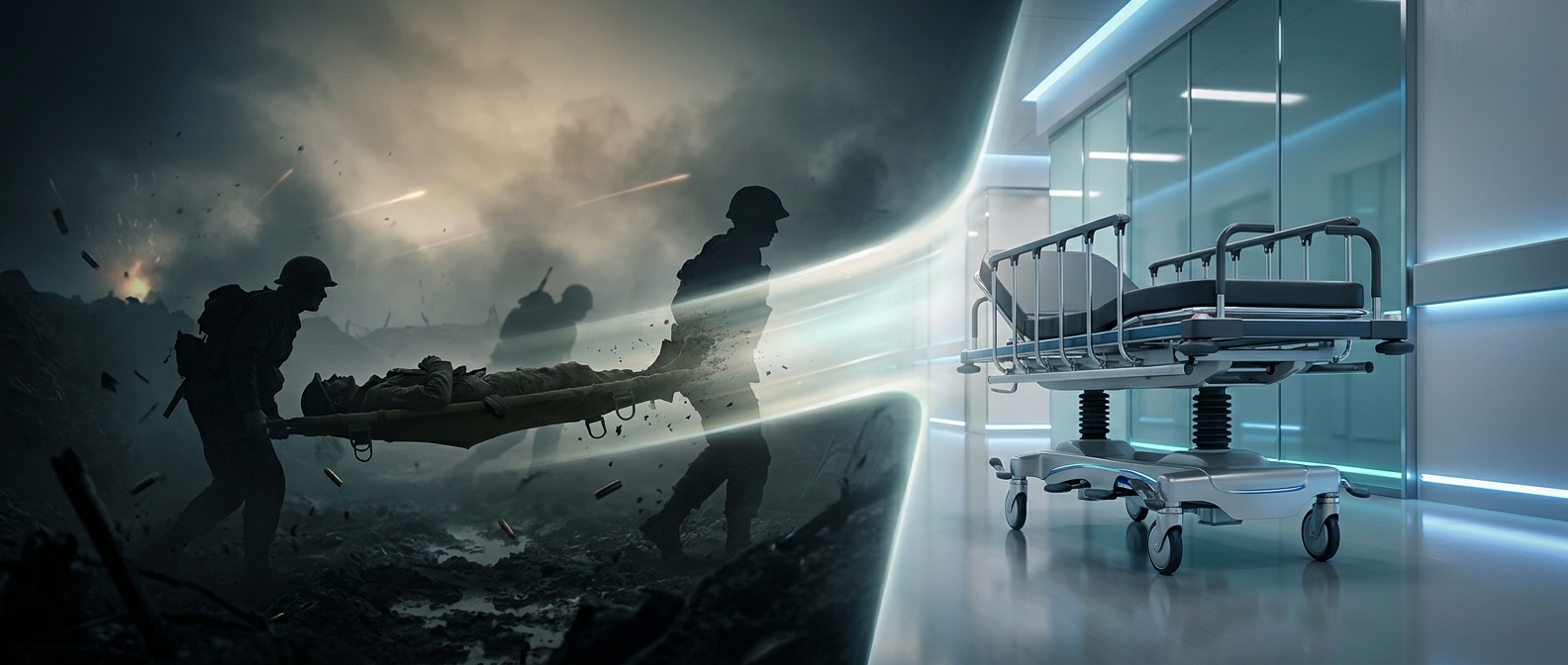
A wounded person often cannot walk, so rescuers need a way to move them without making them support their own weight. On a battlefield, that meant lifting a person onto a litter—a simple platform carried by people at its handles—and getting them out of danger as quickly as possible. In trenches and other cramped spaces, equipment had to be light enough to carry and compact enough to maneuver.
That practical problem shaped the design logic behind modern collapsible gurneys: a patient-supporting frame that can be moved, folded, and carried when needed. The battlefield litter’s basic purpose—support someone who cannot walk while others transport them—lives on in hospital equipment.
Why folding matters in a hospital
A modern gurney adds wheels and a more adjustable frame, making it easier for staff to move a patient through corridors or between rooms. Its folding structure also helps when it must be stored or carried through a tight space. These features answer a familiar challenge in a different setting: getting a person safely from one place to another when the route is awkward and time matters.
The design’s lasting inheritance is not simply a military shape. It is the idea that emergency transport equipment should support the patient while remaining manageable for the people doing the carrying.