Why a Wicker Stretcher Could Become Hard to Carry
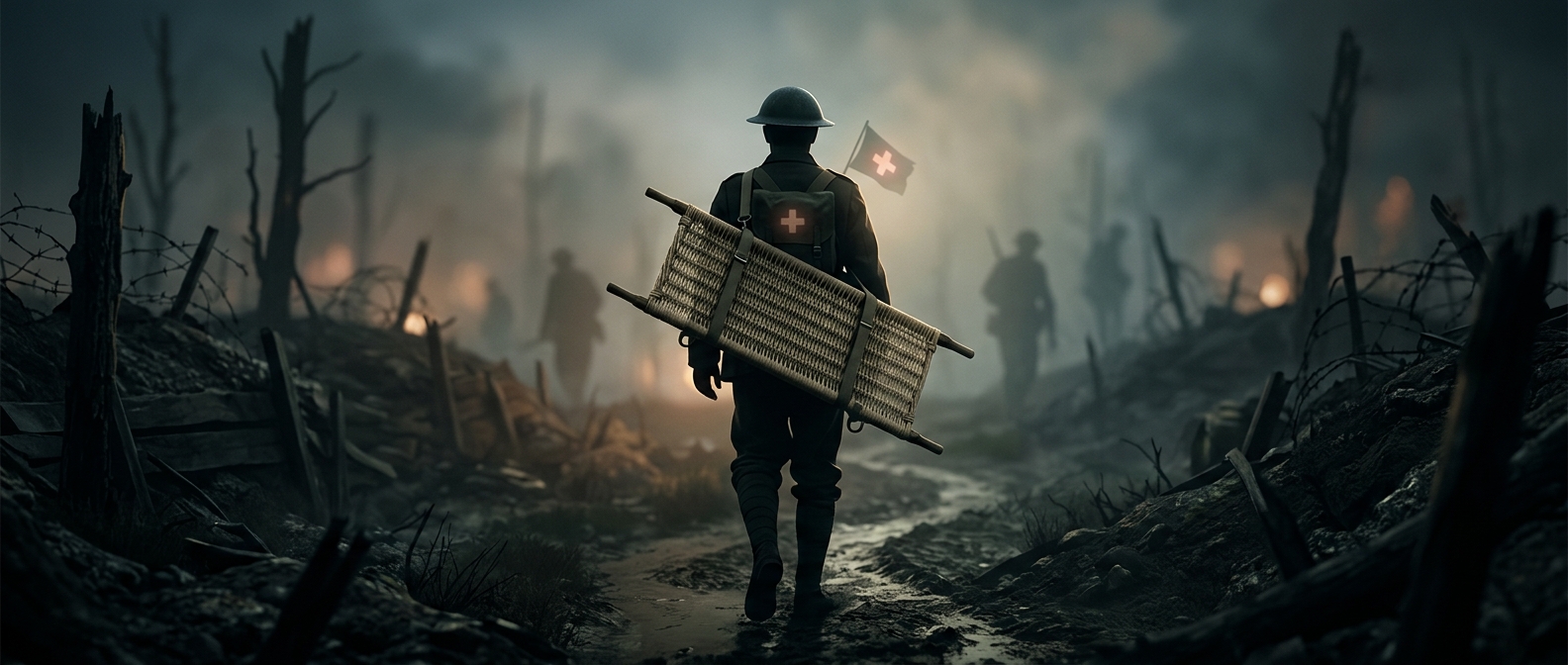
A basket-style stretcher worked as a cradle: its sides helped keep a wounded person contained while bearers lifted and carried them. Wicker was light, and the material was readily available—useful qualities when equipment had to be made and moved under wartime conditions.
But a stretcher’s usefulness depended on the route, not just its weight. A large, rigid cradle could not easily be turned or angled around obstacles. In deep mud, bearers also had to fight for stable footing and keep the load from dragging or tipping. The same shape that supported a patient on firmer ground could become awkward in narrow, churned-up terrain.
The Route Became Part of the Equipment
Moving a casualty was not simply a matter of lifting them once. Bearers needed to carry the stretcher far enough to reach ground where it could be handled safely, while avoiding jolts that might worsen pain or injury. Mud made that task slower and more demanding, especially when a bulky stretcher could not be maneuvered directly through the easiest path.
The practical lesson was stark: a lightweight stretcher could still be a poor fit for the ground beneath it. In a landscape of mud, the route determined whether the basket was an aid to evacuation or an obstacle to it.