A fire extinguisher designed to break
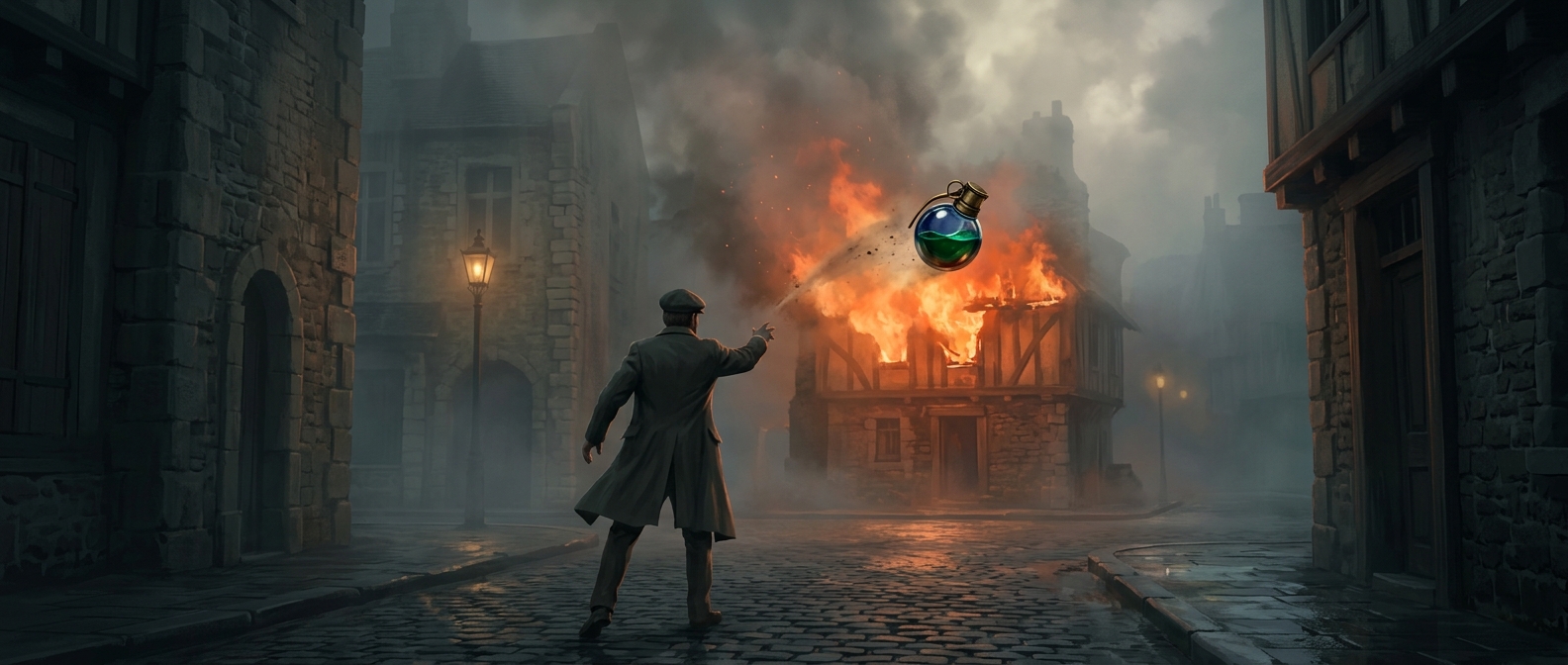
These glass spheres—often called fire grenades—turned the act of putting out a fire into a single throw. A person hurled one toward the flames; on impact, the thin glass shattered and released its liquid across the burning area. The point was to get a fire-suppressing substance where it was needed quickly, without first operating a pump or hose.
The liquid did the actual work. Depending on its formulation, it could absorb heat, helping cool burning material, or otherwise make it harder for flames to keep going. Breaking the sphere spread the liquid, but only over a limited patch; it could not reliably reach around corners or coat a large, fast-growing fire.
A quick response with a narrow window
The design made sense as an accessible first response: keep a sealed container nearby and throw it at a small fire before it spread. But it was a one-shot device. Miss the burning area, or use it after the fire had grown beyond the liquid’s reach, and there was no second attempt from that sphere.
That tradeoff is what makes the object memorable. It looked like something to throw, and that was precisely how it was meant to work—but its usefulness depended on catching a fire early and landing the breakable container close enough to matter.