A wartime need became a training system
World War I left many soldiers blind, including men injured by chemical weapons. In Germany, that sudden need for practical help prompted the creation of organized guide-dog training. Rather than relying on a dog’s instinct or a handler’s luck, trainers developed a repeatable way to prepare dogs to work alongside people who could not see.
The change was important because guiding is more than avoiding the next obstacle. A dog has to learn to move steadily through changing surroundings while staying attentive to its handler. Training turns that behavior into a usable skill, practiced in everyday situations rather than treated as a one-time trick.
The dog guides; the person directs
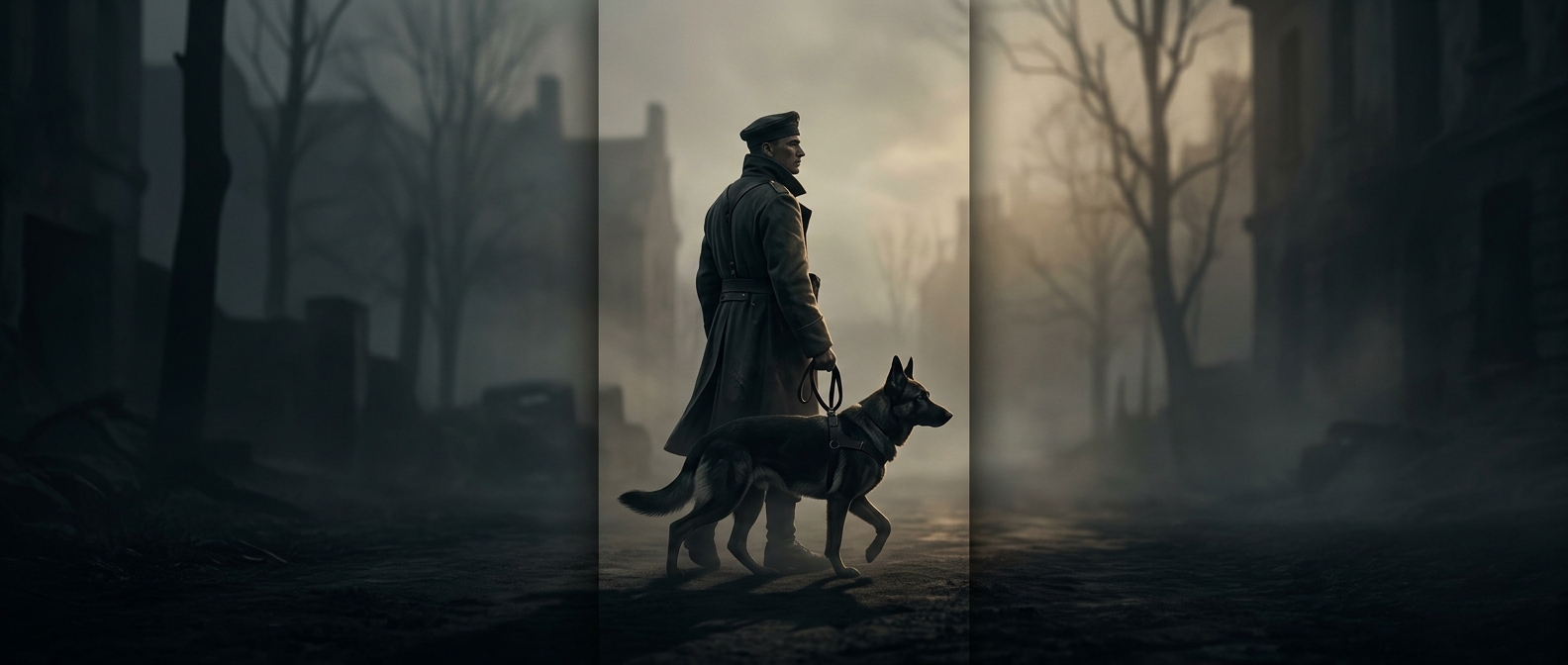
A guide dog does not independently choose a destination or map out a journey. The handler knows where they want to go and gives directions; the dog helps negotiate the path, such as moving around obstacles. The two form a working team: the person supplies the goal, while the dog provides information through movement and response.
That division of responsibility also explains why training must prepare both members of the team. A dog can help someone travel more safely and confidently, but the handler still needs to know the route and make decisions. The system created for blinded veterans was therefore not simply about teaching dogs commands—it was about making coordinated travel possible.
From emergency response to lasting assistance
The war supplied the urgent reason to organize the work; the training approach made assistance more dependable and transferable. Instead of each person having to improvise with an untrained animal, dogs could be prepared for a defined role and matched with handlers who would learn to work with them.
That shift turned a response to wartime injury into a lasting form of mobility support: the dog’s training could help a person navigate ordinary streets long after the original emergency had passed.