Why a spring clip mattered at the bedside
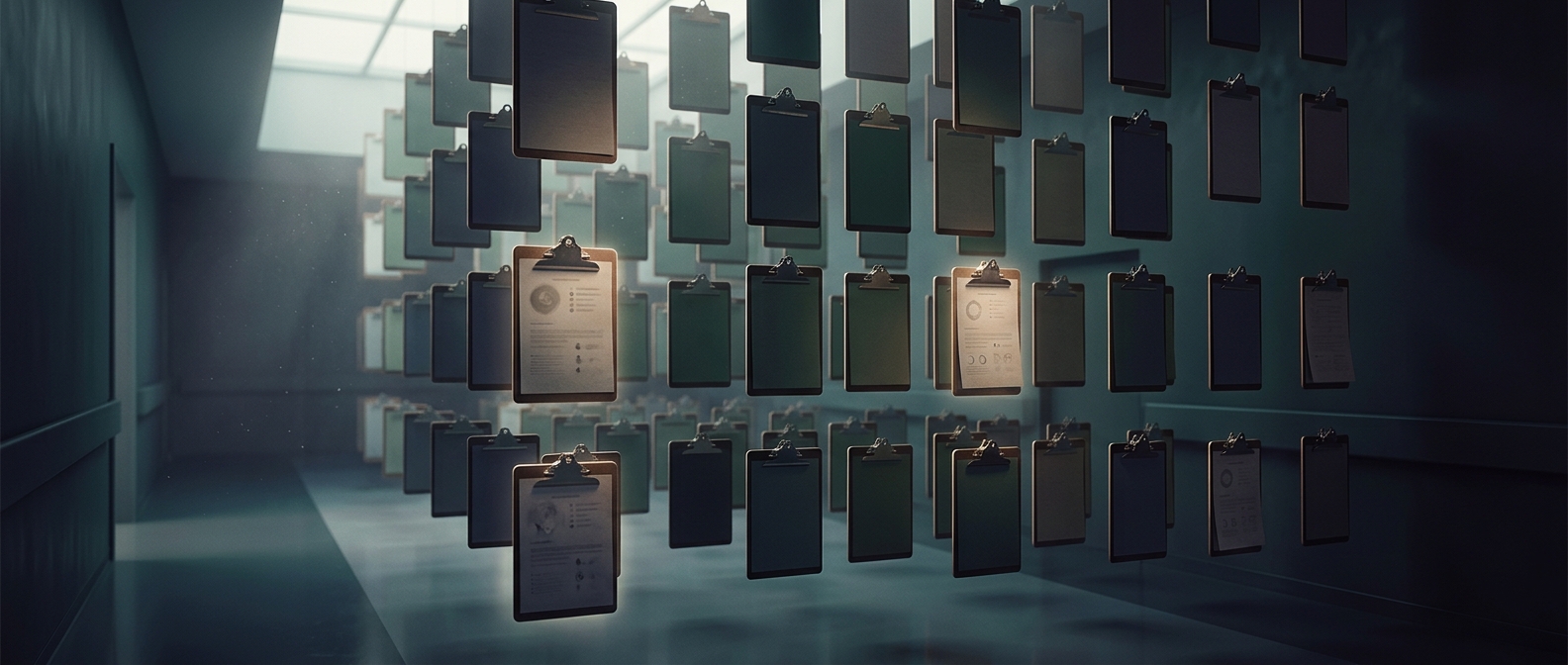
A hospital chart is useful only if the right information stays connected to the right patient. In a ward, staff move between beds while recording observations, adding notes, and checking instructions. A loose pile of papers can be separated, shuffled, or carried away from the place where it is needed. Keeping a chart at the bedside made the record available during care rather than somewhere across the ward.
The clipboard’s spring-loaded clamp solved a small but recurring problem: it pressed the sheets together firmly enough to keep them from slipping, while still allowing staff to add or remove pages. The board also gave them a hard surface for writing when a desk was not close at hand. Together, those features turned a stack of paper into a portable work surface and a more orderly record.
Organization was part of patient safety
The clip could not verify that a chart belonged to the person in the bed, or guarantee that every entry was correct. Its value was more practical: it reduced the chance that loose pages would drift into another patient’s papers during the ordinary rush of ward work. Keeping records together made it easier for staff to consult and update the same set of information as care continued.
That simple physical arrangement mattered because hospital care is shared across people and moments. A note made during one visit may be needed at the next. The spring clip helped keep those pieces in one place—close enough to use, and less likely to become somebody else’s chart.