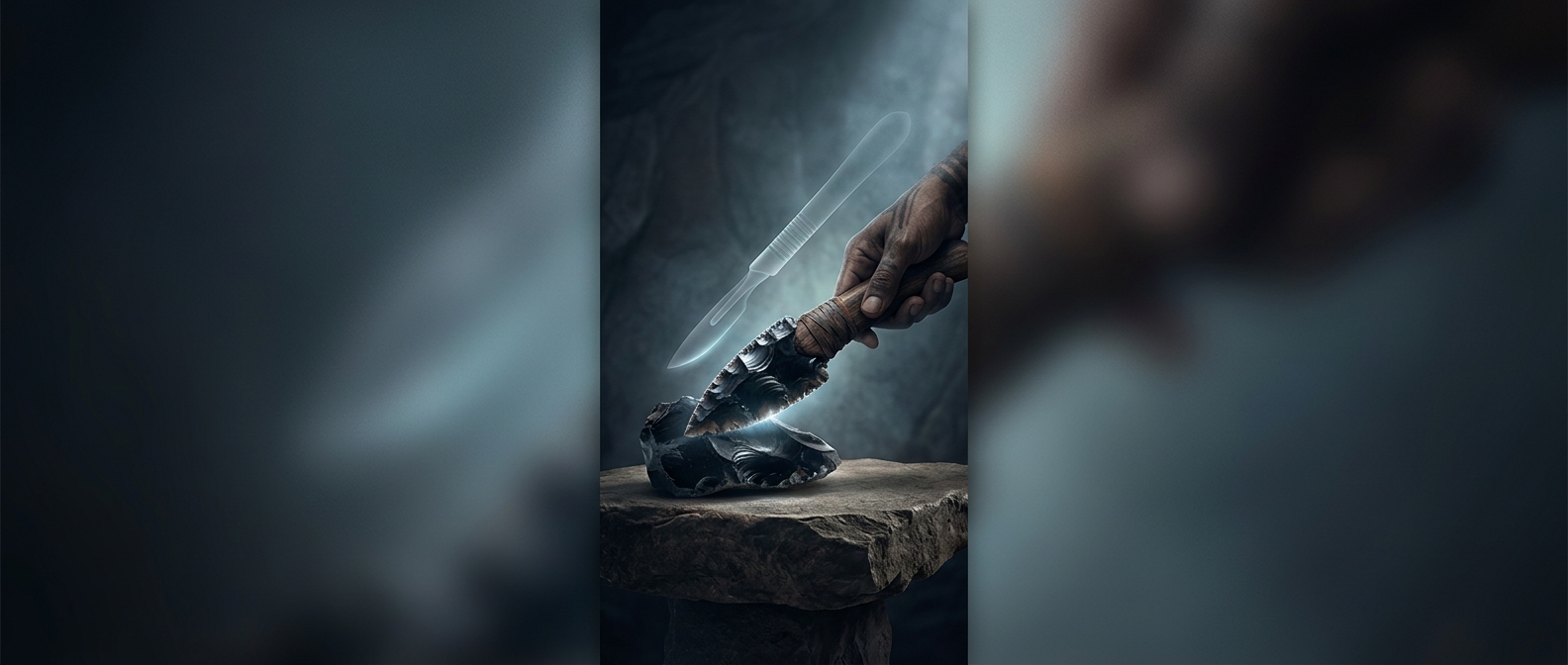
How a fracture makes a fine edge
Obsidian is volcanic glass: it forms when lava cools so quickly that crystals have little time to grow. When the glass breaks, the crack can travel in a smooth, curved path rather than being deflected around grains. That conchoidal fracture—the same kind of break seen in chipped glass—can leave an edge that tapers to an exceptionally fine point.
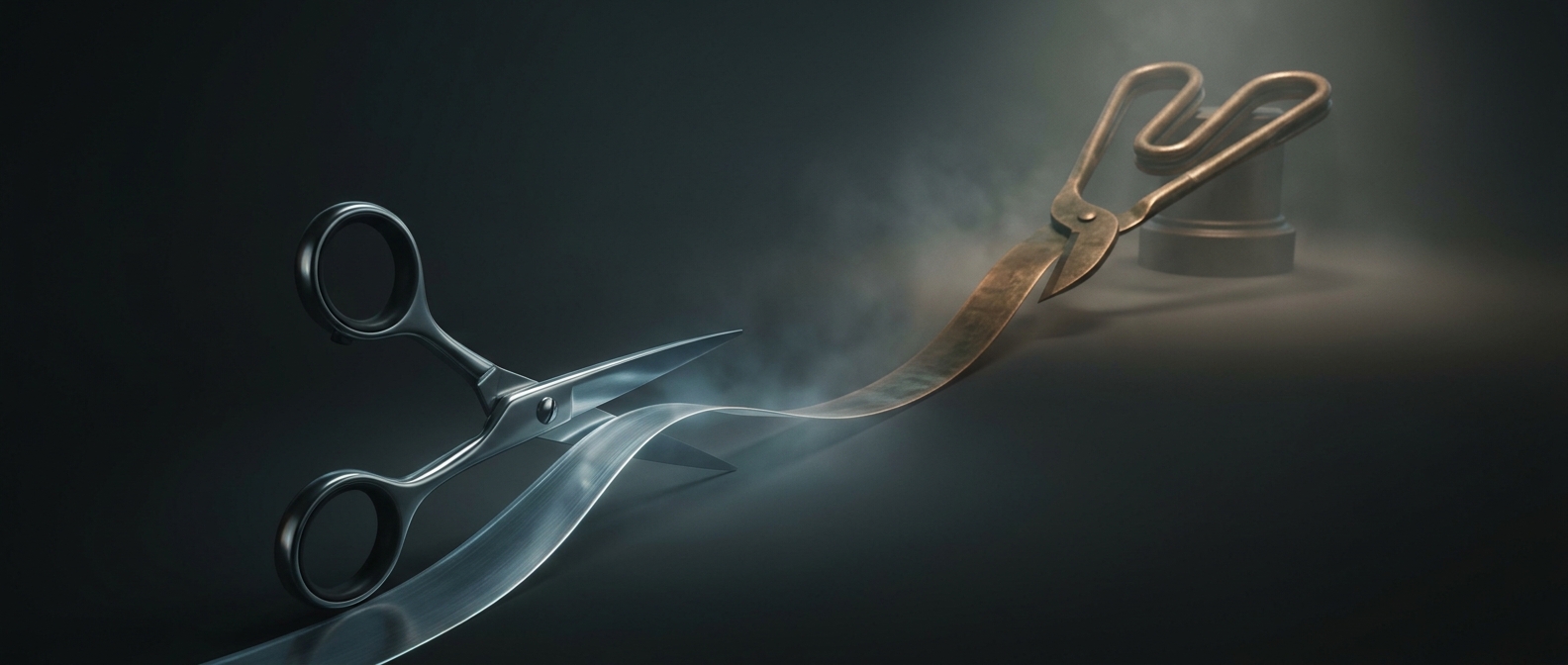
A steel blade is made and sharpened through a different process. Its metal structure can be ground into a cutting edge, but that edge is not shaped by a single clean fracture. The result is usually more resistant to damage, not necessarily finer at its very tip.
Why the finest edge is not always the best
Sharpness is only one part of a surgical blade’s performance. During an incision, a blade meets tissue that can resist, pull, or shift. If force concentrates on obsidian’s delicate edge, a tiny chip can form; under greater stress, the blade can break. Steel is less likely to fail that way, making toughness and predictability important in an operating room.
A microscopic edge may also matter differently depending on the task. A blade used for a controlled cut does not face the same demands as one that must tolerate repeated pressure or contact with harder material. The material’s advantage therefore comes with a narrow operating margin: the edge can be extraordinarily fine, but it must be handled gently.
That is the trade-off behind obsidian’s reputation. A sharper-looking or finer edge does not automatically make a safer instrument; in surgery, an edge that stays intact under real conditions can matter more than one that starts out finer.