A spring made the blades move as one piece
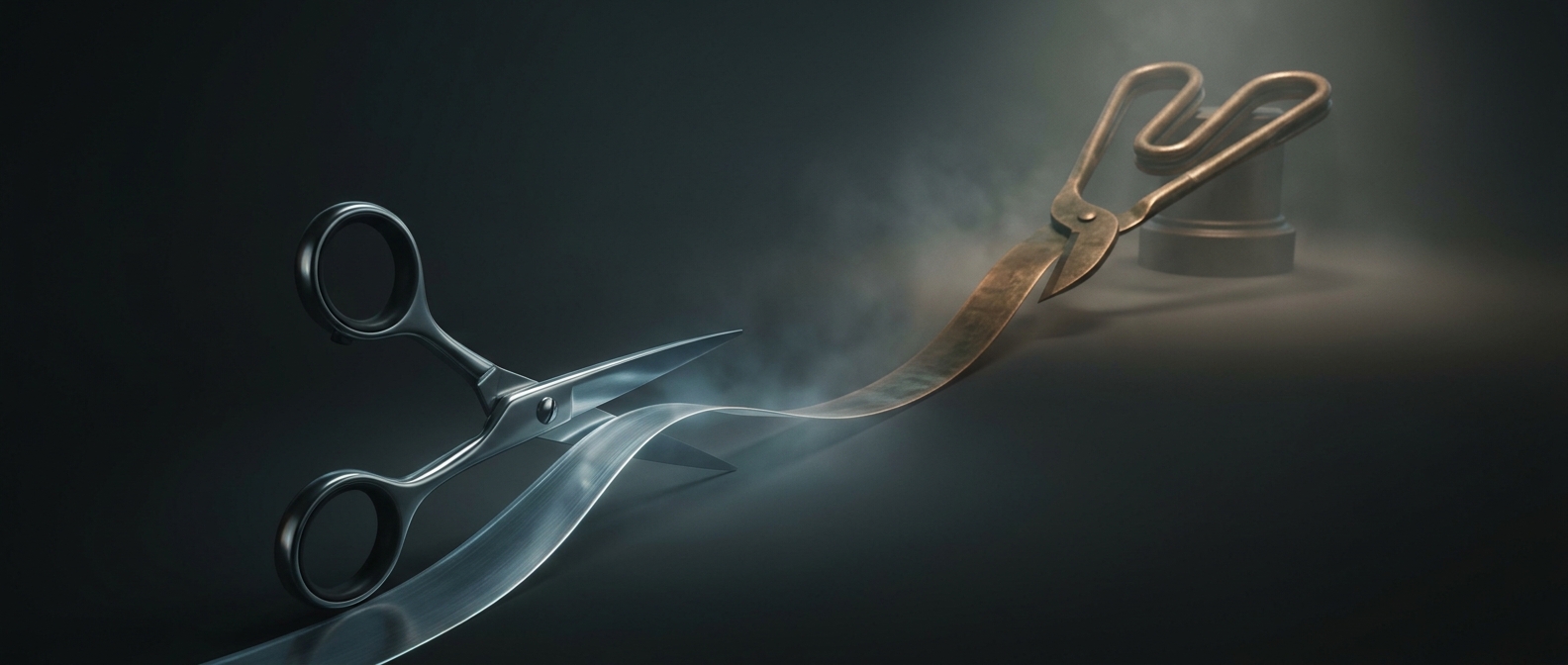
In an early spring design, the blades and the curved connector formed a single working unit. The bend stored energy when a user squeezed the handles, then released it to reopen the blades. That return motion mattered in repeated cutting: the user did not have to pull the blades apart by hand after every snip.
The cutting action depended on more than sharp edges. As the blades pressed together, their opposing edges forced material to separate. The spring supplied the opening motion, while the user supplied the closing force. This made the tool’s behavior direct and easy to feel: squeeze to cut, release to reset.
A different solution from a central pivot
A spring pair does not rotate around a screw between the blades. Instead, the curved bridge flexes, so the blades move toward and away from each other as the metal bends. That is a simpler arrangement in one sense, but it ties the tool’s opening and closing to the spring’s stiffness and the shape of the bend. Too little spring force would make the blades slow to reopen; too much would make them harder to squeeze.
The design shows how a small change in a tool’s structure can change the rhythm of work. Rather than manually resetting two separate arms, the user could let the bronze spring do that part—one squeeze and release at a time.