A removable bond finds another job
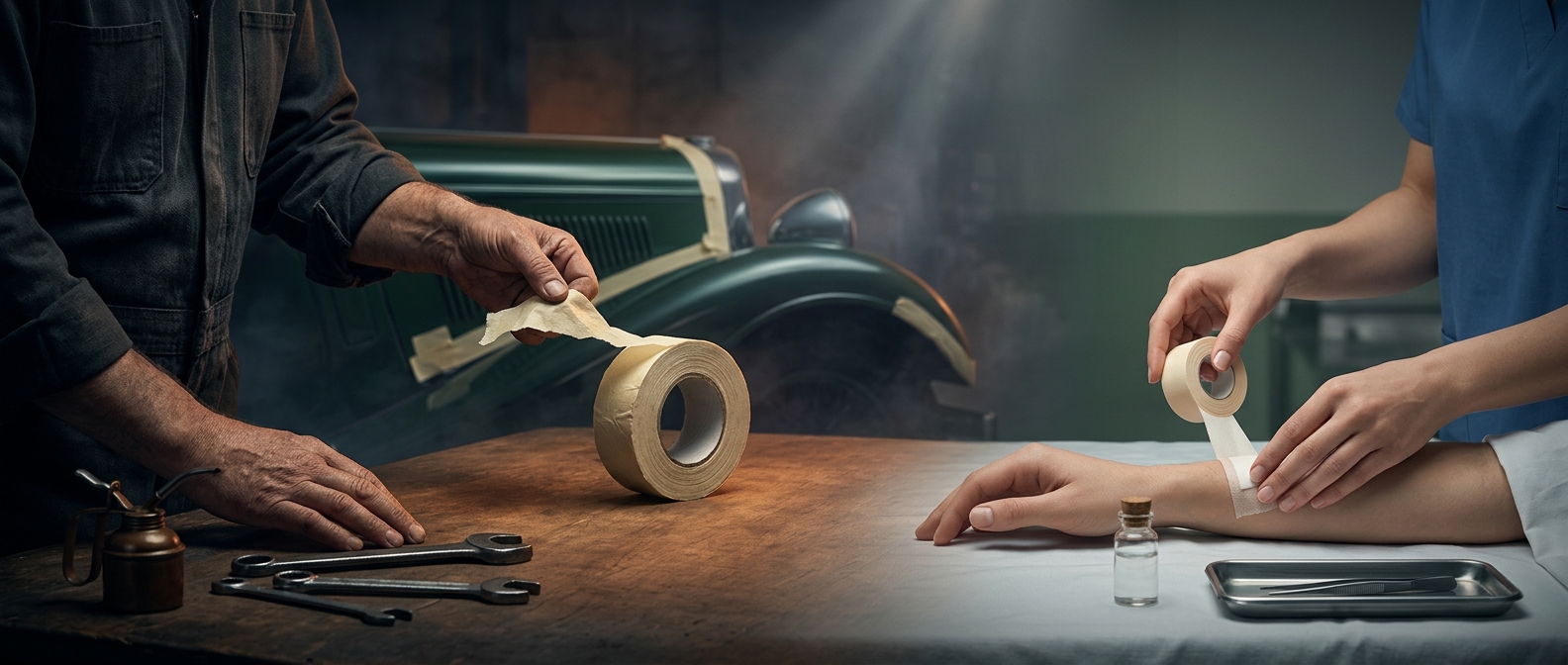
When a car is painted, masking tape holds a protective edge in place while paint is applied. It must stick firmly enough not to lift, yet come away without pulling off the finish or leaving a stubborn layer of glue. That practical challenge helped advance pressure-sensitive adhesives: glues that bond when pressed against a surface, without needing heat or water to activate them.
The same basic idea suits a bandage. Press adhesive tape onto skin and its tack helps hold gauze over a wound; peel it back and the bond should release without undue force. The useful connection is the design problem—secure attachment paired with clean removal—not necessarily one identical adhesive used on both cars and people.
Skin makes the problem more demanding
A painted panel is comparatively still and uniform. Skin bends, stretches, warms, and produces moisture, while the tape may need to stay put through ordinary movement. At the same time, removing it can tug at skin and hair. Medical tapes therefore have to balance holding power with gentler removal, and products vary in how well they suit different skin and uses.
A solution first refined around paintwork could thus inform a very different task: keeping a dressing in place without making removal another ordeal. The small engineering insight is that an adhesive’s value is not just how strongly it sticks, but how predictably it lets go.