Why the reading took so long
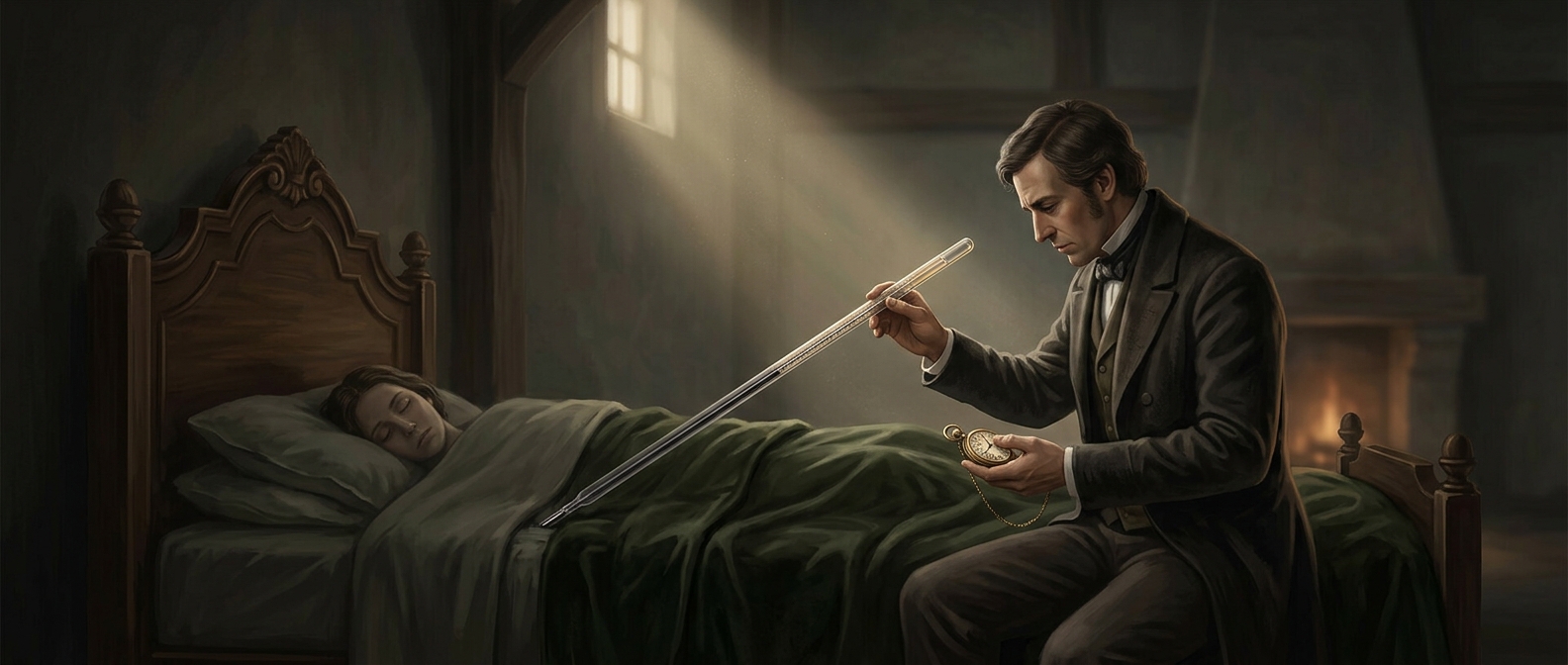
A glass thermometer does not measure body temperature instantly. Heat must pass from the patient into the thermometer, warming its glass and the liquid inside. As the liquid warms, it expands and climbs a narrow tube. The column needs time to approach the temperature of the body site being measured; reading it too early can give a misleading result.
The thermometer’s design made that wait especially noticeable. A narrow tube magnifies a small change in the liquid’s volume, making the temperature easier to read, but the instrument still responds only as quickly as heat can move through its materials. The patient had to keep the thermometer in place while that exchange caught up.
A measurement that demanded cooperation
That wait turned a simple check into a practical challenge. Any movement could shift the thermometer or interrupt contact with the body, while the glass itself could break if handled carelessly. Taking a temperature therefore depended not just on the instrument, but on a patient—often a child—remaining still long enough for the reading to settle.
Later thermometers shortened the process by changing how temperature was sensed and displayed. The contrast is easy to overlook: today, a temperature check can feel nearly instantaneous, but the old glass instrument required the patient to supply something its design could not—time.