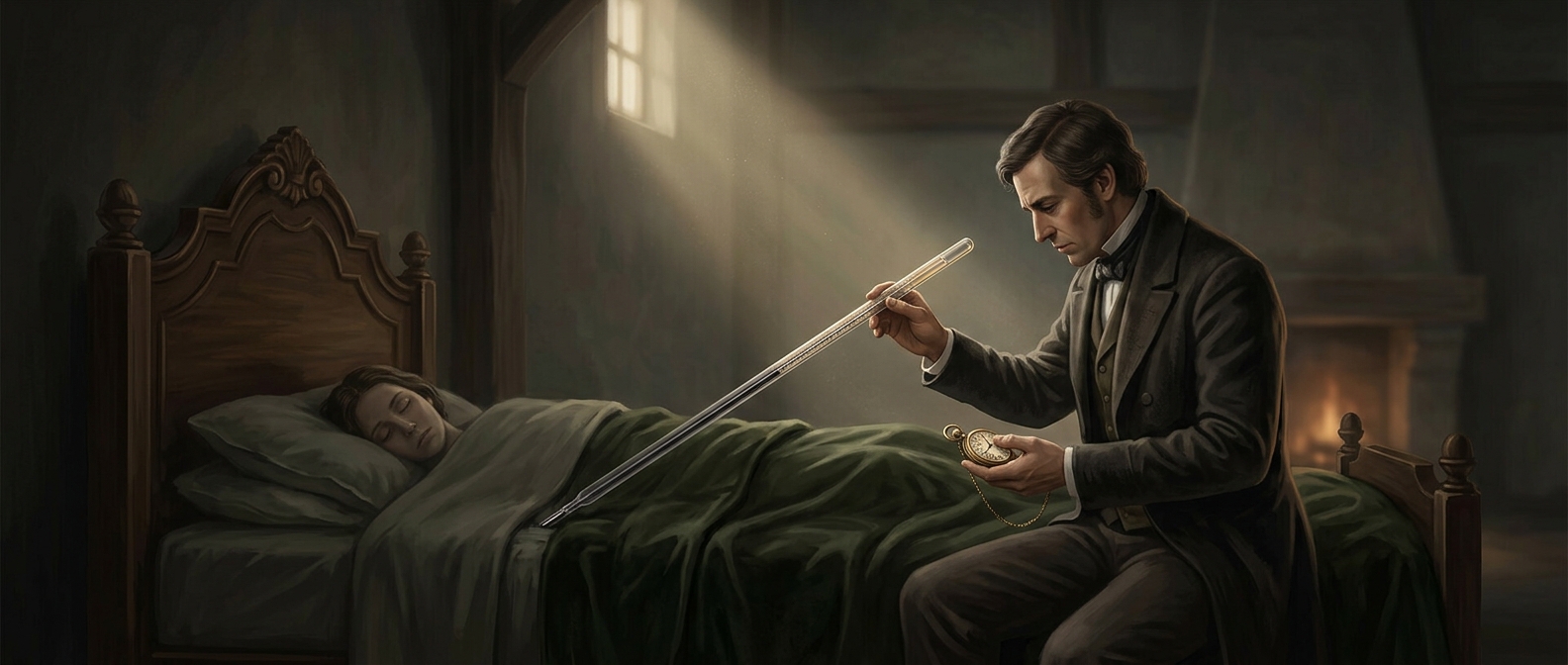
A feather could serve as the syringe’s tube
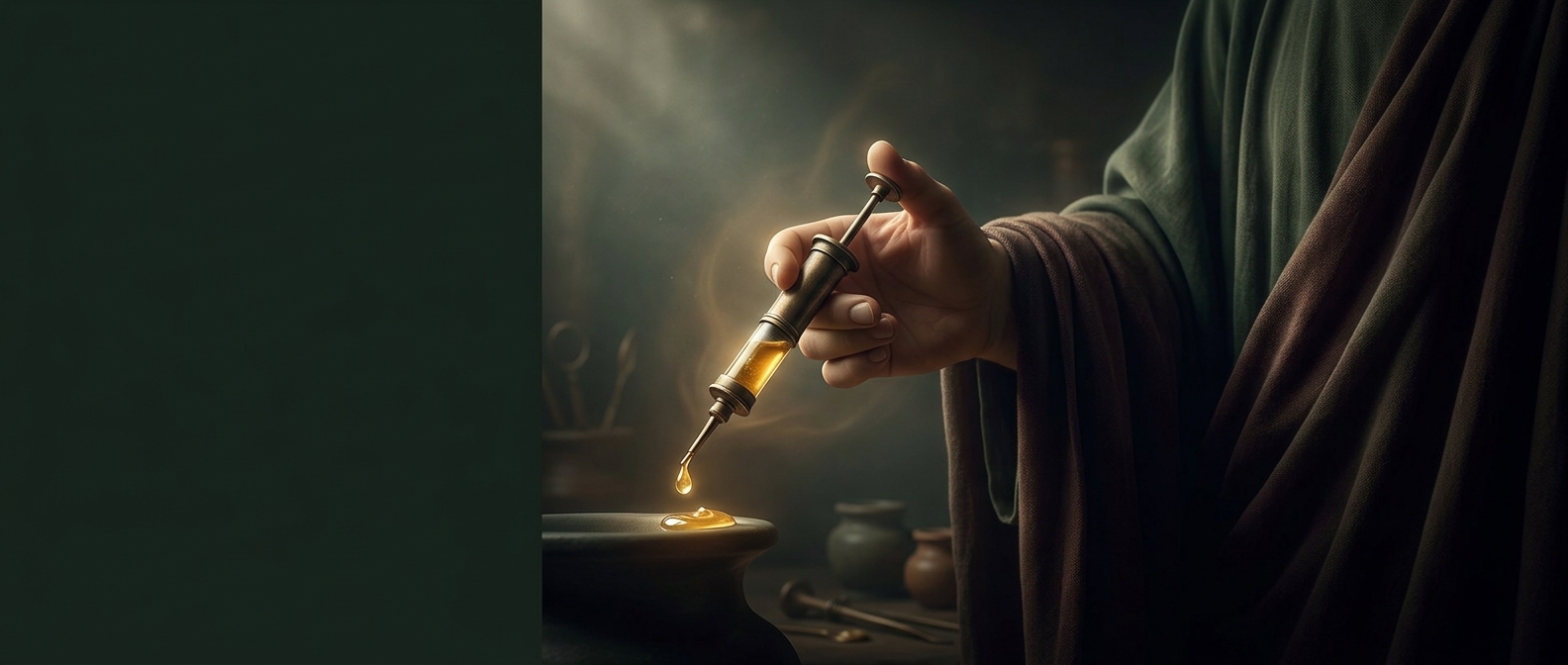
Before purpose-made metal hypodermic needles, an injector could assemble a crude delivery device from materials at hand. A hollow bird feather—its quill already shaped like a narrow tube—carried liquid toward the body. A small animal bladder served as a flexible reservoir: squeezing it created pressure that moved the substance through the quill.
The basic challenge was the same as in any syringe: hold a liquid, direct it through a narrow channel, and force it out. The bladder supplied the push, but it did not provide the rigid, precisely shaped point that later made it possible to pierce skin directly and predictably.
What metal changed
A hypodermic needle is a hollow metal tube with a sharpened tip. Its stiffness lets it enter tissue without collapsing, while its narrow opening guides liquid into the body. When metal needles appeared in 1853, they made the delivery end of the instrument more controlled and durable than an improvised feather tube.
That change was not merely a swap of materials. A flexible bladder and quill could move liquid, but reliable injection depended on the parts working together: a reservoir to create pressure, a channel to carry the dose, and a tip able to reach the intended tissue. The feather-and-bladder arrangement shows how early injectors solved the first two problems before the modern needle made the third far more practical.