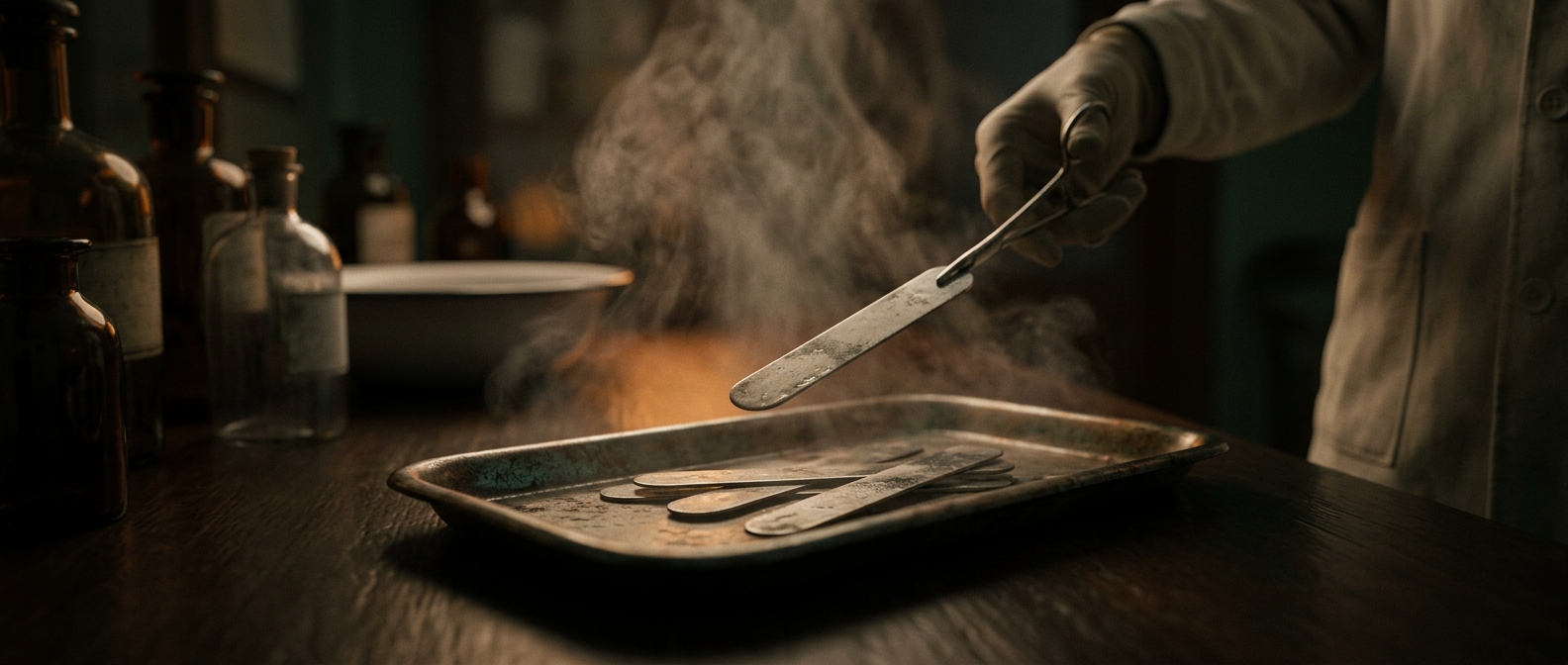
A rinse could clean a tool without making it safe
A tongue depressor touches the inside of a patient’s mouth, where saliva and tiny amounts of blood can carry microbes. Rinsing a metal or glass depressor could wash away visible residue, but clean-looking is not the same as disinfected: organisms can remain on a surface after debris is gone. Reusing the tool therefore depended on how thoroughly it was cleaned and, when needed, sterilized—a process designed to kill microbes, not merely remove what the eye can see.
Metal and glass could be cleaned for reuse because their smooth, durable surfaces could withstand repeated washing and heat treatment. But that required equipment, time, and a reliable routine between patients. A quick rinse alone could not guarantee that the next person would not be exposed to what the previous patient left behind.
Disposal changed the exam-room routine
A wooden depressor offered a simpler sequence: take a clean one for the examination, then discard it. Because it was intended for one patient, staff did not need to clean and reprocess it for another. The change shifted part of infection control from a repeated cleaning task to a straightforward rule about use and disposal.
That convenience also came with a tradeoff. Reusable metal and glass tools could make many trips through the exam room, while a disposable wooden one became waste after a single use. The small stick on the tray thus reflects a broader practical choice in care: whether to invest in reliably reprocessing a tool or avoid that risk by replacing it after each patient.