A simple tone became a bedside test
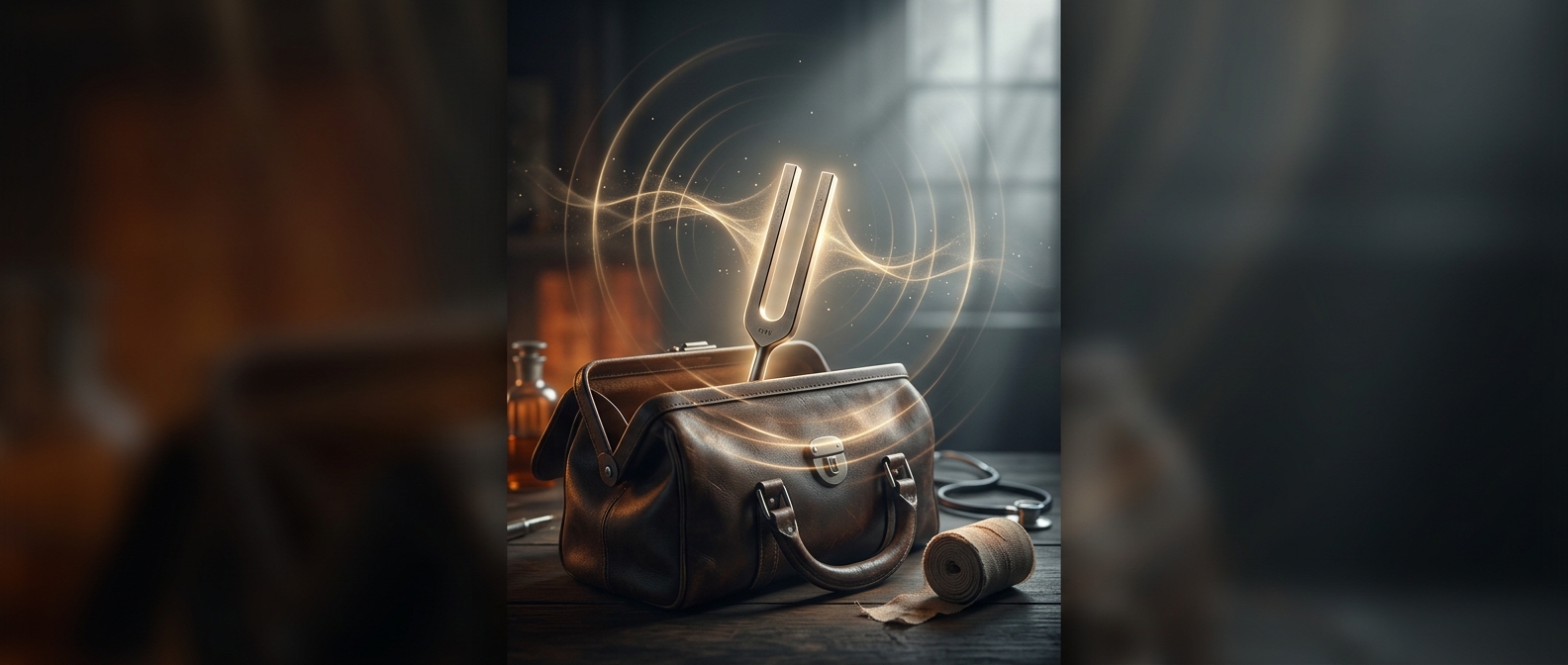
Before compact electronic hearing equipment was available, a tuning fork gave doctors a repeatable sound they could produce without a machine. Strike its prongs and they vibrate at a steady pitch. That made the fork useful not just for asking whether a patient could hear, but for comparing how sound reached the inner ear by different routes.
Air and bone carry sound differently
In a common comparison, a doctor would hold the vibrating fork near the ear, then place its base against the bone behind it. Sound near the ear travels through the air and ear canal; contact with the skull sends vibration through bone toward the inner ear. The patient reported which seemed louder, or when the sound faded. These bedside checks—known as the Rinne and Weber tests—could help distinguish problems in the outer or middle ear from problems involving the inner ear or hearing nerve.
The same basic idea also let clinicians check vibration sensation: with the fork’s base resting on a bony spot, a patient could say whether the buzzing was felt and when it stopped. That offered a quick clue about how well sensory nerves were carrying signals.
A useful clue, not a complete diagnosis
A tuning fork could not measure hearing with the precision of modern audiology equipment, and the results depended on the patient’s responses and the clinician’s technique. Its strength was immediacy: one small vibrating instrument let a doctor compare sound pathways—or test a sensory response—right at the bedside.