From stored heat to controlled heat
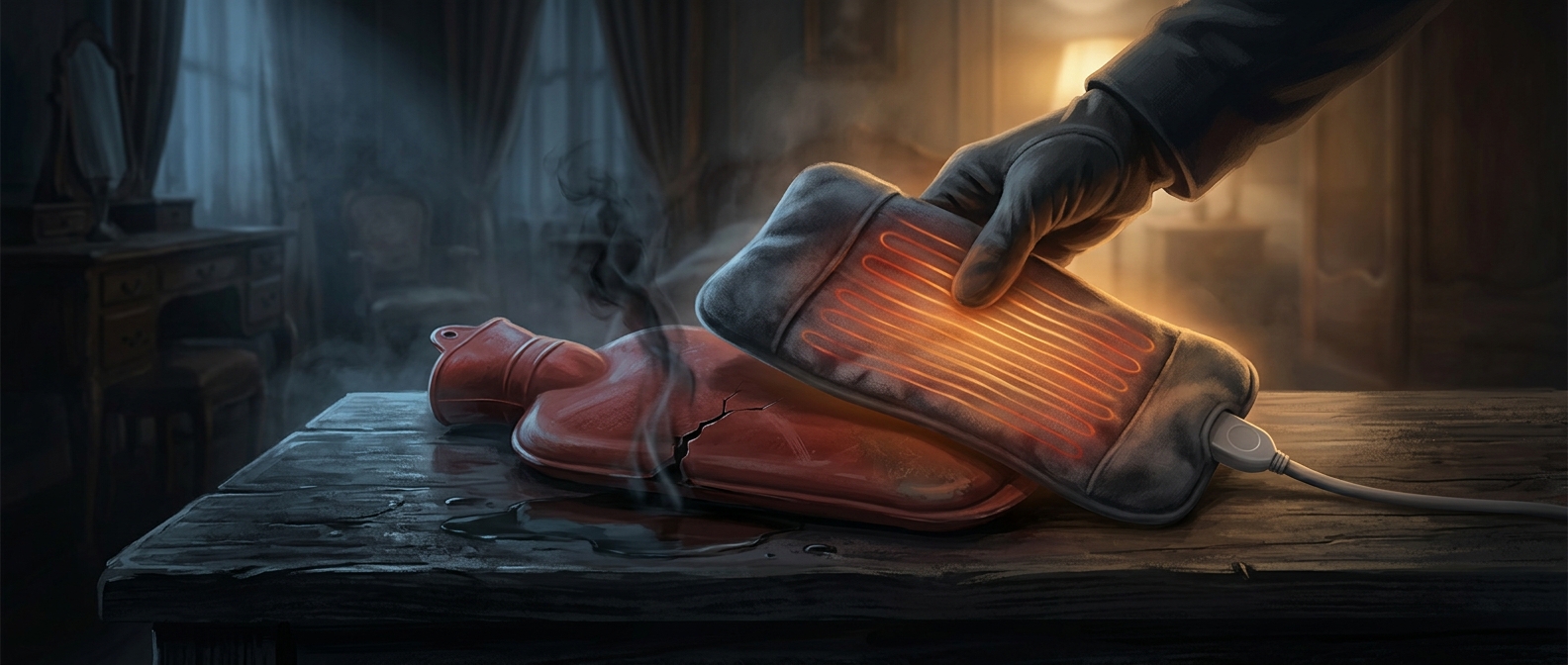
A hot-water bottle is a heat reservoir: it absorbs warmth when filled, then gradually releases it into the bed. An electric heating pad works differently. Current passes through a resistance wire inside the pad, and the wire converts electrical energy into heat across a broad, flexible surface. Instead of carrying a supply of hot water to bed, the pad can keep producing warmth while it is plugged in.
That shift made warmth easier to adjust and reposition. A bottle’s temperature falls as it cools, while a pad’s output can be regulated by its control. The heat also spreads through fabric rather than concentrating around one water-filled container. These differences made electric pads a practical alternative for warming a bed or easing localized aches.
A new hazard, not no hazard
Removing near-boiling water eliminated the particular danger of a bottle leaking or bursting against the sleeper. But electric heat introduced its own risks: a pad left on too long, folded so heat cannot escape, or used against skin that cannot sense heat normally can cause burns. Modern pads commonly include temperature controls and may include automatic shutoffs, but they still need to be used as directed.
The change was therefore more than swapping one warming object for another. It replaced a batch of stored heat with a controllable source—and moved the main safety concern from a container of scalding water to managing sustained electrical heat.