One vibration, two kinds of information
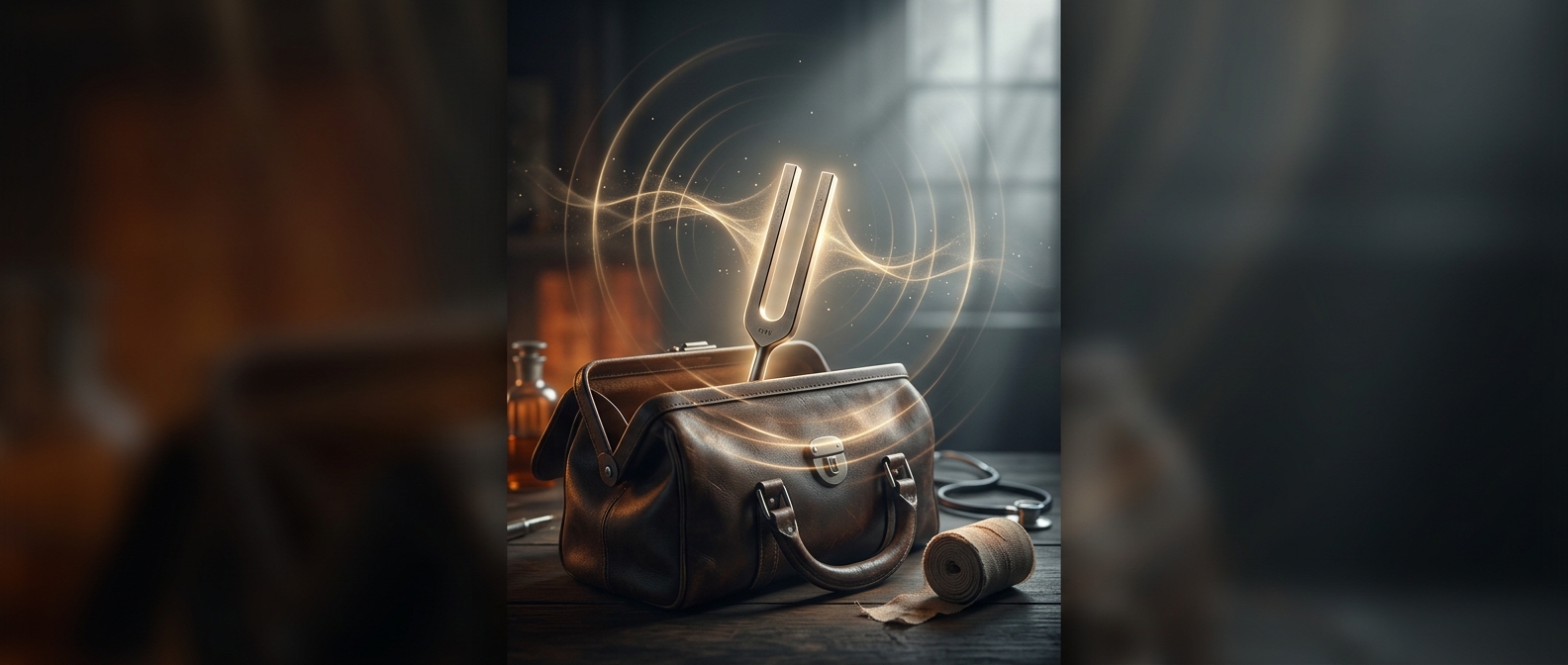
A tuning fork produces a tone while its metal tines are still moving. That makes it useful for checking two different sensory pathways at the bedside: hearing and the body’s ability to feel vibration. The clinician strikes the fork, then places its base on a bony spot or holds it near the ear, depending on what is being assessed.
For a vibration-sense check, the fork’s base may be set against a bone, such as near the ankle or wrist. The patient says when the buzzing begins and when it fades. Comparing responses at different places—and with the clinician’s own sense of when the vibration stops—can help reveal reduced sensation. This matters because vibration signals travel through nerves that can be affected by some nerve disorders.
Comparing sound through air and bone
For a basic hearing check, the clinician can compare how long a tone is heard beside the ear with how long it is heard when the fork is placed on the skull behind the ear. Sound beside the ear travels mainly through the ear canal and middle ear; sound delivered through the skull reaches the inner ear by a different route. The comparison can help distinguish problems affecting sound transmission from problems involving the inner ear or hearing nerve.
Another bedside maneuver places the vibrating fork on the center of the forehead and asks whether the tone seems louder in one ear. Together, these simple comparisons can help a clinician decide what kind of hearing problem to investigate. They do not provide a complete hearing measurement, but they turn an otherwise invisible vibration into something a patient can hear or feel—and report.