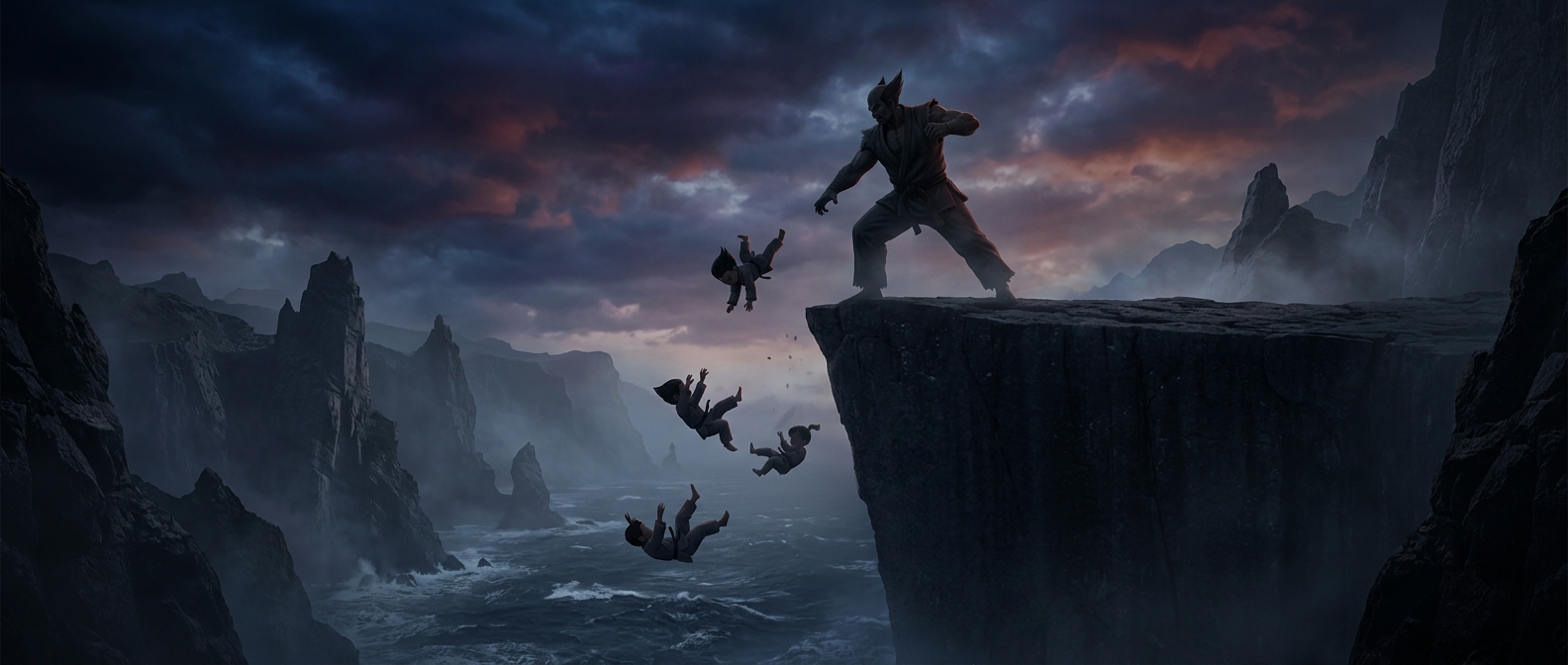
A Family Feud Built Around the Cliff Edge
Heihachi Mishima’s most infamous act of parenting is also the origin of his son Kazuya’s hatred of him: when Kazuya was a child, Heihachi hurled him down a ravine. The test was brutally simple—if the boy could climb back up, Heihachi would consider him strong enough to inherit the Mishima family’s power.
That episode turns a family relationship into a contest with a physical finish line. Kazuya survives, but the ordeal does not earn him affection or trust. It gives him a reason to treat his father as an enemy, setting the emotional stakes for their repeated battles.
Why the Story Keeps Returning to the Mishimas
Tekken is a fighting game, so its plot must repeatedly bring characters into combat. The Mishima feud makes those matches personal: when Heihachi and Kazuya face each other, the fight is not just a tournament bout but another chapter in a conflict that began in childhood. Each new installment can revisit the same rivalry while changing who has the upper hand.
The cliff incident also establishes Heihachi’s idea of strength through action rather than explanation. He does not merely demand that Kazuya become tough; he places his son in a life-threatening situation and makes survival the measure of worth. That extreme standard helps explain why the family’s conflicts escalate instead of resolving through reconciliation.
The result is a saga in which a father’s test becomes a son’s defining grievance—and a childhood fall keeps echoing in the next generation of fights.