How a modern rune-reading system took shape
Ralph Blum’s 1982 book did more than invite readers to look at old symbols: it organized them into a ready-to-use method for divination. The symbols themselves were ancient, but Blum gave each one a distinct mystical meaning and explained how to draw and interpret them as answers to personal questions. That framework helped turn runes from a historical writing system into a familiar fortune-telling practice.
The blank stone that became part of the set
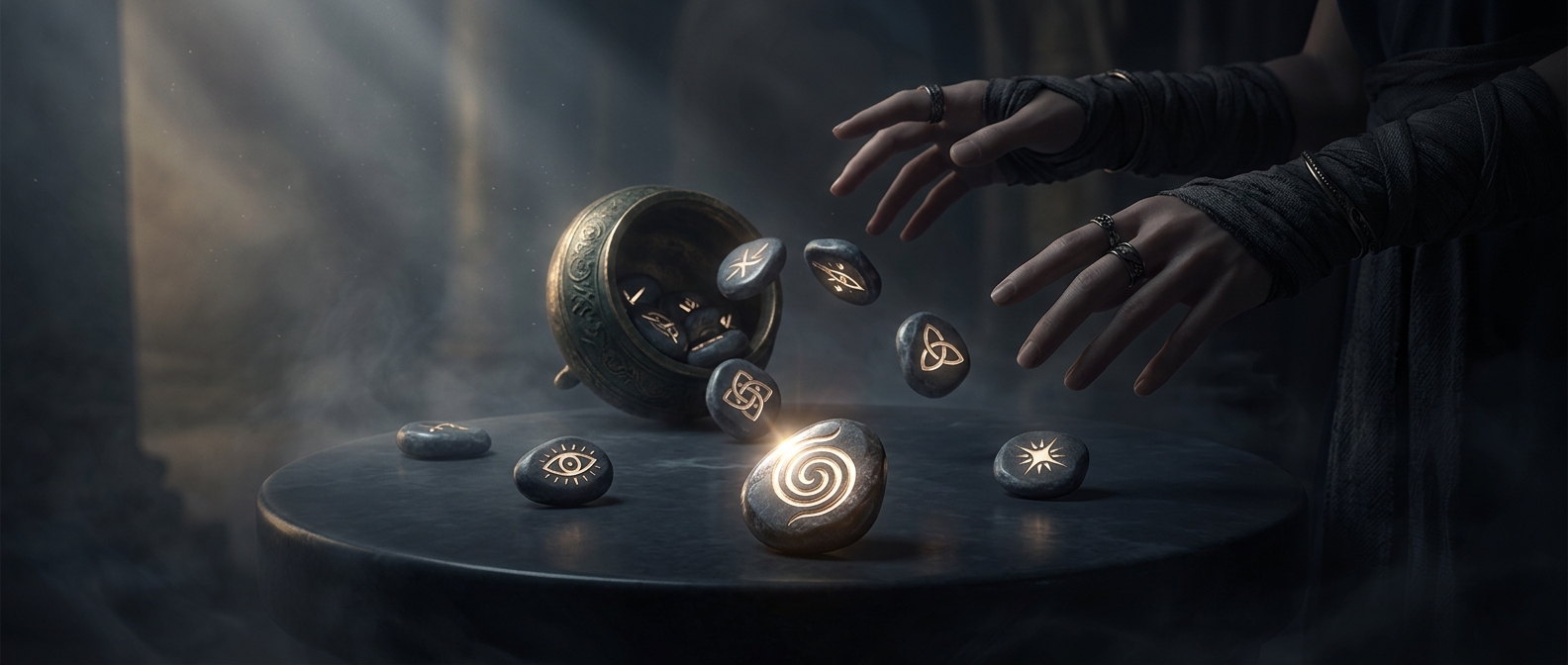
Blum’s system also included a blank rune, a stone with no symbol on it. The idea reportedly came from a blank stone in the set he was using. Rather than treat it as a stray piece, the book gave it a role in readings, making absence itself something a reader could interpret.
That detail captures how modern divination systems can form: an existing set of symbols is given a new interpretive structure, and even an accidental feature can become meaningful within it. The modern practice is not simply an unchanged Viking custom; it is a later system built around ancient symbols.