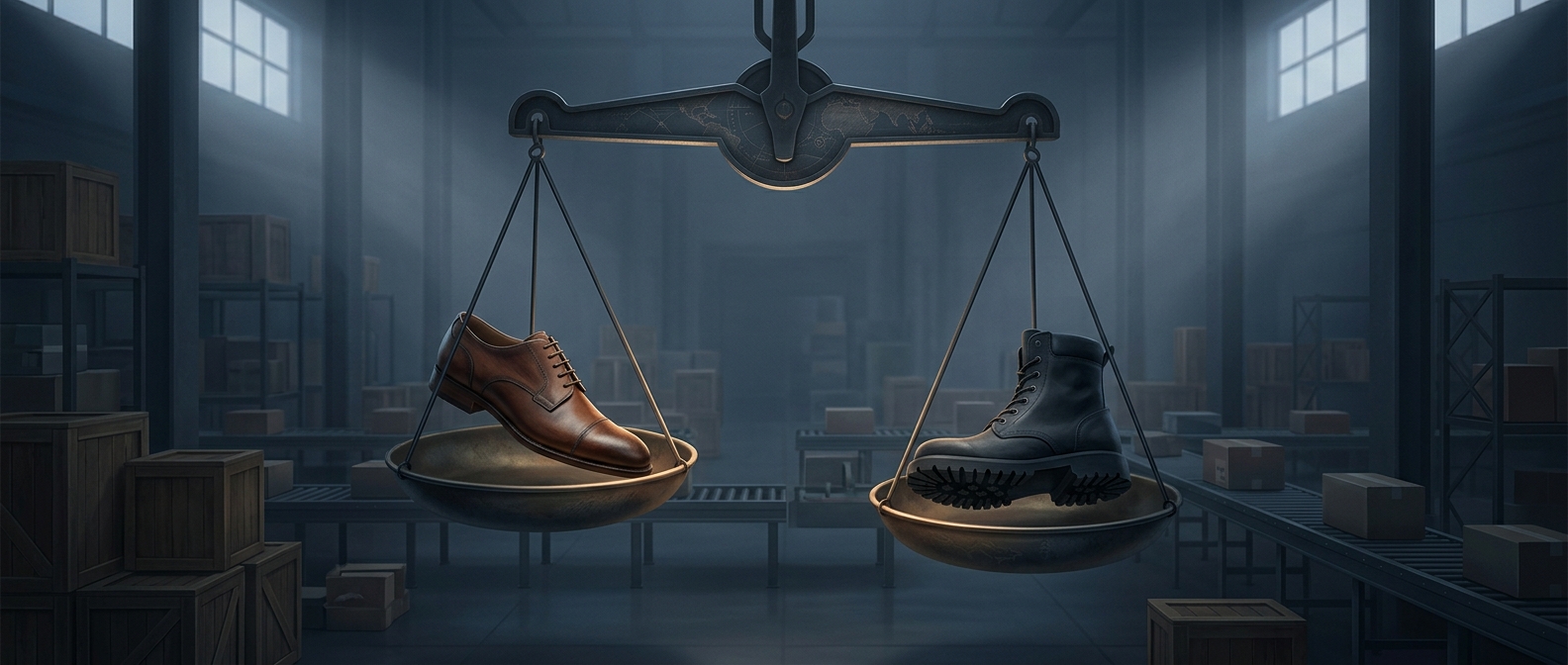
A small material change can alter a shoe’s tariff identity
Import duties are not always charged at one flat rate for every shoe. Customs schedules divide goods into categories, and footwear may be classified according to details such as the material making up its outer sole or upper. Those categories can carry different rates.
That makes a shoe’s construction economically important. A thin layer added to the bottom can change which material is treated as the defining sole material under the applicable classification rules. The shoe may look nearly identical to a shopper, yet customs may place it in a different tariff category.
The calculation happens before the shipment arrives
A footwear importer can compare the cost of changing the design with the potential duty reduction across the quantity it expects to bring in. If the added layer costs little per pair and the lower rate applies to many pairs, the savings can outweigh the extra material and manufacturing work. If not, the redesign makes no financial sense.
This is a form of tariff engineering: designing a product to qualify for a more favorable classification, rather than merely changing paperwork after it is made. The change has to be real, and the product still has to meet the rules for the category claimed. A material description on an invoice cannot, by itself, turn one construction into another.
Why the detail matters beyond the factory
The incentive can influence which materials a supplier buys, how a sole is assembled, and which version of a shoe an importer chooses to sell in a particular market. A seemingly minor layer can therefore affect costs throughout a supply chain—and may be added for its customs treatment as much as for how the shoe feels or wears.
The key is that tariff classification follows the product’s specified construction, not simply its appearance. On a pair of shoes, a sliver of material can have consequences that are invisible on the shelf but substantial across a large order.