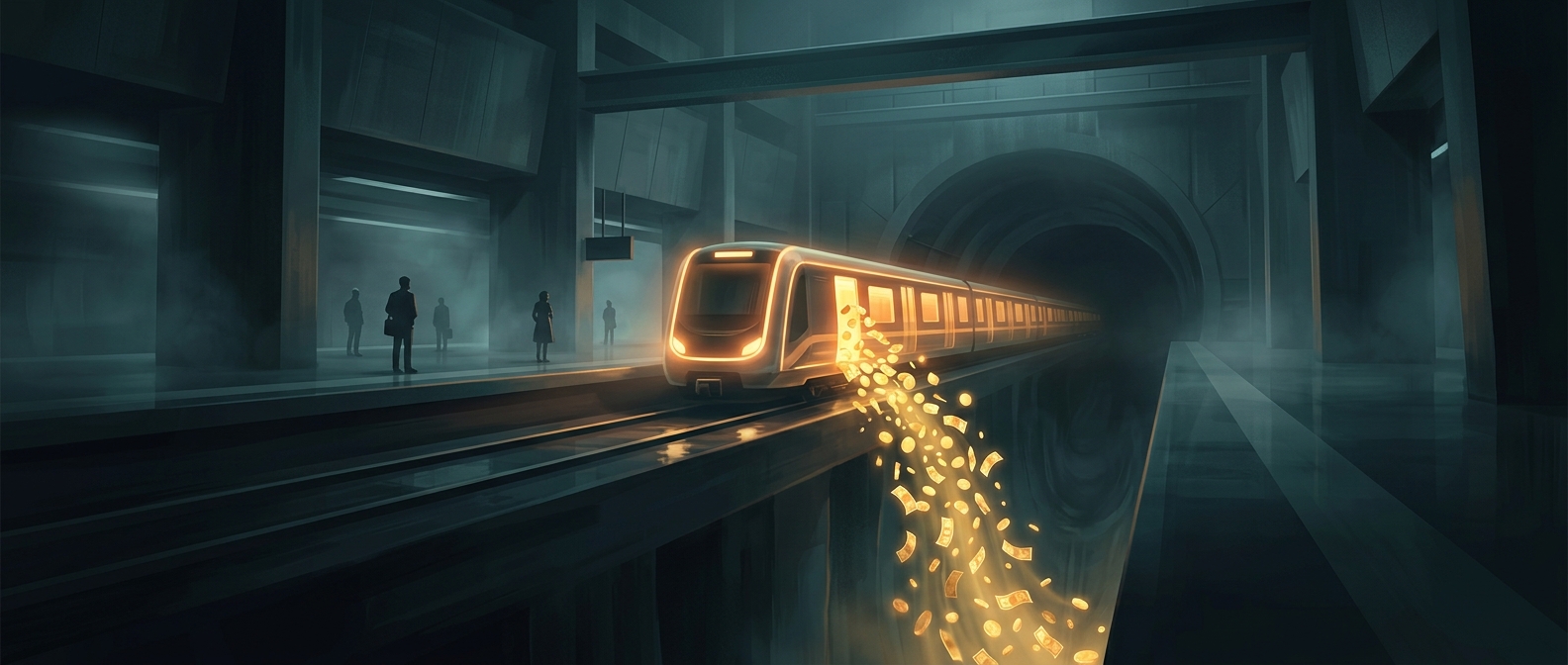
Why a busy subway can still run a deficit
A subway’s economics are shaped by a mismatch between large fixed costs and relatively small costs per additional rider. Fixed costs—such as maintaining tunnels, signals, stations, and trains—remain even when a train is nearly empty. Once a train is already running, carrying another passenger usually costs much less than building and operating the system in the first place.
That can make a full train look successful without making the network self-financing. Fare revenue rises with ridership, but it must help support infrastructure that was built to serve a whole city, including routes and hours that may be valuable even when they are not crowded.
The benefits do not all show up at the fare gate
A subway can also save people and businesses costs that the transit agency never collects. Riders may reach jobs without buying a car; fewer car trips can ease road congestion; and reliable access to stations can make nearby neighborhoods more useful to residents and employers. These gains are spread across the city, rather than captured as ticket sales.
This creates a public-finance tradeoff: if the system had to recover every expense from fares, tickets would need to be higher, service could be cut, or both. Higher fares might push some riders back toward cars or keep them from traveling, reducing the wider benefits the network is meant to provide. Public support helps pay for those benefits while keeping access broader.
The result is that a subway’s success is not measured only by whether its farebox balances. It is also measured by how much useful movement the city gets from the network—and whether that movement is worth supporting collectively.