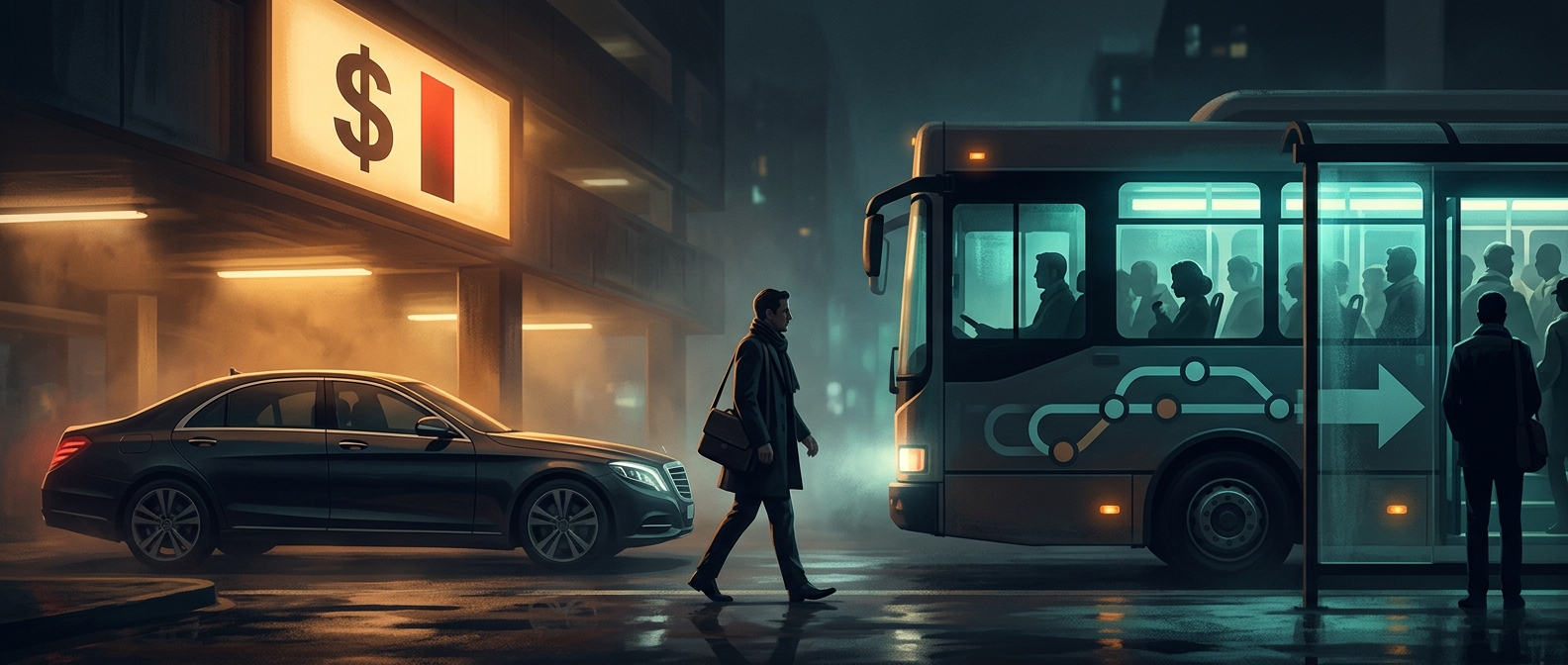
When Parking Becomes Part of the Commute’s Price
A commute by car costs more than fuel. In a city, the parking space at the destination can be a recurring expense—and one that is hard to avoid if an employer, building, or neighborhood offers little free parking. When that daily charge grows large enough, it changes the arithmetic of getting to work.
The Choice Is About the Whole Trip
Commuters compare the cost and inconvenience of the alternatives, not just the price of a bus ticket. Driving may mean paying for parking as well as fuel, while taking the bus may require a walk, a transfer, or extra time. A bus becomes attractive when its fare is lower than the parking cost it replaces and the added trip time or hassle is manageable.
That tradeoff can favor transit even for someone who prefers driving. The decision does not require the bus to be faster or more comfortable; it only has to be the less costly workable option. For regular commuters, a fee paid day after day can weigh more heavily than a single, occasional charge.
How Parking Prices Shape Travel
Parking prices also make drivers bear more of the cost of scarce space. A convenient spot near work is limited, and charging for it can prompt some people to seek another way to travel rather than compete for that space. The result is a personal budget decision with a wider effect: each commuter who switches may mean one fewer car seeking a place to park.
The practical tipping point is simple: when the parking bill is large enough to outweigh the bus’s inconvenience, the route to work changes.