Why a recycling load has a price tag before it has a buyer
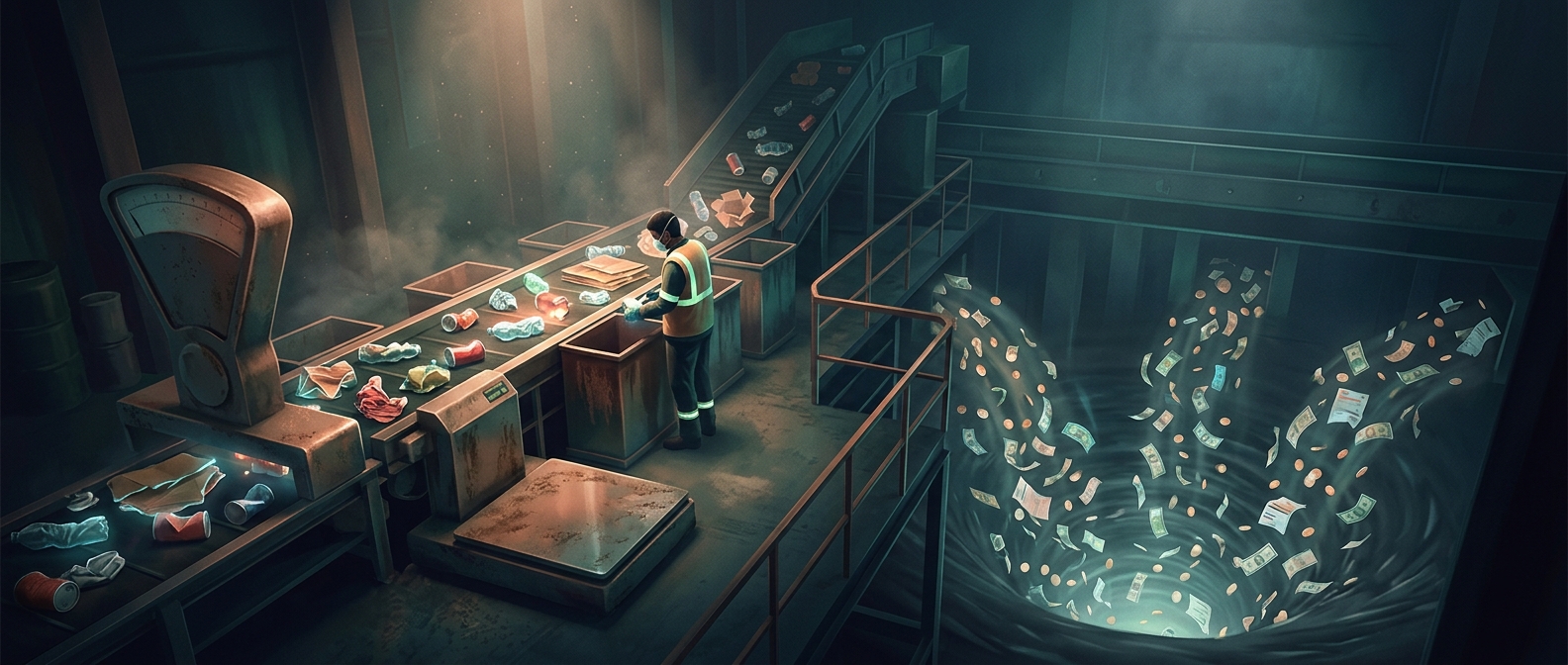
Recycling is not a single act of putting a bin at the curb. A city must collect the material, bring it to a sorting facility, separate paper, metals, glass, and plastics, and ship usable batches to manufacturers. Each step takes labor, equipment, fuel, and space. The resulting material is a commodity: its sale price shifts with demand, and buyers may pay little when supply is abundant or manufacturing demand is weak.
Sorting also determines what can be sold. Food residue, plastic bags, and items made from mixed materials can contaminate a load or slow the equipment. If a batch fails a buyer’s quality requirements, the city may have to pay to dispose of it instead of earning revenue from it.
The budget comparison is not the whole choice
A city weighing its recycling program against disposal has to compare more than sale proceeds with collection costs. Landfilling also costs money, and the comparison depends on local contracts, distance to facilities, and what kinds of materials residents put out. A program can therefore be expensive in one place and more workable in another, even when both collect similar items.
There can also be benefits that do not appear as a check from a materials buyer, such as using less new raw material. Those benefits may matter to residents and policymakers, but they do not automatically pay the city’s recycling bill. The central budget problem is a mismatch: the public system pays to recover materials, while the market decides what those materials are worth. That is why cleaner sorting and steady demand can matter as much as the act of collecting more.