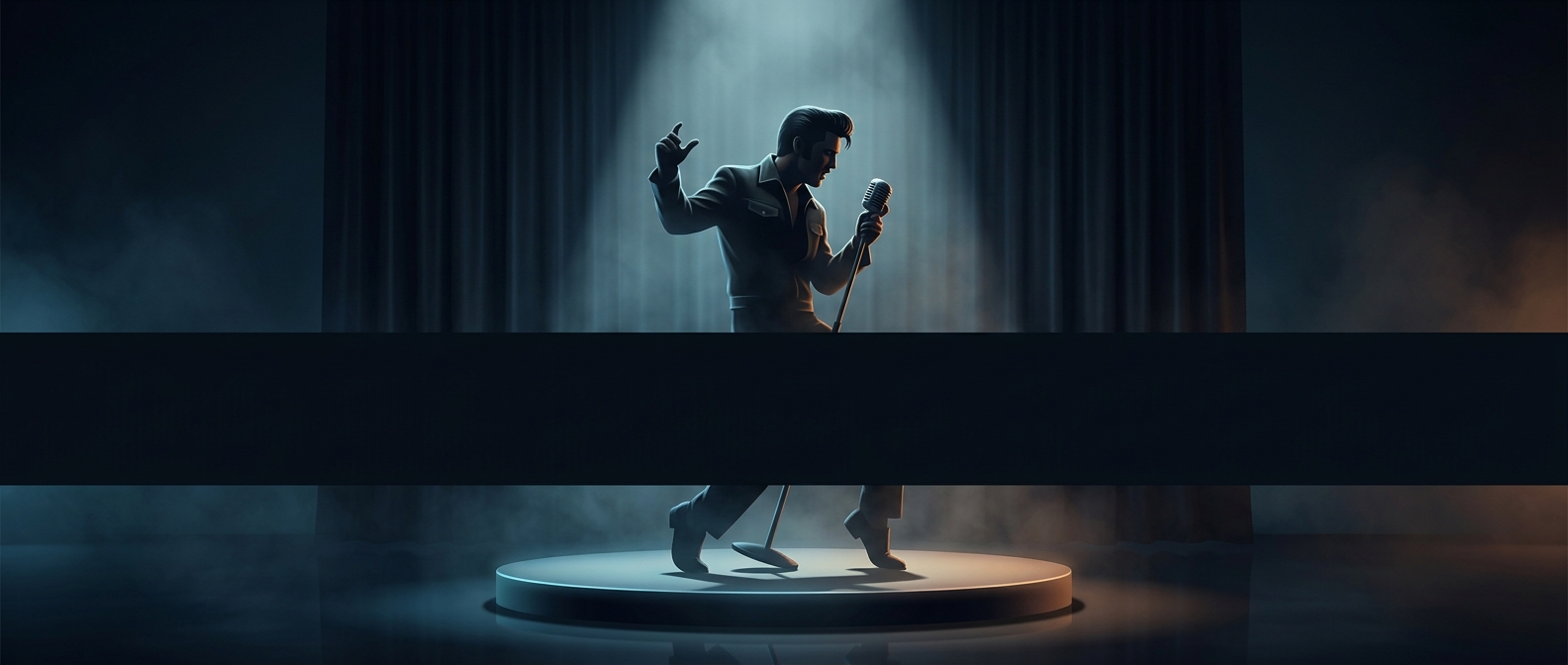
A camera angle became the compromise
Elvis Presley’s movements were not hidden because the network could not show a rock-and-roll performance at all. The concern was more specific: his swiveling hips and sharp leg movements struck television censors as sexually suggestive, especially on a program watched by families. Rather than remove him from the broadcast, the show limited what viewers could see.
That distinction mattered. A waist-up shot still showed Presley singing, playing guitar, and moving with the music, but it cropped out the gestures that had drawn the objections. The restriction turned camera framing into a form of censorship: the performance continued, while the broadcast presented a carefully narrowed view of it.
The restriction made the performance more conspicuous
The rule applied to Presley’s third appearance on The Ed Sullivan Show, after his earlier appearances had already brought his stage movements to national attention. The episode was hosted by Charles Laughton while Sullivan was recovering from an accident. Viewers could still hear the songs and watch Presley’s upper-body performance; the camera simply refused to follow him below the waist.
That partial view carried its own message. Television could accommodate the new music, but only by drawing a visible boundary around how its star was allowed to perform. The censorship did not stop the spectacle; it made the missing half of the image part of it.