Why railway leather fails
A train seat is a punishing environment for leather. Repeated pressure bends and rubs the surface; body heat and grime add stress, while drying can leave the material stiff and prone to cracks. Leather is made from a network of collagen fibers. When that network loses flexibility, ordinary use can turn small surface damage into upholstery that seems ready to discard.
A repair aimed at the material, not the seat
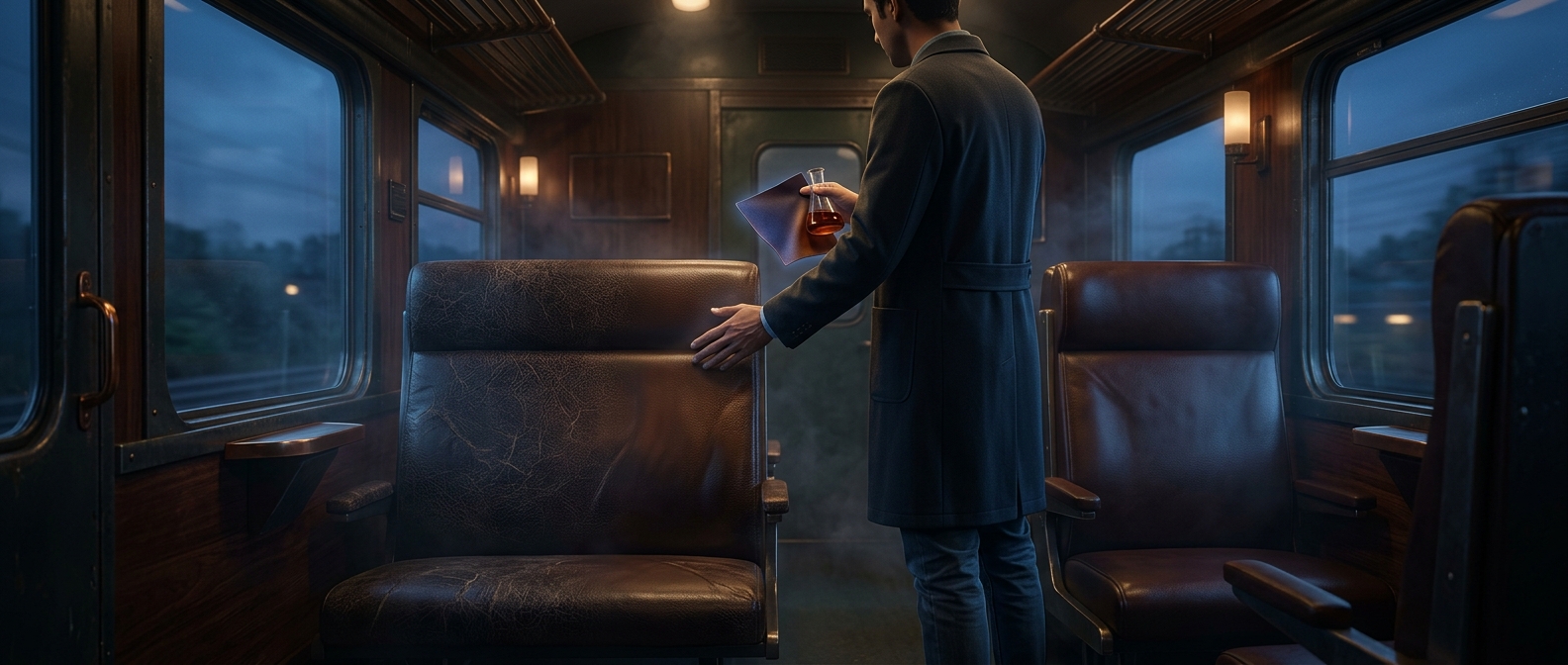
A leather chemist approached the problem as a materials issue. Leather treatments can help restore suppleness by conditioning the fiber structure, making it more able to flex instead of splitting under pressure. The reported treatment brought worn railway-seat leather back into service, avoiding replacement of the affected upholstery.
The account does not specify the treatment’s ingredients or exact procedure, so its value is best understood through the practical result: specialist knowledge changed the choice from replacing damaged seats to trying to restore them. On a railway, where seats endure constant use, extending the life of upholstery means less material sent to the scrap heap—and fewer seats needing to be replaced.