When a coating became a sheet
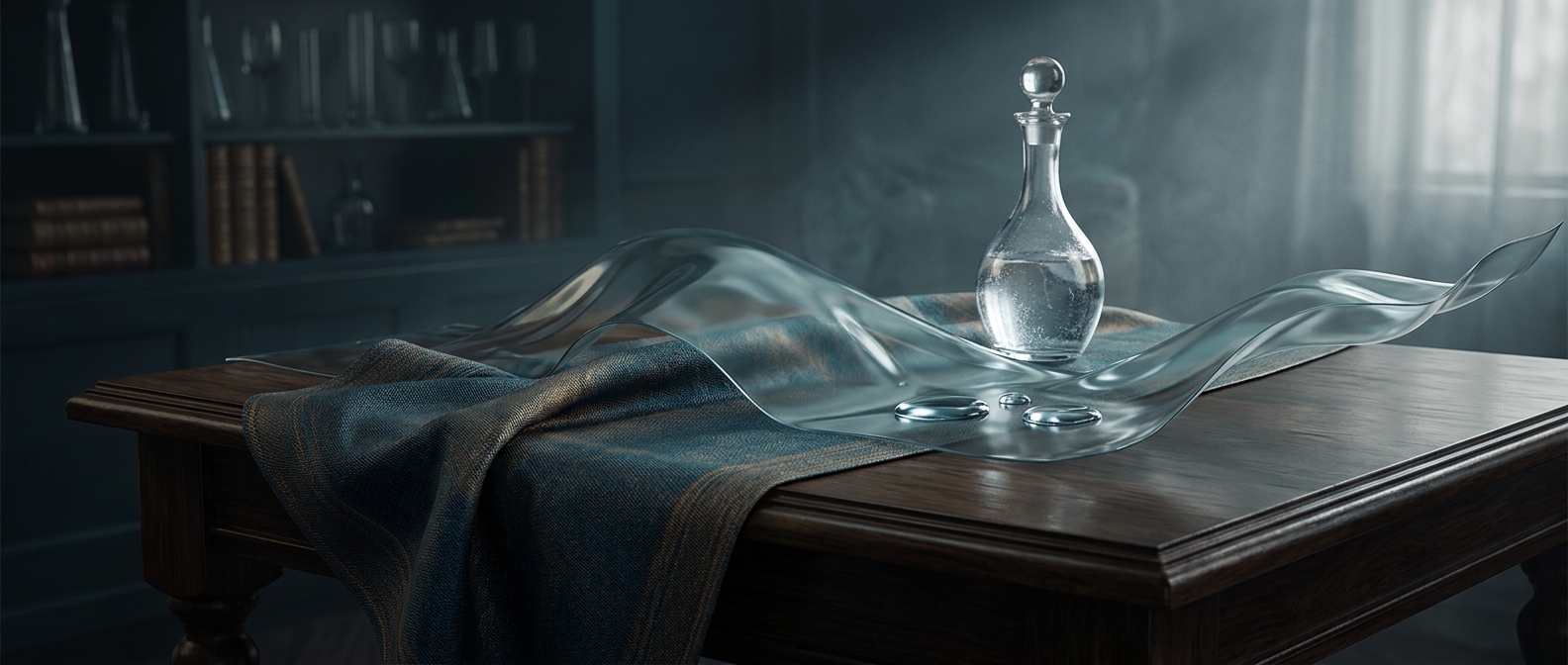
A tablecloth coating has to stay attached to fabric and bend with it. The transparent layer developed for that purpose did neither: as it dried, it became brittle and could peel away in sheets. That made it a poor finish for cloth—but revealed a useful property. The material could form a thin, separate film of its own.
Cellophane is made from cellulose, the structural material in plant cell walls. In production, cellulose is processed into a form that can be spread or shaped, then treated so it becomes a solid film again. The key change was not making the coating more flexible on the tablecloth. It was treating the freestanding sheet as the product.
A new job for a failed experiment
A tablecloth is a large surface that must tolerate folds, spills, and repeated handling. A wrapper has a different task: it needs to enclose an object and let people see what is inside. A brittle sheet that failed as a durable fabric finish could still be useful when wrapped around goods rather than stretched over furniture.
That shift in purpose helped make cellophane a packaging material. Its transparency turned the wrapper into part of the display, while its continuous film separated the contents from direct contact with the outside. The experiment’s failure mattered because it exposed a different form the material could take—and a different problem that form could solve.