Why a failed medicine experiment turned purple
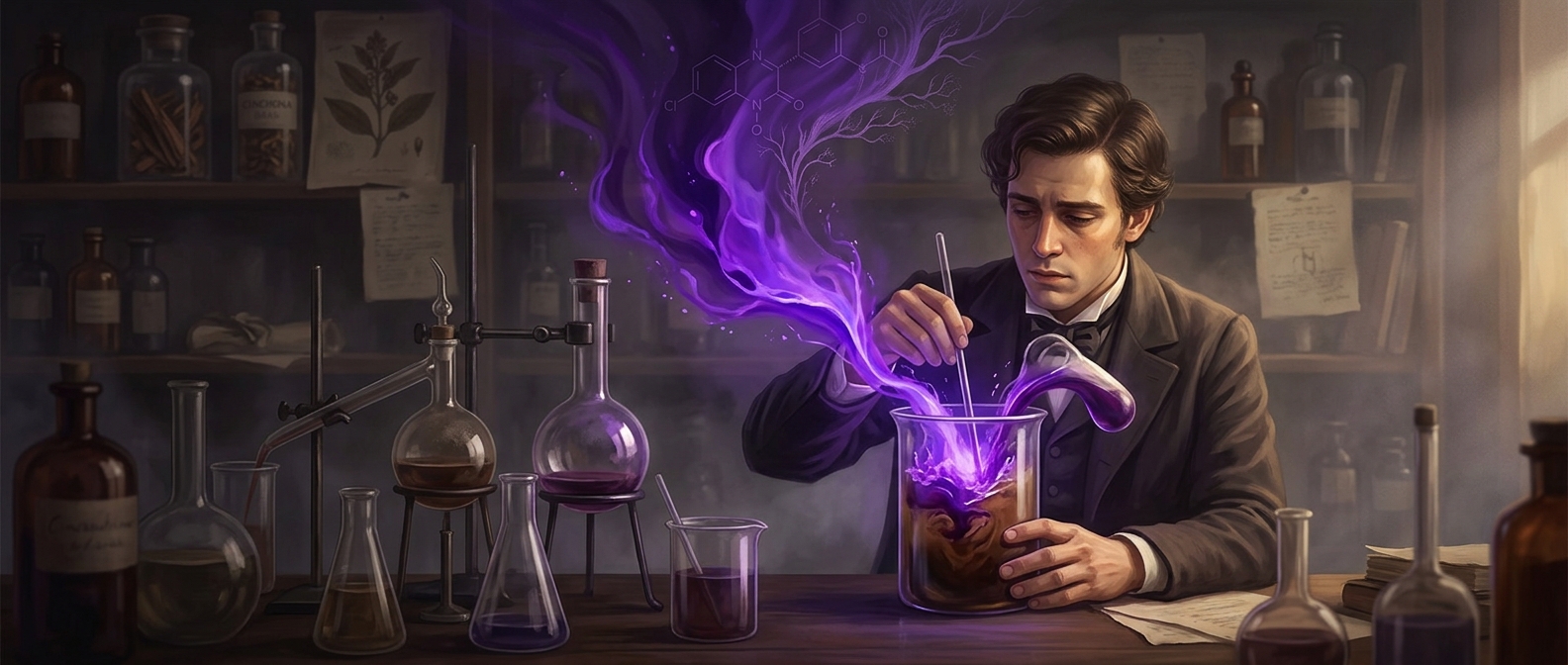
In 1856, chemist William Henry Perkin was trying to make quinine, a medicine used against malaria, from coal-tar chemicals. His experiment did not produce quinine. Instead, it left a dark residue that stained fabric a vivid purple when he tested it. The color came from a mixture of synthetic compounds later known as mauveine.
That accidental result mattered because a dye had to do more than look bright in a glass. It needed to cling to cloth and survive washing and light. Perkin’s discovery pointed toward a color that could be made from industrial chemicals rather than extracted from scarce natural sources.
From laboratory stain to wearable color
For centuries, deep purple had been costly because its natural dyes were difficult to obtain and process. The best-known source, the secretions of certain sea snails, yielded only small amounts of color. That kept rich purple garments beyond the reach of most people.
Perkin pursued the stain as a commercial product. He worked out how to make the dye in larger quantities and how to apply it to silk; mauveine’s success helped establish that coal-tar chemistry could supply useful colors for the textile trade. Other synthetic dyes followed, giving manufacturers a wider palette and making vivid shades more accessible.
The failed quinine experiment did not solve malaria. It changed what could be made from the chemical residue left behind—and turned a costly status color into one that could be produced for ordinary clothing.