The king whose reputation became a verdict
Wenceslas IV inherited a realm that demanded constant attention. He became king of Bohemia as a child and, in 1376, was elected King of the Romans—the title held by the ruler chosen to lead the Holy Roman Empire. He was never crowned emperor. The distinction matters: the empire was a patchwork of territories whose princes expected the king to negotiate disputes and keep the peace, not simply issue orders from a central government.
Absence had political consequences
Wenceslas’s authority depended on cooperation with powerful nobles and other princes. When he failed to settle conflicts or appeared unwilling to act, opponents could portray inaction as evidence that he was unfit to rule. That reputation contributed to his deposition as King of the Romans in 1400, although he remained king of Bohemia until his death.
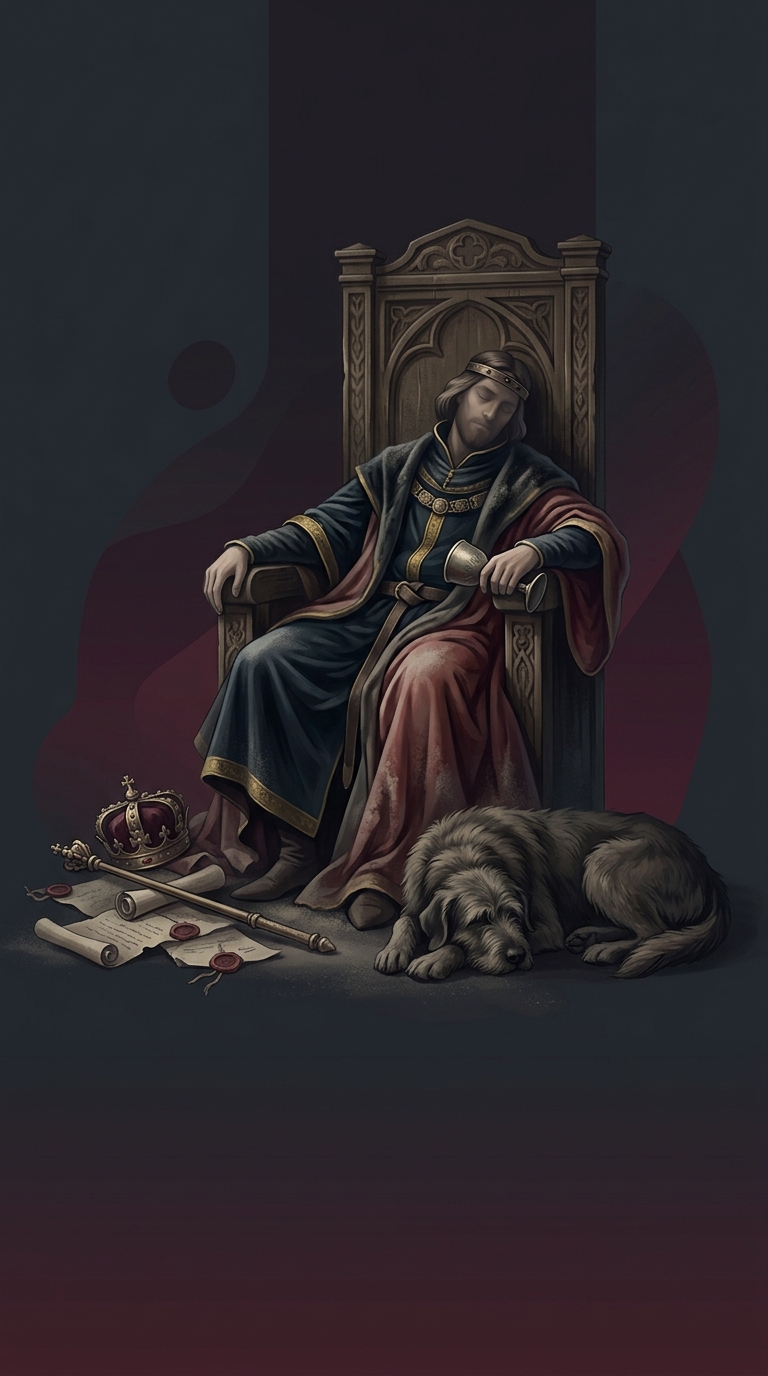
The label “the Idle” reflects that hostile judgment, not a reliable record of a single defining moment. The story that he skipped his coronation to take a nap is not established by the historical account of his reign. What is clearer is the political pattern behind the legend: a ruler’s repeated failures to show up for the work of governing could become, in the eyes of his rivals, a reason to remove him.