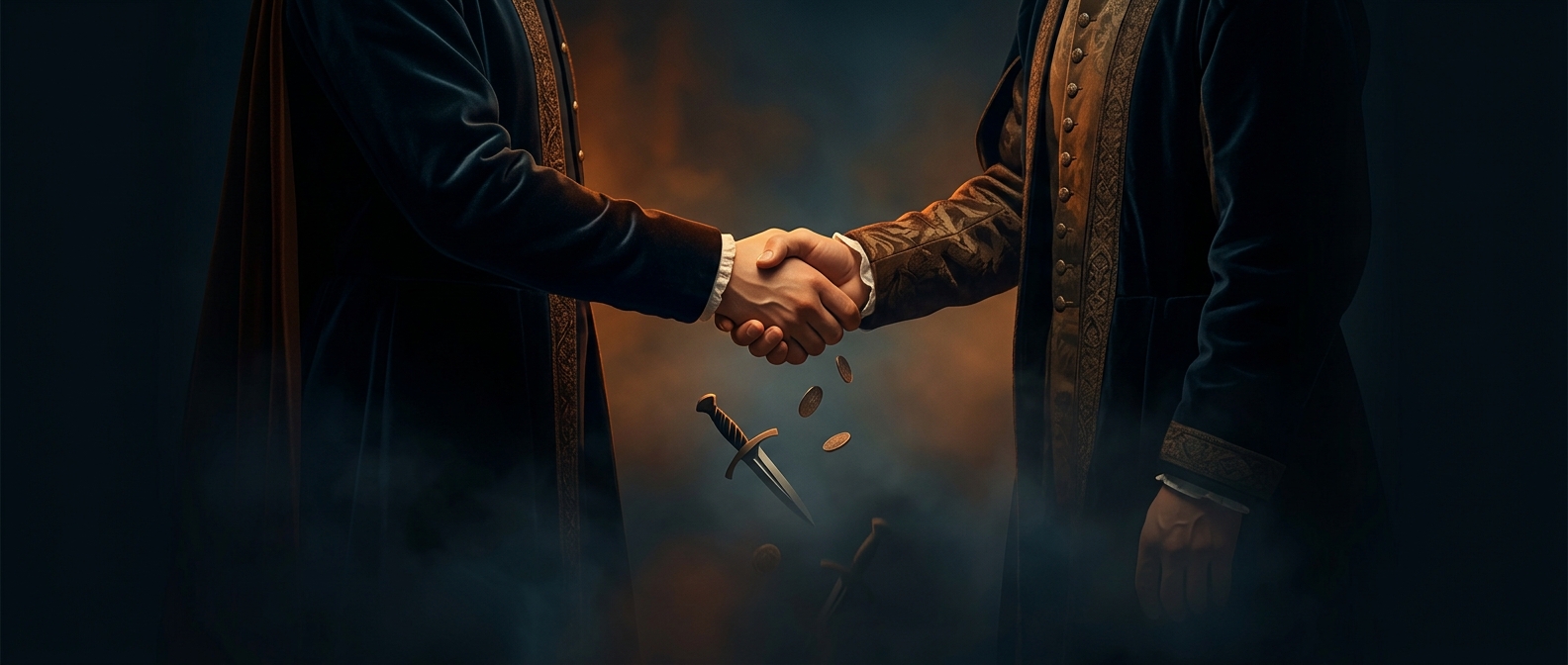
A wedding could redraw a political map
For ruling families, marriage connected two houses whose claims and resources might otherwise collide. A treaty could promise peace; a marriage bound that promise to an enduring family relationship. The bride and groom were not just spouses but potential heirs whose children could inherit from both sides.
That made the terms consequential. A dowry—the money, land, or other wealth a bride’s family provided—could shift resources between courts. A marriage agreement might also arrange a territorial transfer or recognize a border, turning a wedding settlement into part of the machinery of government.
The treaty had to survive the wedding
Negotiations addressed more than the ceremony. Families could bargain over what the bride would bring, what rights she or her children would have, and what each side promised if the political situation changed. A border guarantee, for example, mattered because it set expectations about where one ruler’s authority ended and another’s began. Marriage did not automatically prevent conflict, but it could make breaking an agreement more costly: the rival ruler was also a relative, and their descendants might have a stake in both realms.
Some matches were arranged when the future couple were children. In such cases, the agreement could shape alliances years before either person was old enough to marry. It also exposed the limits of the arrangement: rulers might change, heirs might die, and rival claims could persist even after the ceremony.
A family bond with public consequences
Romantic attachment was not necessarily absent, but it was rarely the main term being negotiated between dynasties. The political calculation was that marriage could join inheritance, diplomacy, and kinship in one settlement. Its most lasting consequence might not be the couple’s household, but a child whose parentage gave two competing families a reason—and sometimes a claim—to share the same land.