A greeting with a practical edge
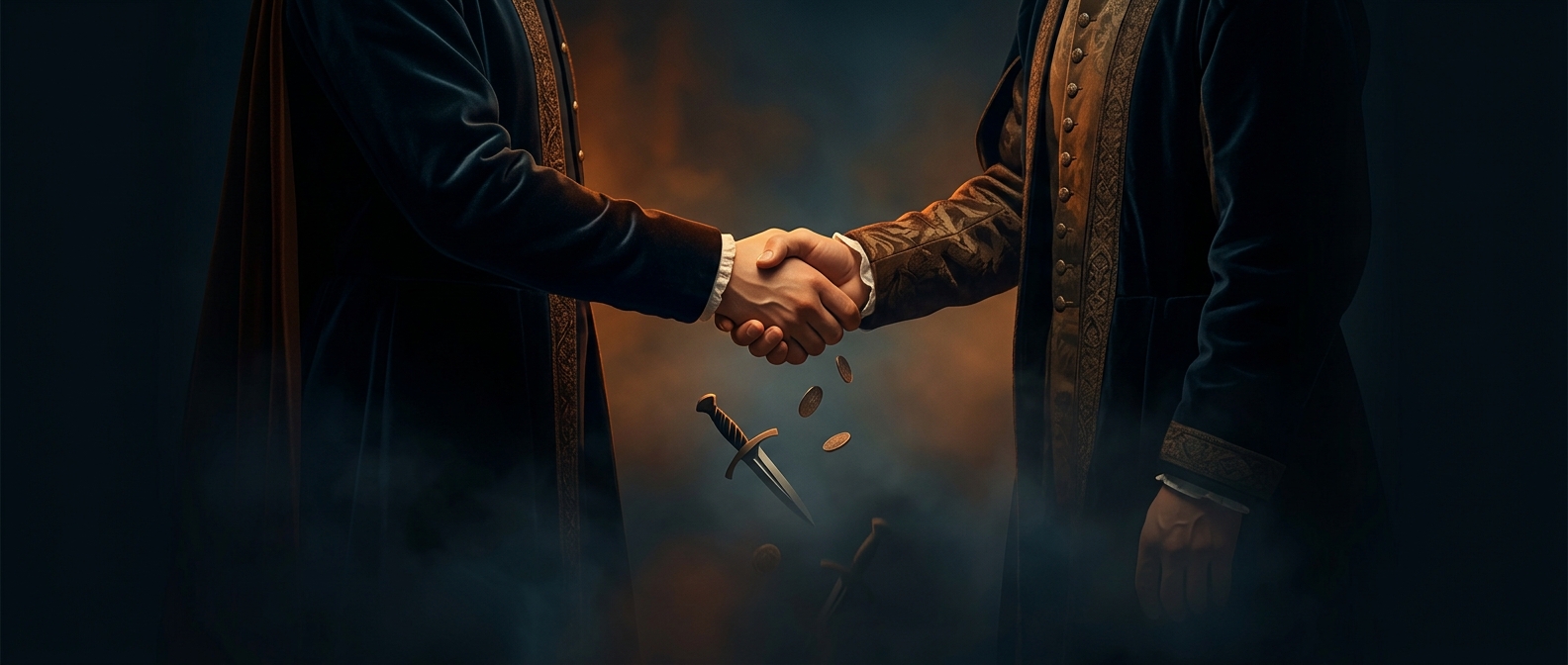
One proposed explanation for the handshake is that it began as a quiet way to check for a concealed weapon. In this version, a person grasped and shook the other’s forearm, potentially jostling a dagger tucked into a loose sleeve. The motion could serve two purposes at once: greet a stranger and make a hidden blade harder to keep concealed.
The idea fits a world in which meeting an unfamiliar person could carry real risk, but it remains a theory, not a documented origin. There is no clear record showing that forearm-shaking began as a weapon search, and a gesture’s practical use does not prove that it was invented for that purpose.
From inspection to reassurance
Even if the weapon-check story cannot be confirmed, it points to a lasting social function of hand greetings: they make contact visible. Extending an empty hand gives the other person a moment to see what it is doing; clasping hands turns that display into a shared ritual. Over time, a movement that might once have carried a hint of caution could work simply as a sign of welcome.
The theory’s memorable twist is that the handshake may have joined two opposing signals in one gesture: I’m approaching you and I’m checking that you’re safe to approach.