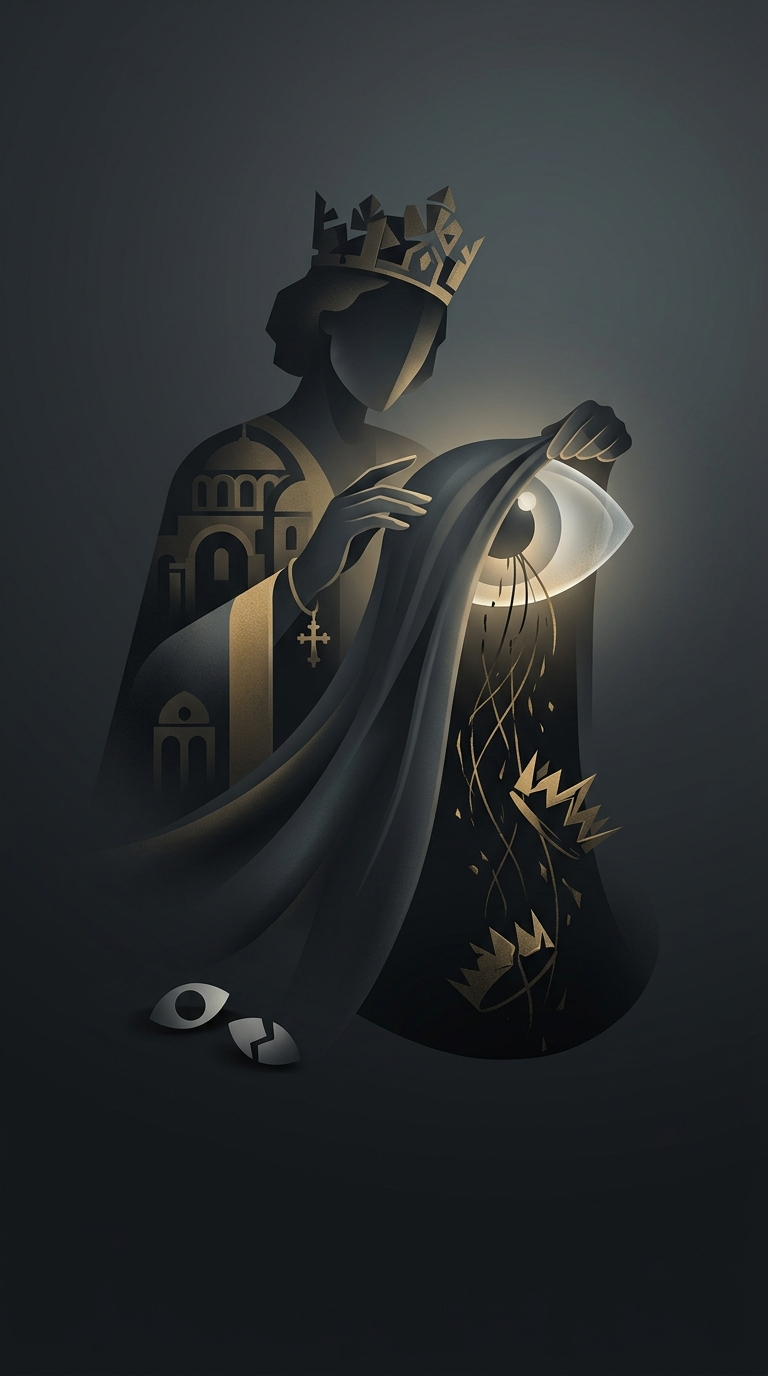
Why Byzantine Rivals Were Blinded
Blinding offered a ruler a way to neutralize a dangerous opponent without executing him. A living rival could be spared the appearance of a political martyr, while the injury made it harder for him to lead troops, appear in public, or command loyalty. It also left open the possibility of reconciliation—or at least avoided the finality of killing a member of the ruling family.
The punishment worked on appearances as well as ability. Byzantine emperors were expected to embody legitimate rule, and bodily wholeness carried political and religious meaning. A conspicuous injury could portray a claimant as unfit to rule and make supporters hesitate to rally around him. Slitting the nose, another form of disfigurement, served a related purpose: it marked the rival and damaged his public standing.
A Powerful Custom, Not an Unbreakable Rule
It is too simple to say that Orthodox theology legally barred every mutilated person from the throne. Religious rules about bodily impairment applied especially to eligibility for church offices; there was no automatic rule that every blinded or disfigured claimant could never become emperor. The injury was a potent political handicap, not a guaranteed constitutional lock.
The limits of the strategy were clear when a disqualified rival retained enough support to return. Justinian II, whose nose was cut after he was deposed, later regained the throne. His return shows why mutilation could not settle succession by itself: an injury might weaken a claim, but armies, alliances, and political opportunity still mattered. Blinding was meant to remove a rival from the contest without removing him from the world—and sometimes the contest continued anyway.