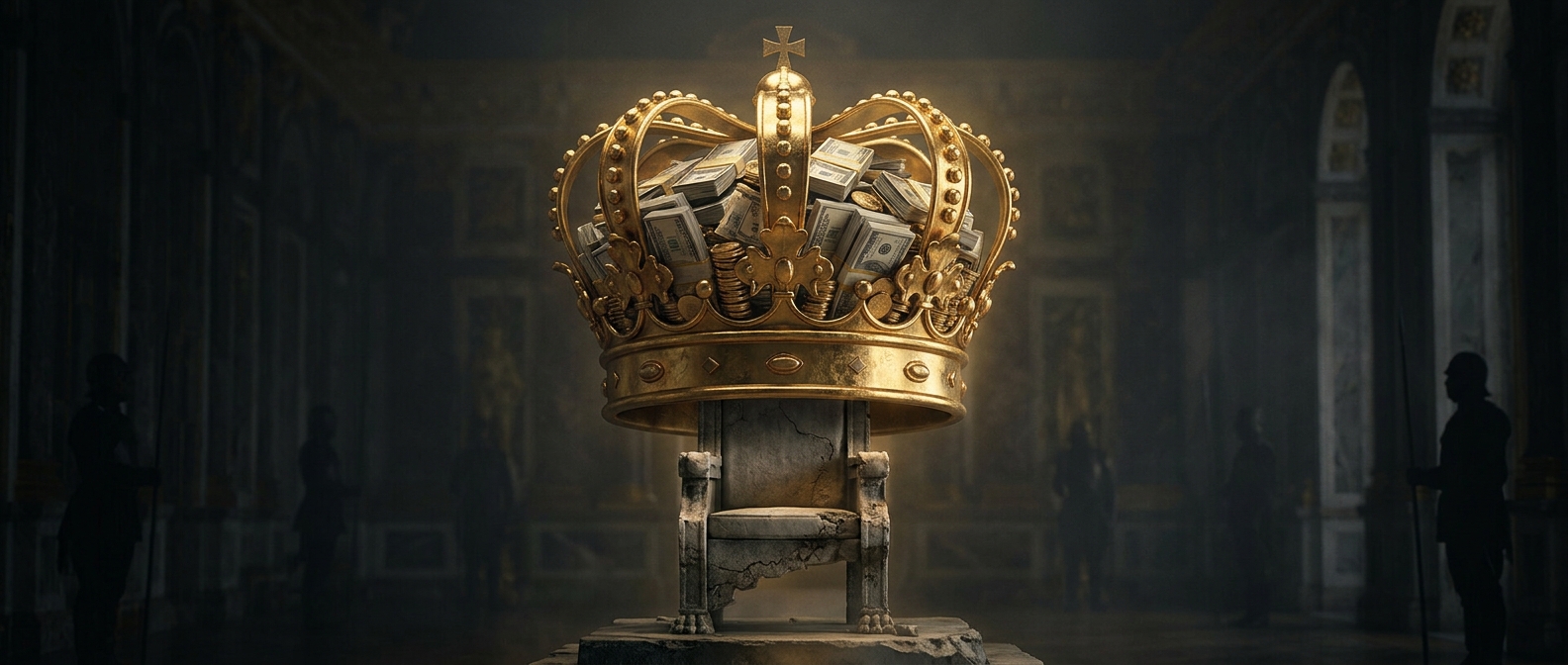
An empire staged on a poor country’s budget
Bokassa’s 1977 coronation was designed to make his rule look like that of a long-established European monarchy. The Central African Republic had been renamed the Central African Empire, and the ceremony supplied its new emperor with the pageantry to match: ceremonial dress, formal processions and an enormous gold-colored throne shaped like an eagle.
That spectacle required more than a throne. A coronation on this scale meant arranging a major public event, bringing in luxury goods and staging ceremonies for visiting dignitaries. The expense was striking because the country had little wealth to spare. Public money used to make the emperor look powerful could not be used for ordinary needs such as roads, schools or public services.
The cost was political as well as financial
“Bankrupted” captures the contrast, but the ceremony did not single-handedly empty a national treasury. It was an exceptionally visible use of resources by a government already facing severe economic constraints. The deeper damage was the message the spending sent: the state could marshal money and effort for the ruler’s image while many citizens saw little improvement in daily life.
The coronation was meant to strengthen Bokassa’s authority by surrounding it with imperial ritual. Instead, its extravagance made the gap between royal display and ordinary hardship harder to ignore. The eagle throne became a symbol not just of the empire he proclaimed, but of the priorities that helped make his rule increasingly unpopular.