A battlefield reduced to a board
Chaturanga’s name refers to the four divisions of an Indian army: infantry, cavalry, elephants, and chariots. Its pieces turned those forces into distinct roles on a small, bounded field. Players could move them, protect them, and sacrifice them without moving a real army or risking soldiers’ lives.
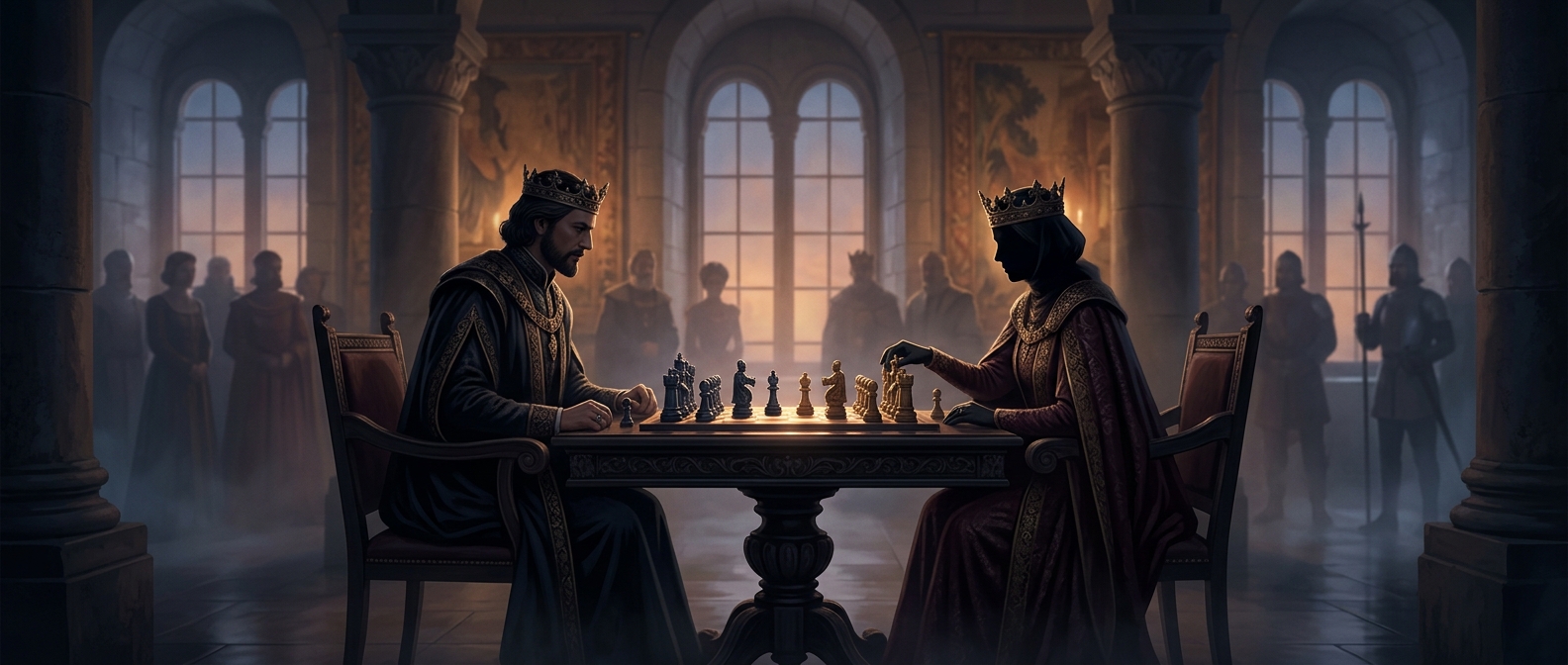
That made the game more than a contest of individual moves. A piece that seemed powerful could become vulnerable if it advanced alone; a weaker piece could help control a route or shield the king. The board compressed the central problem of command: how to coordinate different forces when every move changes what the opponent can do.
Conflict with consequences contained
On a real campaign, a ruler’s decisions could mean long marches, depleted supplies, and deaths. In Chaturanga, the same basic pressures became visible and reversible. A player could test an attack, see it fail, and begin another game. The pieces stood in for military power, while the rules imposed a limit the battlefield did not: the contest ended at the board.
The game did not make war harmless or replace the political conflicts rulers faced. It offered a controlled way to think through opposition and strategy. Its lasting appeal lies in that contrast: a battle’s logic, played out without the battle’s casualties.