How Guiding Light Carried a Story From Radio to Television
When Guiding Light debuted on radio in 1937, its audience built the world from voices alone. Dialogue had to identify characters, convey emotions, and make changes in a household or relationship easy to follow without anything to see. The show’s title referred to the metaphorical light of a minister’s study, a steady point of guidance for people facing personal troubles.
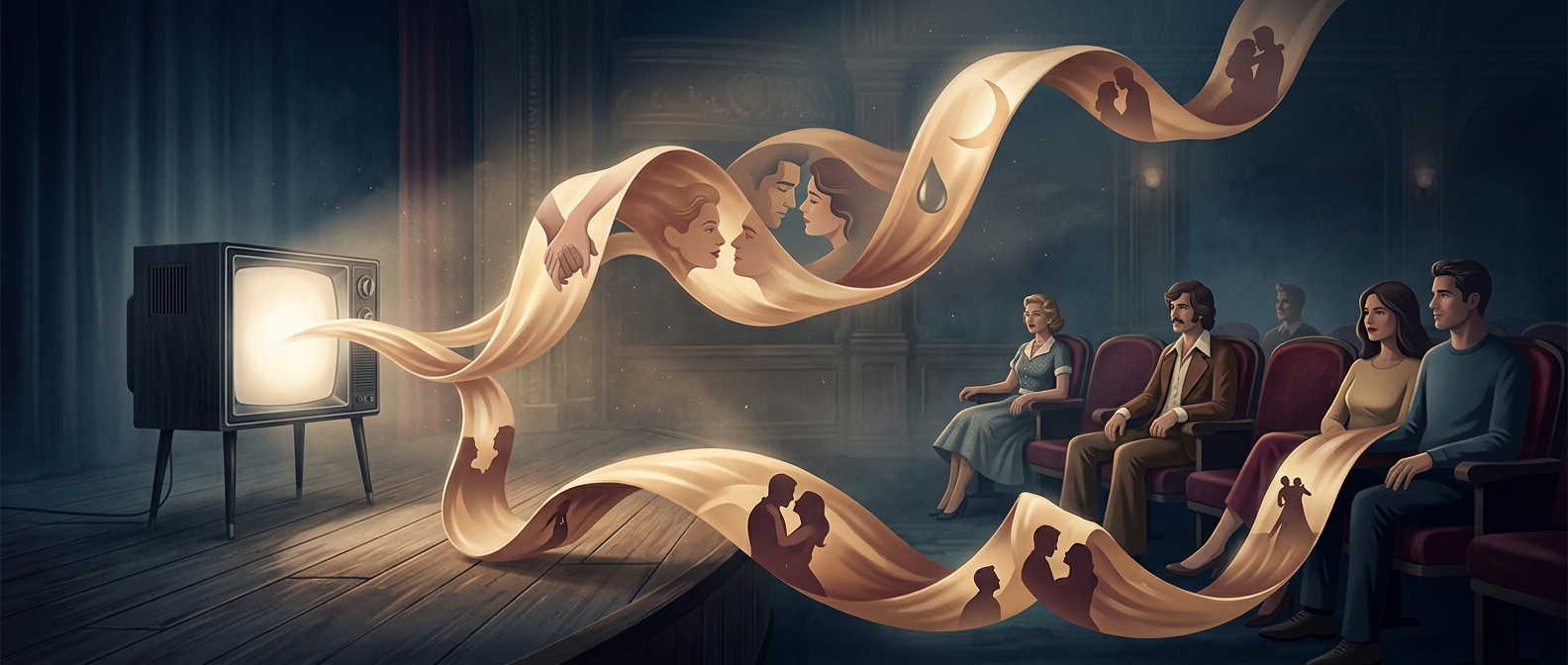
Television offered a different way to tell that continuing story. Faces, rooms, and gestures could now do some of the work that radio dialogue had handled. The series moved to television in 1952, while its radio version continued for several years. The transition was not simply a matter of putting microphones in front of cameras: scenes had to be staged visually, and a regular cast and sets became part of the storytelling.
Why the Serial Form Could Keep Going
Unlike a drama built to resolve its central conflict in one evening, a daytime serial could keep introducing problems as characters’ lives changed. A relationship might fracture, a family secret could alter what viewers thought they knew, and consequences could unfold across many episodes. Each installment offered a new piece of the story while leaving other threads open.
That structure gave writers room to replace one conflict with another without ending the fictional world. It also gave viewers a reason to return: familiarity with the characters made even small developments matter, while new turns kept that familiarity from becoming static. The format depended on a demanding production rhythm, but its ongoing plot could absorb changes in performers, audience tastes, and television itself.
A Story Built to Outlast Its Medium
The result was Guiding Light, whose run ended in 2009 after 72 years across radio and television. Its longevity was not just a record of repeated episodes. It showed how a serial could preserve its essential promise—tomorrow would bring another chapter—while changing the medium used to deliver it. The story’s continuity was the thing that traveled; the audience learned to picture it first through sound, and later through the people and places on screen.