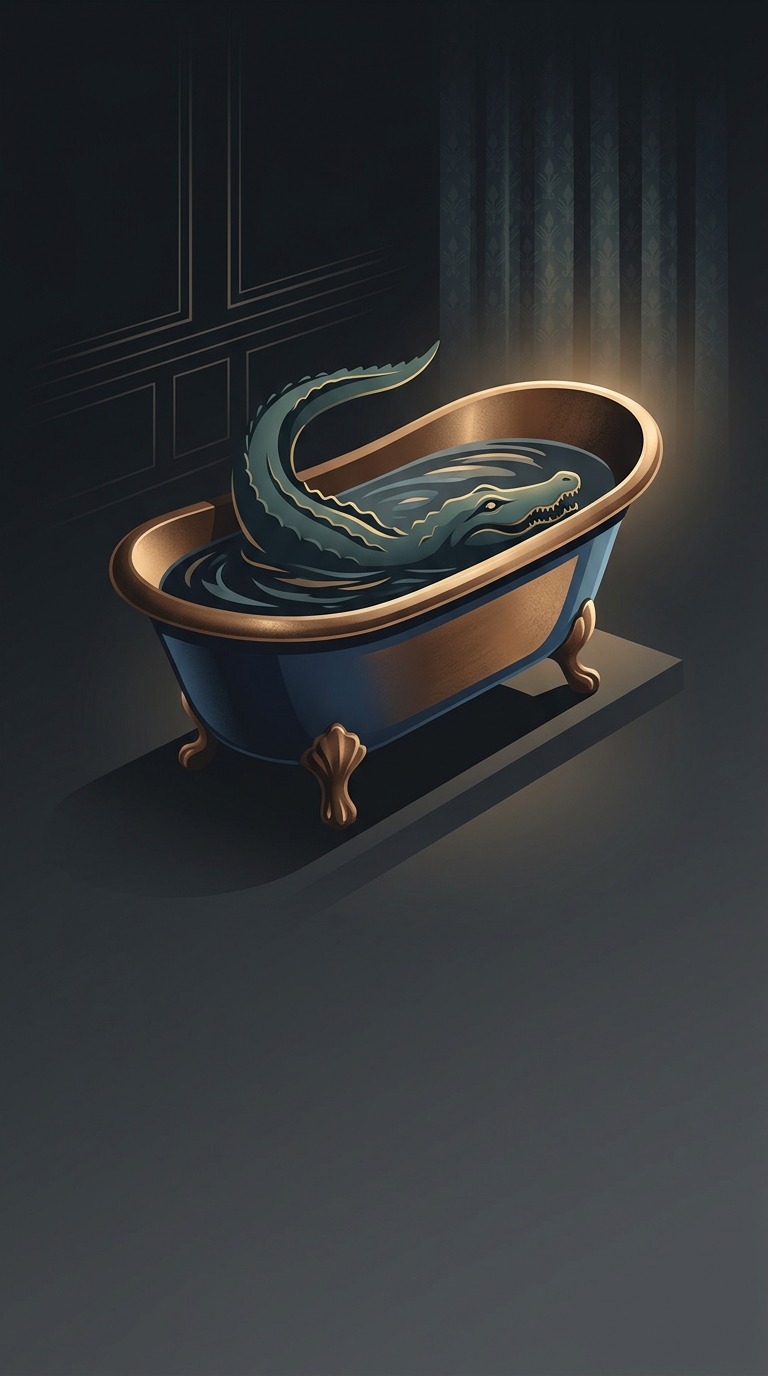
A White House story with a slippery paper trail
The alligator tale is attached to a real moment of public celebration. In 1824–25, the Marquis de Lafayette—French commander and American Revolutionary War ally—returned to the United States on a widely celebrated farewell tour. Stories later connected a reptile he supposedly brought with him to President John Quincy Adams, who occupied the White House from 1825 to 1829.
That setting helps explain why the anecdote caught on: Lafayette’s visit involved gifts, ceremonies, and intense public interest, while the White House was still a relatively new home for the presidency. But the familiar details—that Adams kept the animal in a bathtub and used it to startle guests—are not securely established. The story is repeated more confidently than its surviving evidence warrants.
Why the anecdote endured
The image turns a formal political residence into a place of comic disorder. A crocodilian predator in a bathroom is an instantly graspable contrast with the ceremony of receiving guests, and it gives Adams a memorable, mischievous personality. The joke also fits a broader appeal of presidential lore: private habits can make powerful historical figures seem unexpectedly human.
That does not make the episode impossible, but possibility is not proof. The most careful way to tell it is as a persistent White House legend tied to Lafayette’s return, rather than as a firmly documented incident. Its staying power may say more about the appetite for an unruly presidential anecdote than about what actually waited behind the bathroom door.