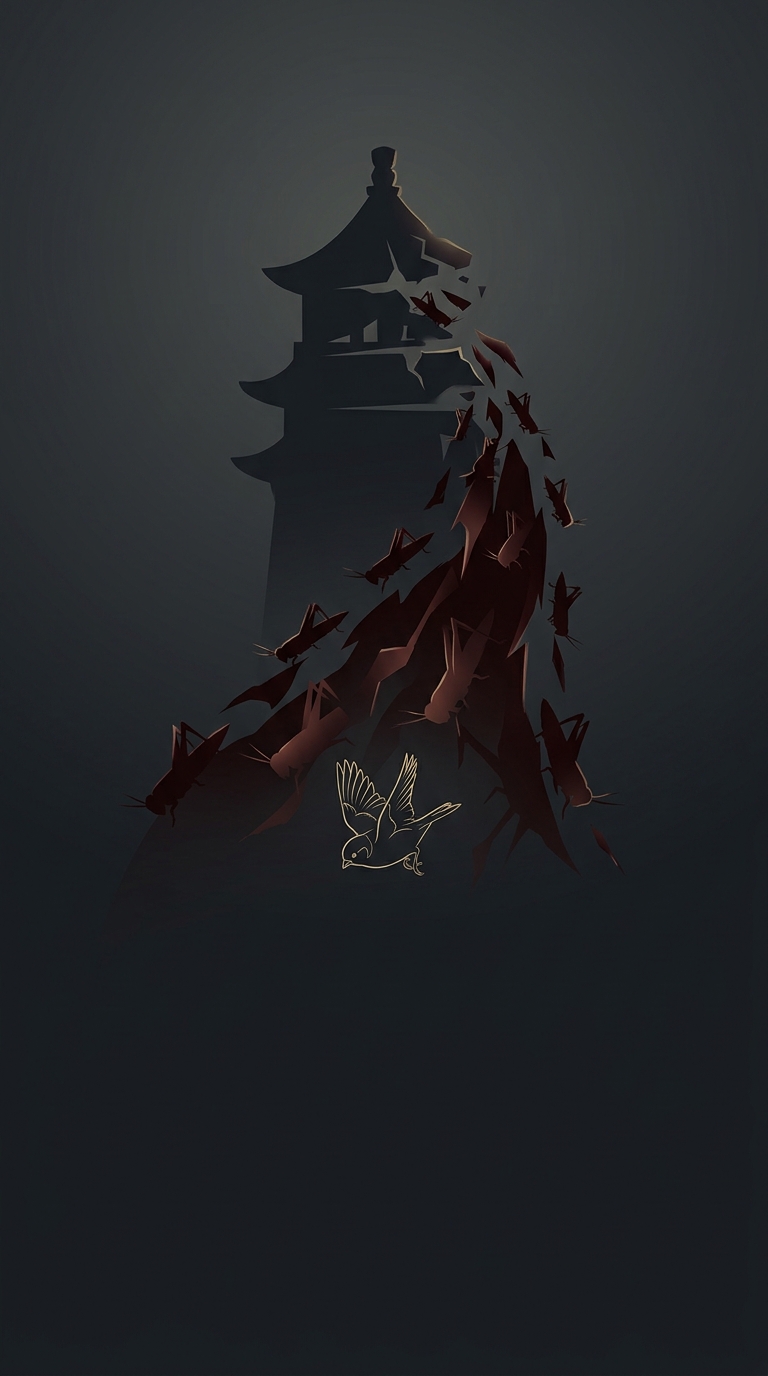
A bird was treated as a crop-eating enemy
In 1958, Mao Zedong’s government made sparrows a target of the Four Pests Campaign, a mass effort to eliminate animals and insects considered harmful to people or agriculture. The case against sparrows seemed simple: they ate grain, so killing them should leave more food for people.
That reasoning focused on what the birds took from fields, not what they removed. Sparrows also ate insects that damaged crops. Their place in the food web—the connections through which one species feeds on another—made the campaign’s intended benefit less straightforward than officials had assumed.
When the campaign changed the fields
People across China were mobilized to drive the birds from their perches, banging pots and pans so they could not land and rest. Exhausted sparrows fell from the sky. But removing a predator does not remove its prey: with fewer sparrows eating them, insect populations surged, increasing pressure on crops.
The consequence exposed a basic weakness in the campaign’s logic. A species can consume crops and still help protect them; its net effect depends on what else it eats and what happens when it disappears. Officials eventually took sparrows off the target list, acknowledging that the birds’ role could not be judged by grain consumption alone.
The episode is a striking example of how a simple national order can alter an ecological balance—and why an animal’s place in a field is more complicated than whether it eats the harvest.