The last part of the egg travels with the chick
At hatching, a chick is not starting from empty. In the final stage of development, it draws the remaining yolk through the navel into its abdomen, where the yolk sac sits just beneath the abdominal wall. The chick can then absorb those nutrients gradually after it emerges, rather than needing to eat immediately.
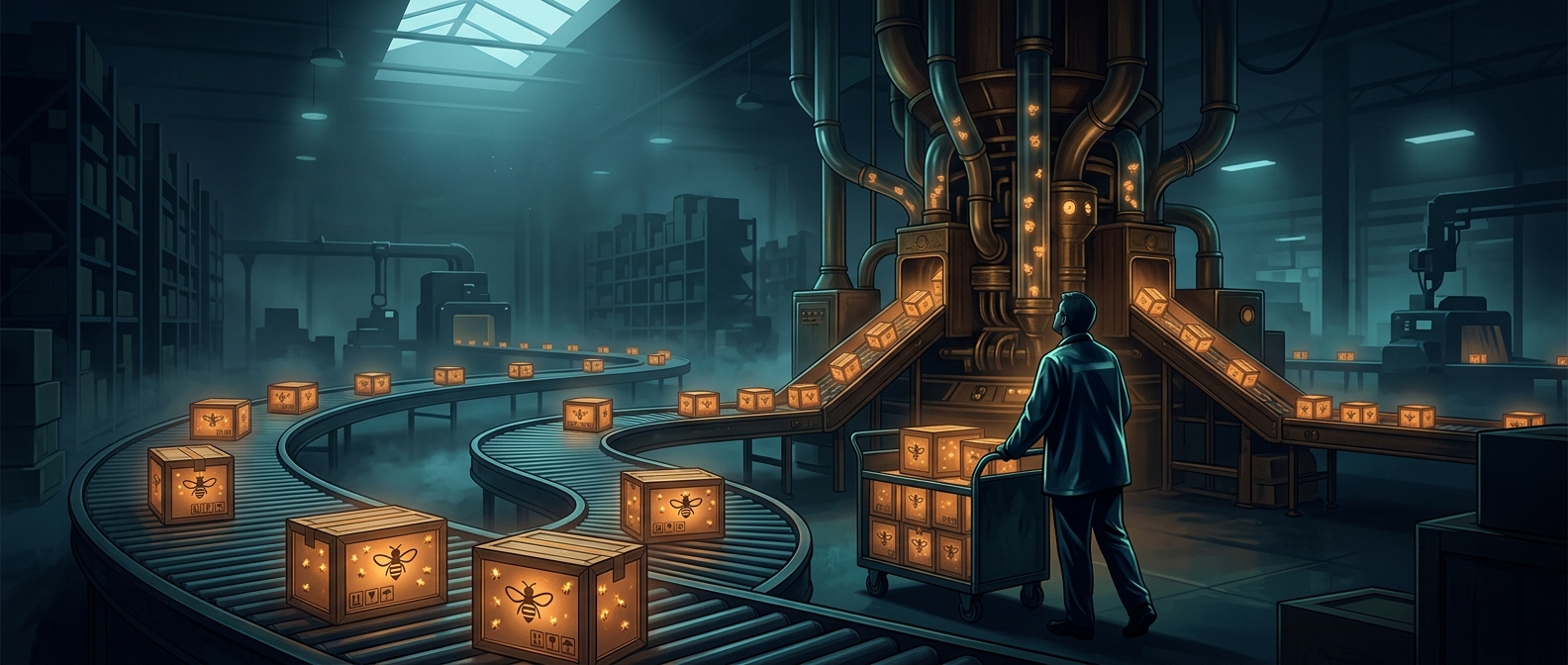
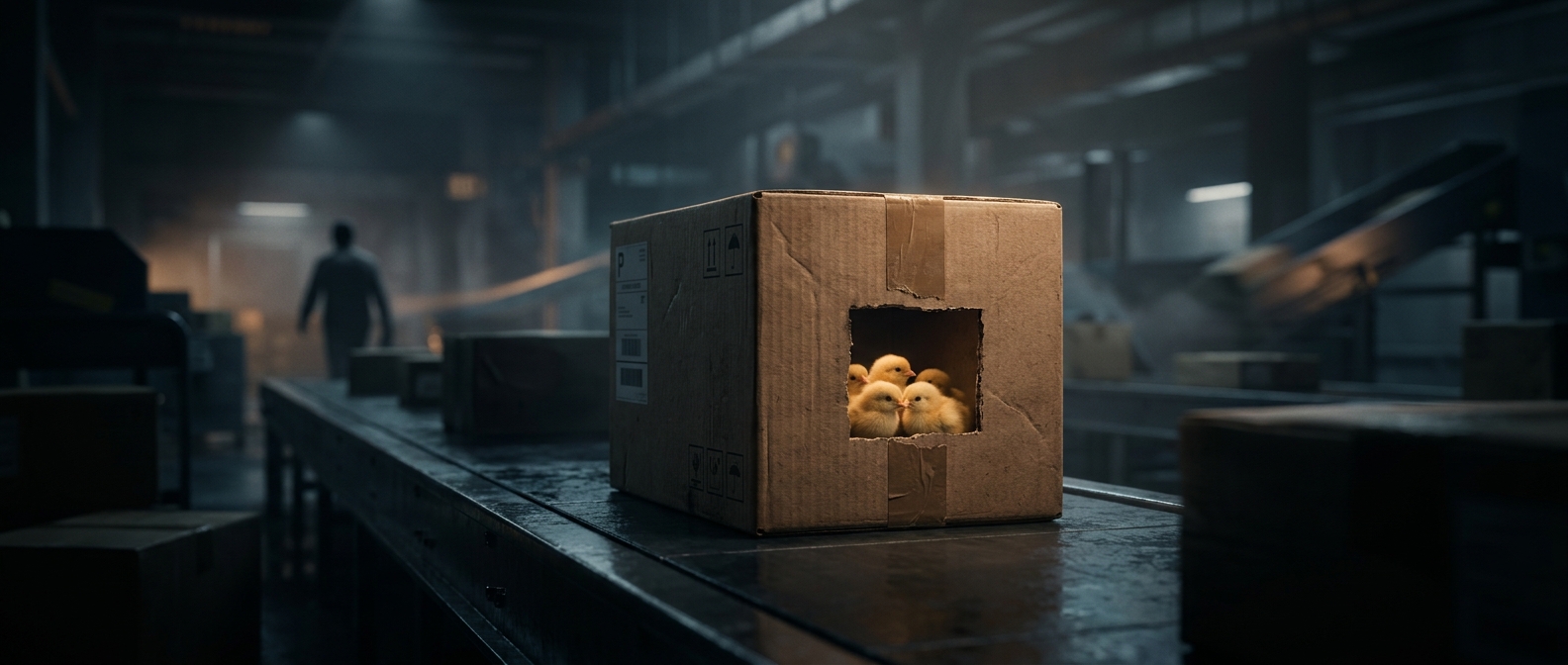
That reserve is especially useful because hatching and delivery do not happen at the same instant. Chicks may hatch in batches, then be sorted, packed, and transported to farms. The yolk gives them a short buffer while those steps are underway; it is not a substitute for food and water once they arrive.
A buffer, not a travel system
The reserve buys time, but it does not make conditions irrelevant. Chicks still need suitable temperature and careful handling during transport, and they must be given access to feed and water afterward. The practical advantage is narrower: a newly hatched chick can tolerate the gap between leaving the egg and reaching its first meal.
So the journey begins with a handoff from the egg itself. Before the chick can peck at food, it is already using nutrients carried inside its own body.