Light changes more than a potato’s color
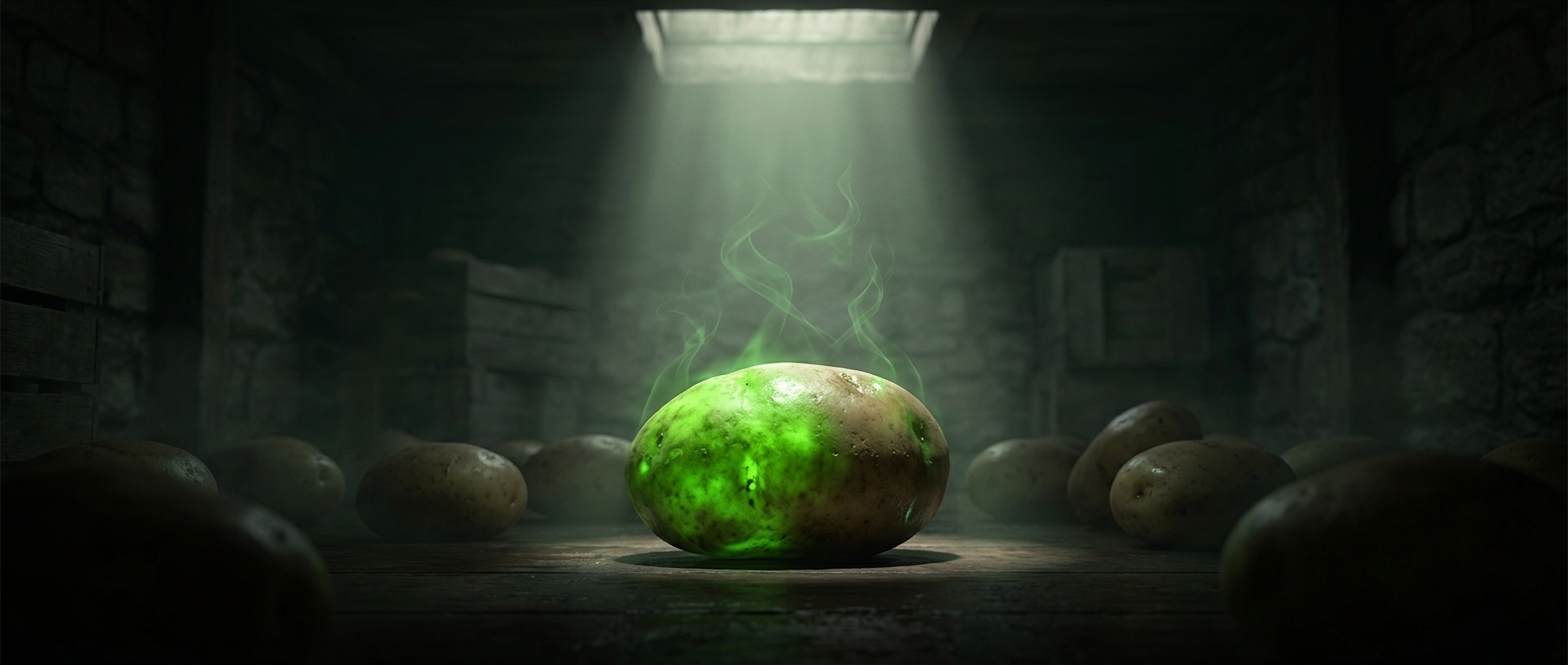
When light reaches a potato, its cells make chlorophyll—the same green pigment found in leaves. Chlorophyll is harmless, but the exposure that produces it can also prompt the potato to build up glycoalkaloids, defensive chemicals that help protect the plant from pests. The green is therefore a warning sign, not the poison itself.
Potatoes naturally contain small amounts of these compounds, especially in and near the skin. Levels can rise when tubers are exposed to light, and they may also be elevated around sprouts or damaged areas. How much is present can vary, so color cannot tell you the exact amount.
Why peeling may not be enough
Removing the skin can lower exposure because glycoalkaloids tend to be more concentrated near the surface. But it cannot guarantee that the remaining potato contains little enough to be safe—particularly if the potato is extensively green. Ordinary cooking also does not reliably remove these compounds.
A bitter taste is another warning to stop eating the potato; it is not a useful way to test a questionable one, since you cannot judge its chemical content by taste alone. If a potato is very green or tastes bitter, discard it rather than trying to salvage it with a peeler. Keeping potatoes in a cool, dark place helps limit the light exposure that starts the visible greening.