What Botanists Mean by “Berry”
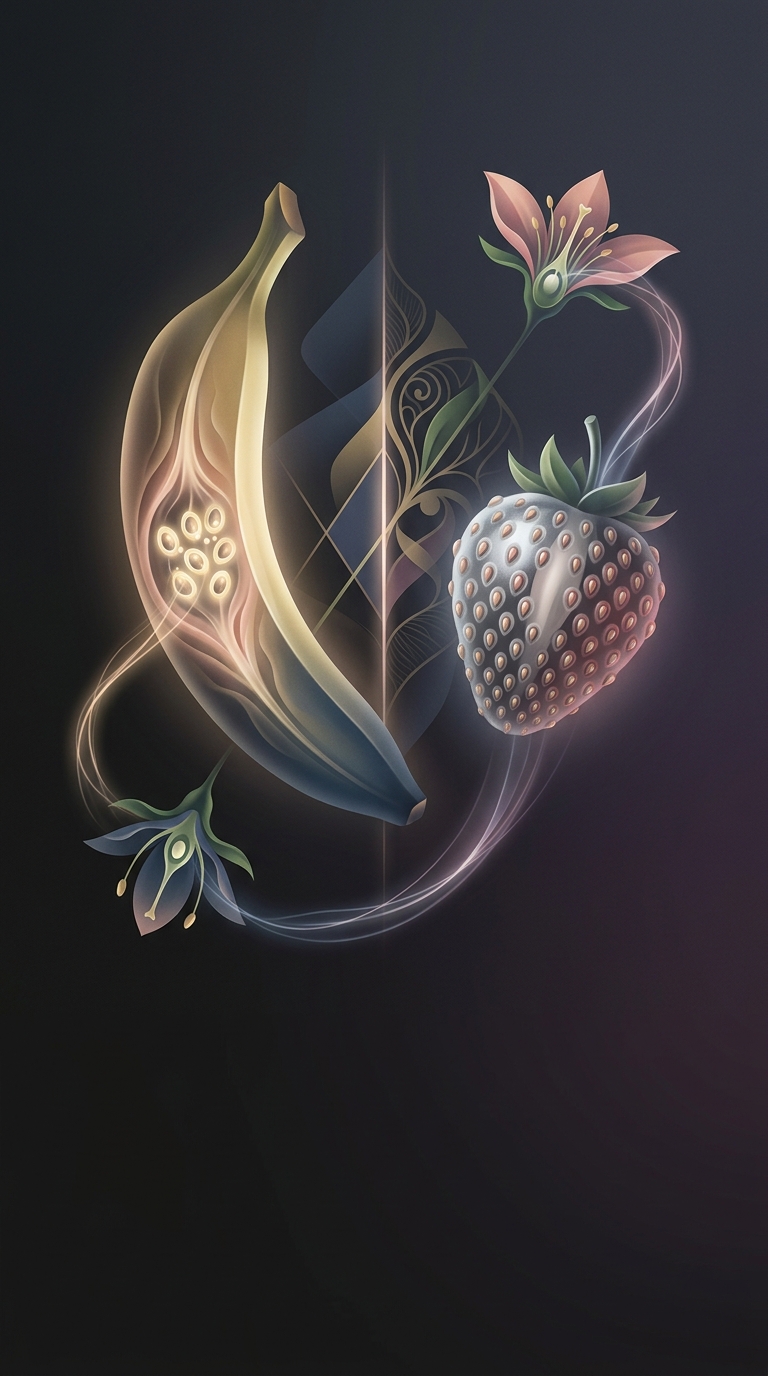
In everyday speech, a berry is usually a small, juicy fruit. Botany uses a more structural definition: a berry is a fleshy fruit that develops from one flower’s single ovary, with its seeds enclosed in the flesh. By that definition, a banana qualifies. The edible portion grows from the flower’s ovary, and the tiny dark specks inside are undeveloped seeds in most familiar cultivated bananas.
A Strawberry Is Built Differently
A strawberry’s red, juicy part is not formed from the ovary. It is the flower’s receptacle—the base that holds the flower’s parts—which swells after pollination. The actual fruits are the small, dry structures on its surface, commonly mistaken for seeds. Each is called an achene and contains a seed.
That makes a strawberry an accessory fruit: much of what people eat comes from tissue outside the ovary. It is also an aggregate fruit, because the many achenes develop from the separate ovaries of one flower. The familiar fruit is therefore a whole cluster of tiny fruits carried on a fleshy base.
Why the Names Don’t Match
Botanical categories describe how a fruit develops, not how it looks, tastes, or is used in the kitchen. A banana’s soft flesh fits the technical berry pattern; a strawberry’s red flesh comes from a different flower structure. The distinction is hidden in the flower’s anatomy—and it means the strawberry’s “seeds” are, strictly speaking, fruits themselves.