How DNA proofreading works
When a cell divides, it must copy the long DNA molecule that carries its instructions. DNA-copying enzymes build each new strand by matching chemical building blocks to the original. The fit is usually precise, but a wrong building block can slip in.
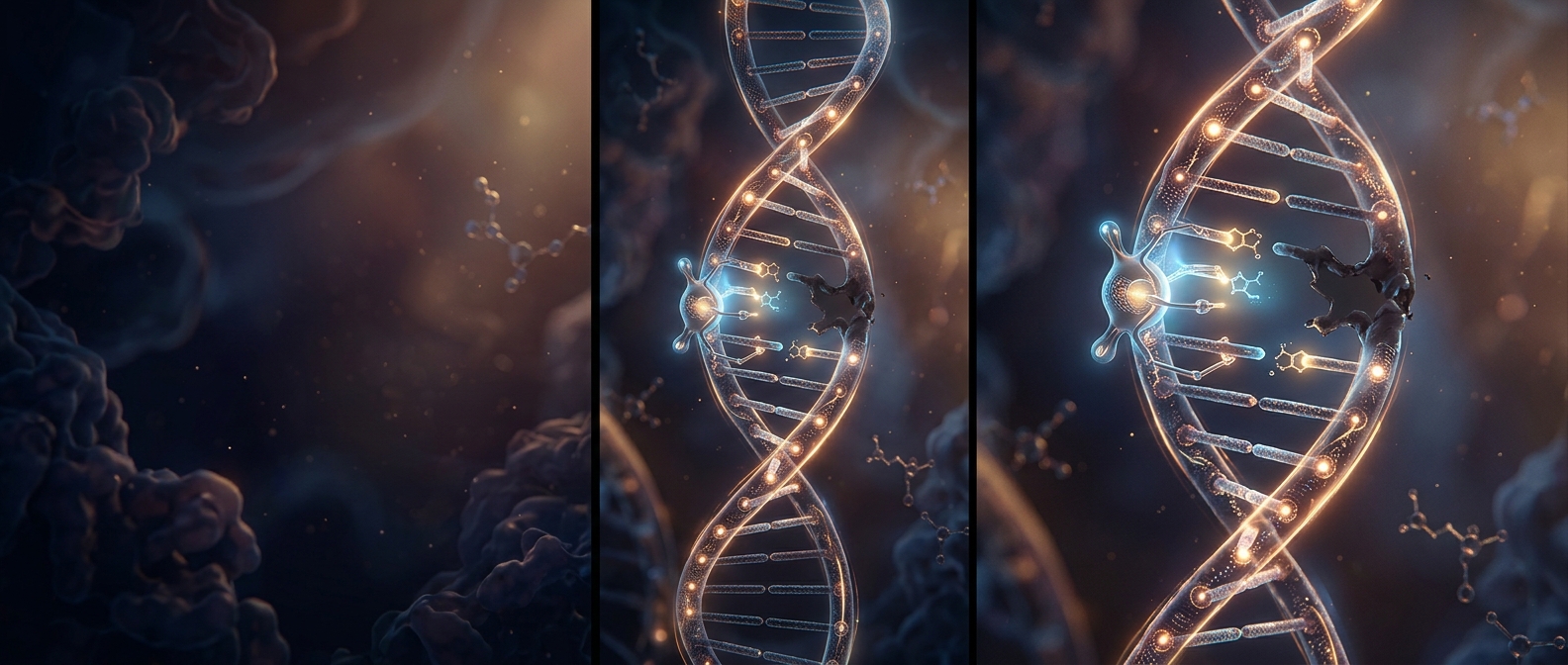
Some DNA-copying enzymes act like proofreaders: as they build, they can detect a mismatch, back up, cut out the newly added piece, and insert the correct one. A separate repair process can catch some mismatches that remain after copying. It removes a short stretch of the new strand around the error, then other enzymes replace the missing DNA and seal the strand.
Why the repair is not perfect
These checks greatly reduce copying mistakes, but they cannot catch every error. Some mismatches evade repair, and DNA can also be damaged by other processes. If a mistake remains when the DNA is copied again, it may become a lasting change, or mutation, in the cell’s genetic sequence.
Most such changes have no noticeable effect, but some can disrupt how a gene works. That is one reason cells rely on several layers of checking: a mistake caught before the next round of copying can be removed, while one that slips through may be passed on to daughter cells.