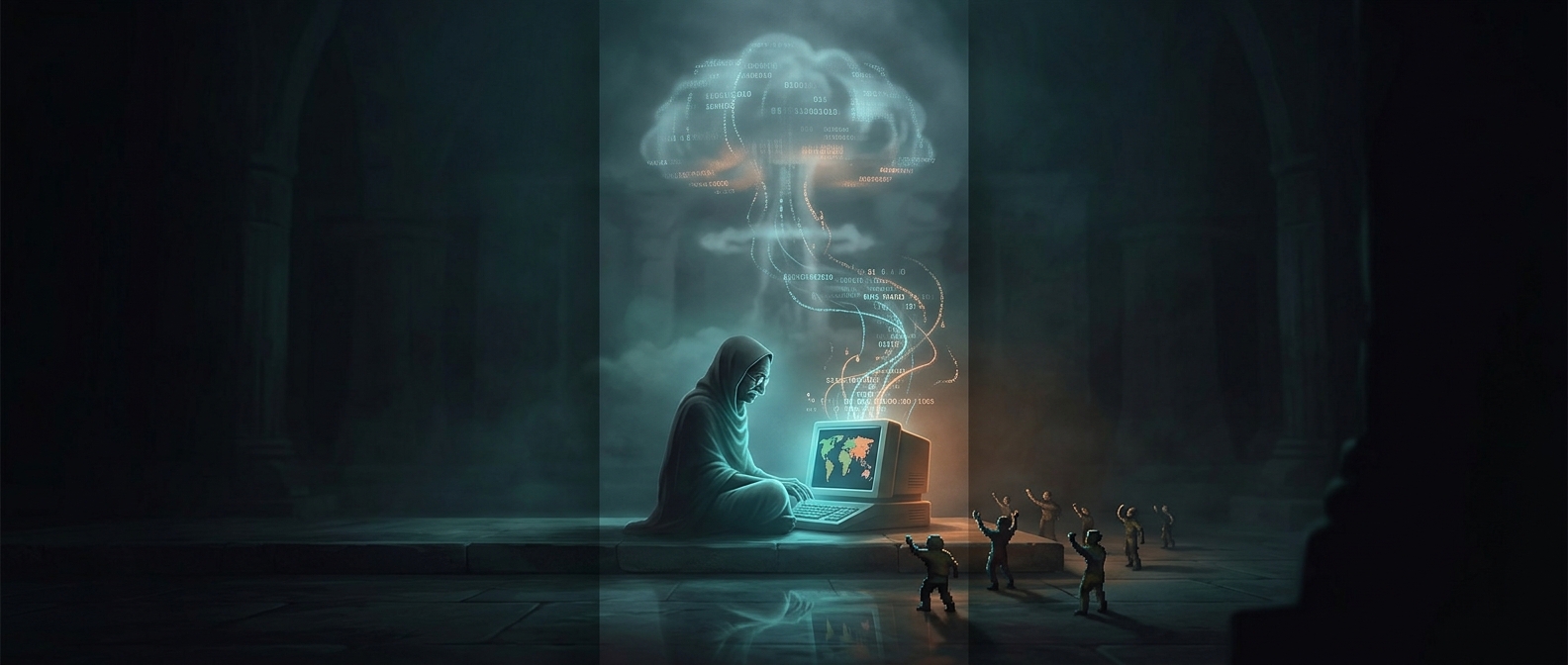
How a peace-loving leader became a nuclear legend
The story sounds like a perfect programming accident: Gandhi’s aggression rating supposedly fell below zero, wrapped around to an enormous value, and made him eager to launch nuclear weapons. In computing, a number stored in a fixed range can sometimes overflow when arithmetic pushes it past that range. The resulting value may look wildly different from what the programmer intended.
But that was never the explanation for Gandhi’s behavior in Civilization. Sid Meier later confirmed that the famous bug did not exist. The legend took a memorable contrast—a leader associated with peace behaving as a nuclear threat—and supplied a neat technical mechanism for it. That mechanism was plausible enough to feel like an answer, even though it was fiction.
From player explanation to game joke
Strategy games produce stories players want to explain. An opponent’s unexpected move can feel personal, and a hidden numerical rule offers a satisfying cause: perhaps one statistic flipped, and the whole personality changed. The Gandhi tale turned that impulse into a shareable bit of game folklore.
Later Civilization games deliberately included the joke. That changed its status: it was no longer merely a story players told about a glitch, but a reference the games themselves chose to make. The distinction matters. A bug is an unintended behavior; a deliberate nod is a design decision that uses players’ familiarity with the legend.
The enduring joke is therefore less about a malfunction than about how games acquire meaning beyond their code. A supposed accident became part of the series’ cultural identity—and eventually a punchline the developers could knowingly play along with.